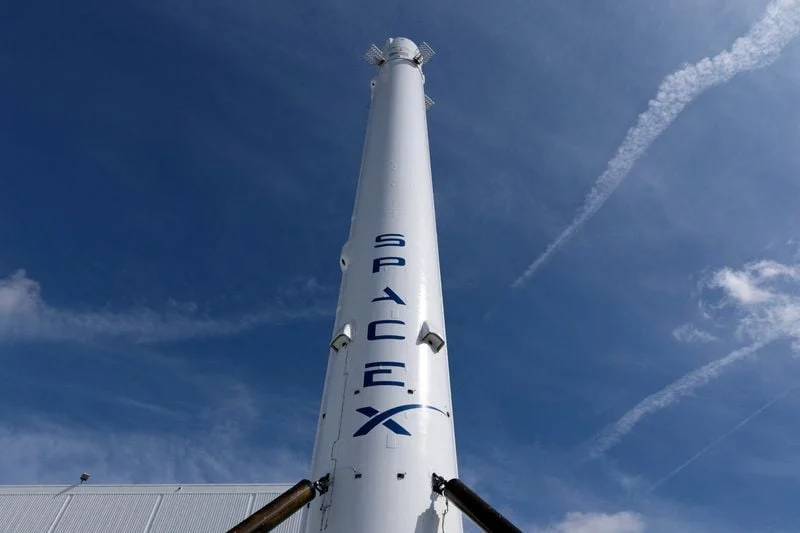
SpaceX Delays Starship Flight 13 to Friday Due to Weather
SpaceX postponed the 13th test flight of its Starship launch system by one day because of unfavorable weather conditions at the company’s Starbase facility in Texas.
The mission is now scheduled for Friday, July 24, 2026.
Weather Conditions Force Starship Delay
SpaceX confirmed the delay in a post on X, stating that it was targeting Friday for Starship’s 13th flight test.
The launch had originally been planned for Thursday. However, weather conditions at the launch site would have limited visibility during an important stage of the mission.
SpaceX said the forecast for Friday should provide better conditions for observing the spacecraft from the ground.
Heat Shield Imagery Is a Key Mission Objective
One of the main goals of Flight 13 is to capture clear images of Starship’s heat shield during ascent.
The spacecraft is expected to travel through a period of higher dynamic pressure, placing greater stress on its structure and thermal protection system.
Ground-based cameras will help engineers study how the heat shield performs under these conditions. SpaceX said Thursday’s weather would not have allowed the team to obtain the required imagery.
Flight 13 Will Test New Starship Upgrades
The latest mission is expected to support the continued development of Starship, SpaceX’s fully reusable launch system.
The company has introduced upgrades designed to improve the reliability of both the Super Heavy booster and the Starship upper stage.
These changes are part of SpaceX’s broader effort to increase launch frequency and eventually achieve full rocket reusability.
Starship Designed for Moon and Mars Missions
Starship is being developed for future missions to the Moon and Mars.
The launch system is also expected to carry commercial satellites and other payloads into orbit.
SpaceX believes that making both stages fully reusable could significantly reduce launch costs and enable more frequent space missions.
Previous Starship Test Achieved Key Milestones
Flight 13 follows SpaceX’s previous Starship test in May.
During that mission, the Super Heavy booster was successfully recovered after completing its portion of the flight.
The Starship upper stage also completed much of its planned mission profile. However, the spacecraft later lost attitude control during atmospheric re-entry.
Data collected during that test helped SpaceX identify areas requiring further improvements.
FAA Approves Starship Flight 13
The U.S. Federal Aviation Administration cleared SpaceX to proceed with Flight 13 earlier this month.
The approval followed a review of the previous Starship mission and allowed the company to continue its flight-testing campaign.
Regulatory approval remains an important step before each major Starship launch attempt.
SpaceX Moves Closer to Full Reusability
Flight 13 will provide SpaceX with another opportunity to test upgraded hardware, flight systems and re-entry performance.
A successful mission could move the company closer to launching Starship more frequently and recovering both stages consistently.
Weather conditions will remain an important factor, particularly because engineers need clear ground-based imagery to evaluate the spacecraft’s heat shield and overall performance.