Tesla Stock Drops After Q2 Earnings Miss
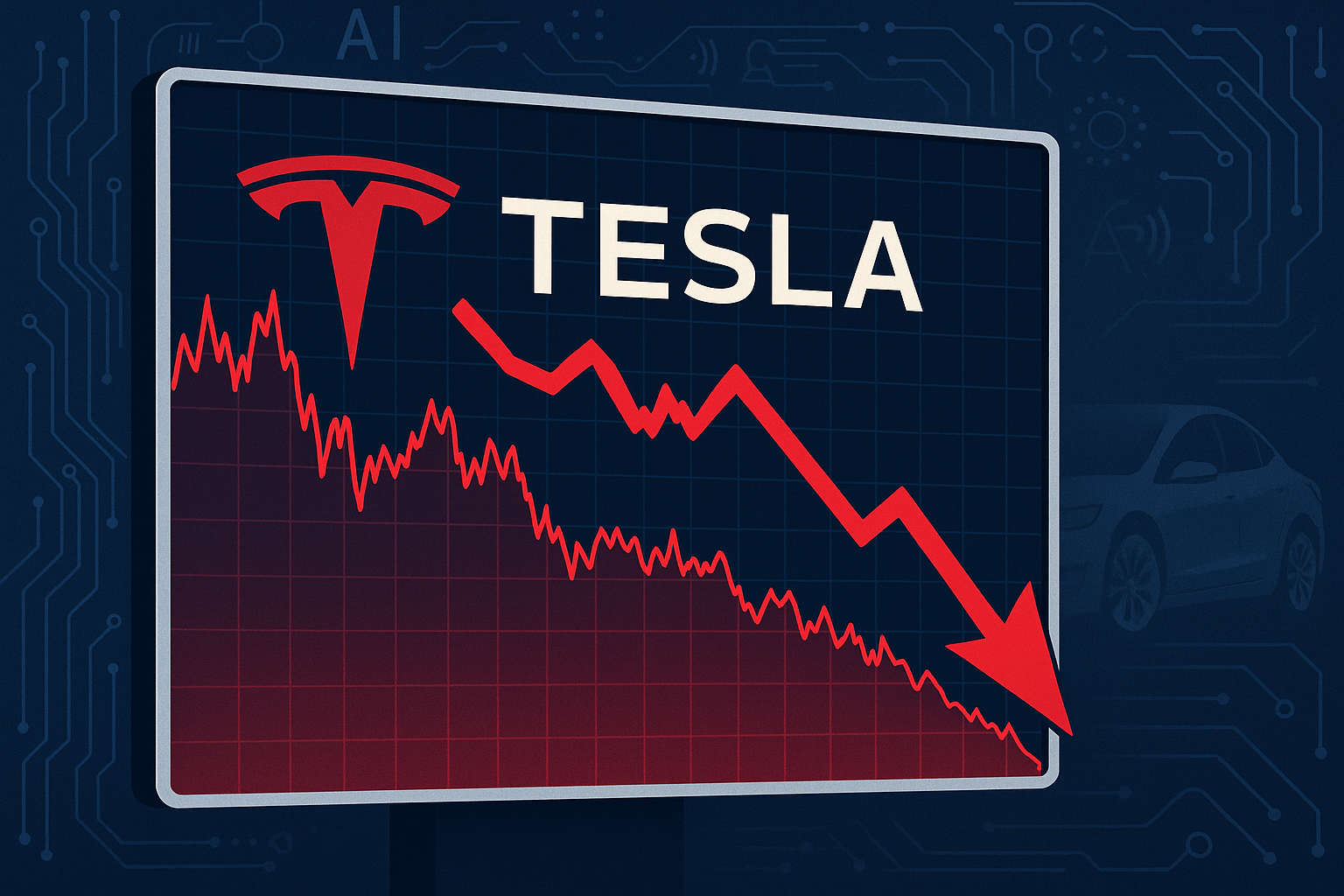
Tesla shares fell sharply in pre-market trading on Thursday after the electric vehicle maker reported weaker-than-expected quarterly profit.
The company exceeded revenue forecasts, supported by a strong rebound in vehicle deliveries. However, softer automotive margins and negative free cash flow raised concerns among investors.
Tesla stock declined by more than 5% following the earnings release.
Tesla Revenue Beats Wall Street Estimates
Tesla reported adjusted earnings of $0.33 per share for the second quarter of 2026.
Analysts had expected adjusted earnings of $0.49 per share.
Quarterly revenue reached $28.24 billion, comfortably above Wall Street’s forecast of $25.55 billion.
The results showed that stronger vehicle sales supported revenue growth. Nevertheless, higher spending and weaker-than-expected margins limited profitability.
Automotive Revenue Rises 23%
Tesla’s automotive business delivered a strong rebound during the quarter.
Total automotive revenue increased by 23% year over year to $20.52 billion. The improvement followed two consecutive quarters in which vehicle deliveries missed market expectations.
Tesla delivered a record 480,126 vehicles during the quarter. Analysts had expected approximately 406,000 deliveries.
The company said strong demand in South Korea, Australia, Japan, and several other markets helped drive the result.
Automotive Margins Miss Expectations
Tesla’s automotive gross margin, excluding regulatory credit revenue, improved by 130 basis points from the previous year to 16.3%.
However, the result remained well below Wall Street’s estimate of 19.4%.
The margin shortfall reduced some of the optimism surrounding the recovery in vehicle deliveries. Investors remain concerned that pricing pressure, production expenses, and rising investment costs could continue to weigh on profits.
Tesla Reports Negative Free Cash Flow
Tesla recorded negative free cash flow of $1.1 billion during the quarter.
This marked the company’s first negative free cash flow result since the first quarter of 2024.
The decline came as Tesla increased spending across its automotive, artificial intelligence, battery, robotics, and autonomous-driving businesses.
Tesla previously projected capital expenditure of more than $25 billion for 2026.
CEO Elon Musk said the funds would support battery technology, AI software and training, chip development, manufacturing expansion, and other core technologies.
AI and Robotics Spending Accelerates
Tesla is investing heavily as it attempts to expand beyond electric vehicles.
The company’s long-term strategy increasingly depends on autonomous driving, Robotaxi services, artificial intelligence, and its Optimus humanoid robot.
Morgan Stanley analysts described Tesla’s rising capital expenditure as a necessary investment in the company’s efforts to lead the autonomy and robotics markets.
However, the timeline for generating meaningful returns remains uncertain.
Investors Focus on AI Monetization
Ryan Lee, senior vice president of product and strategy at Direxion, said Tesla’s earnings outlook increasingly depends on progress in robotics and autonomous vehicles.
Investors are watching whether Tesla can expand its Robotaxi operations beyond existing markets. Las Vegas and Phoenix could become important locations for the service later in the year.
Lee added that Tesla has become a major “physical AI” investment story because it aims to bring artificial intelligence into daily life through vehicles and robots.
However, investors still want evidence that these projects can produce enough revenue and profit to support Tesla’s valuation.
Tesla Valuation Remains Elevated
Before the earnings report, Tesla traded at approximately 177 times forward earnings.
This was the highest valuation multiple among the Magnificent Seven technology companies.
Tesla was also the group’s second-worst-performing stock of the year, with shares down nearly 17%.
The elevated valuation leaves the stock particularly sensitive to earnings misses, spending increases, and delays in the company’s AI strategy.
Battery Capacity Limits Vehicle Production
Tesla said battery pack capacity remained the main factor limiting its ability to increase vehicle production worldwide.
The company is working on several initiatives to expand capacity and support higher output.
Improving battery supply will be important if Tesla wants to maintain delivery growth while expanding its energy storage and autonomous vehicle operations.
Optimus Production Moves Closer
Tesla also made progress in its humanoid robotics business during the quarter.
The company removed manufacturing lines previously used for the Model S and Model X at its Fremont facility.
Tesla is now installing first-generation production lines for its Optimus robots. Manufacturing is expected to begin soon.
Cybercab Testing Expands
Tesla continued testing its Cybercab during the quarter.
The company completed engineering drives on public roads and began offering employee rides at its Gigafactory Texas site.
These tests represent another step toward launching Tesla’s Robotaxi platform. However, regulatory approval, safety performance, and commercial adoption will determine how quickly the service can expand.
Tesla Faces Pressure to Deliver AI Returns
Tesla’s record vehicle deliveries and strong revenue growth provided encouraging signs for its core automotive business.
However, weaker margins, negative free cash flow, and rising capital expenditure overshadowed those improvements.
Investors will now focus on whether Tesla can convert its spending on artificial intelligence, autonomous vehicles, Robotaxi services, and Optimus robots into sustainable earnings growth.