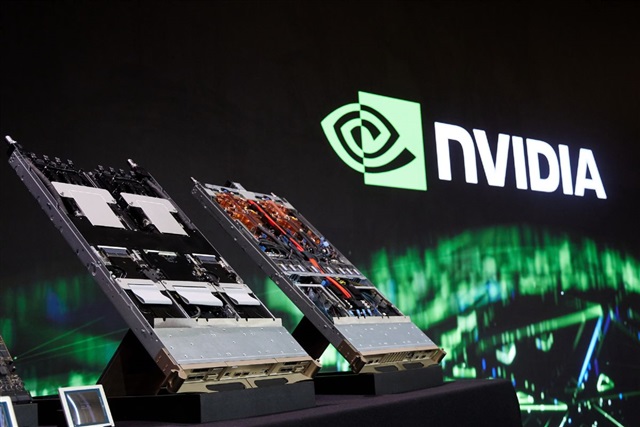
Nvidia Begins Full Production of Vera Rubin AI Systems
Nvidia has confirmed that computing systems powered by its next-generation Vera Rubin architecture are now in full production.
The semiconductor company said it has already delivered the systems to several leading artificial intelligence developers. Major customers are also beginning to deploy the new hardware across their data centers.
Vera Rubin Systems Reach Major Customers
Ian Buck, Nvidia’s vice president and general manager, confirmed the production milestone during a briefing at the company’s headquarters in Santa Clara.
According to Buck, Vera Rubin systems are being installed across Nvidia’s largest customer networks.
The update suggests that the rollout is progressing according to schedule, despite earlier investor concerns about possible manufacturing delays and supply chain difficulties.
Nvidia Meets Its Aggressive AI Hardware Timeline
The production update provides reassurance that Nvidia is maintaining the fast development schedule promoted by CEO Jensen Huang.
Investors closely monitor the company’s ability to launch new AI chips on time. Any production setback could affect Nvidia’s growth outlook and create uncertainty across the wider semiconductor industry.
By moving Vera Rubin into full production, Nvidia has reduced some of those concerns.
OpenAI Plans Large-Scale Vera Rubin Deployment
Several major technology companies are preparing to use the new architecture.
OpenAI reportedly plans to deploy Vera Rubin systems at scale by the third quarter.
CoreWeave, Google Cloud, Microsoft Azure, Meta and Dell Technologies are also integrating the platform into their data center infrastructure.
These companies operate some of the world’s largest cloud computing and artificial intelligence networks.
Vera Rubin Succeeds Blackwell
The Vera Rubin architecture is named after the American astronomer known for her research into dark matter.
It follows Nvidia’s successful Hopper and Blackwell chip generations.
Nvidia designed Vera Rubin to manage the rapidly increasing computing requirements of advanced AI systems. These workloads include both model training and inference, when trained models generate answers or complete tasks.
Why the Vera Rubin Launch Matters
Artificial intelligence models require increasingly powerful computing systems.
As developers build larger and more advanced models, the demand for processing power, memory and data center capacity continues to rise.
Vera Rubin is intended to help Nvidia’s customers handle these workloads more efficiently.
The platform could therefore support the next wave of large language models, generative AI tools and other advanced applications.
Production Update Eases Investor Concerns
Wall Street closely follows Nvidia’s manufacturing schedules because the company remains one of the most important businesses in the AI industry.
Even minor reports of delays can affect Nvidia shares and put pressure on other semiconductor stocks.
The confirmation that Vera Rubin has entered full production reduces fears that technical or manufacturing problems could slow the launch.
Nvidia Faces Growing Competition
Nvidia remains the leading supplier of AI accelerators. However, competition across the industry is increasing.
AMD continues to develop more powerful chips designed for artificial intelligence workloads.
At the same time, major Nvidia customers such as Amazon, Google and Microsoft are investing heavily in their own custom processors.
These companies want to reduce their dependence on external chip suppliers and gain more control over their data center infrastructure.
Successful Rollout Could Protect Nvidia’s Market Lead
A smooth Vera Rubin launch is important for Nvidia’s long-term competitive position.
The company must continue offering better performance, stronger software support and faster product development than both traditional chipmakers and custom silicon developers.
Successful deployment across major cloud and AI companies would strengthen Nvidia’s argument that its technology remains essential to the industry.
Vera Rubin Could Power Future AI Breakthroughs
Computing capacity remains one of the biggest limitations facing artificial intelligence developers.
More powerful hardware allows companies to train larger models, process more data and introduce more advanced features.
With OpenAI and other major developers preparing to use Vera Rubin, Nvidia’s latest architecture could become a core platform for the next generation of artificial intelligence systems.