Chinese President Xi Jinping presented China as a potential leader of a new global artificial intelligence order on Friday.
Speaking at the World Artificial Intelligence Conference in Shanghai, Xi promoted open-source AI development and outlined Beijing’s ambition to influence the international rules governing the technology.
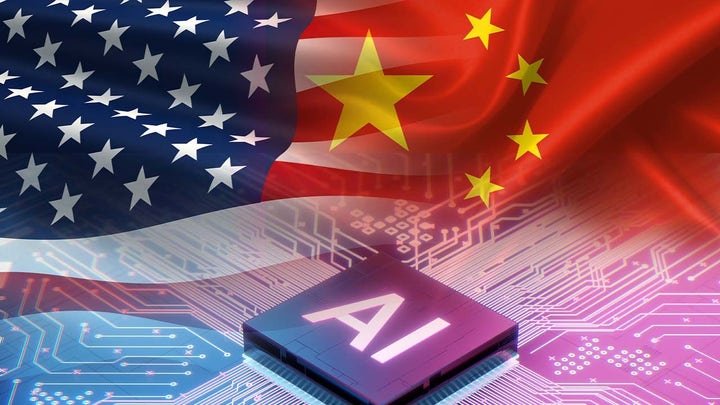
His message also positioned China as an alternative to the United States in the intensifying global race for AI leadership.
Xi Promotes Open-Source Artificial Intelligence
Xi urged governments to take advantage of what he described as a rare opportunity created by open-source AI.
He said China would support developing economies seeking to build their own artificial intelligence capabilities. According to Xi, unequal access to AI could create new forms of global inequality.
Beijing is therefore presenting its open-source models as technology that can be shared more widely, particularly with nations that lack the resources to develop advanced systems independently.
China Seeks a Greater Role in Global AI Governance
The speech represented one of Xi’s clearest statements about China’s intention to shape global AI governance.
He argued that artificial intelligence could transform society in a similar way to electricity and the steam engine.
Under his vision, China would share AI knowledge, infrastructure and technical expertise with countries across the Global South. At the same time, Beijing would help establish international standards for the development and use of the technology.
Beijing Offers an Alternative to the US AI Strategy
Xi did not directly name the United States. However, his proposals appeared to challenge the US-led approach to artificial intelligence and technology supply chains.
China’s emerging AI coalition could compete with the US-backed Pax Silica initiative, which aims to strengthen international supply chains for artificial intelligence technology and critical minerals.
The competing strategies highlight a growing struggle between Washington and Beijing over who will shape the future of AI development.
Chinese Open AI Models Gain Ground
Xi’s comments came as Chinese open-weight AI models continued to improve and compete with proprietary systems developed by American companies.
US firms such as OpenAI and Anthropic remain major players in advanced artificial intelligence. However, Chinese developers are increasingly promoting cheaper and more accessible alternatives.
Beijing-based Moonshot AI used the conference to unveil Kimi K3, which the company described as the world’s largest open AI model based on its number of parameters.
The launch came one month after the US government reportedly withdrew access to Anthropic’s most advanced models over security-related concerns.
Xi Warns About AI Safety Risks
Xi also addressed the potential dangers associated with increasingly autonomous AI systems.
He said artificial intelligence must remain under meaningful human control. Governments should also develop early-warning systems and emergency procedures to respond to major AI-related threats.
Xi warned that advanced systems could create serious risks if they were able to avoid human supervision or operate beyond the control of their developers.
His remarks indicated that China wants to play a leading role not only in AI innovation, but also in discussions about international AI safety.
World AI Cooperation Organisation Expands
Xi praised the China-backed World AI Cooperation Organisation, known as WAICO, after it secured 29 member countries.
He described the organisation as an important development in the history of global artificial intelligence cooperation.
According to Beijing, the group responds to demands from developing nations seeking greater representation in international AI policymaking.
China plans to provide AI training and establish cooperation centres with members of BRICS and ASEAN. It also intends to expand partnerships with countries in Latin America and the African Union.
These initiatives build on China’s existing political and economic influence across many Global South regions.
Analysts See a Clear Leadership Ambition
George Chen, Chair of Digital Practice at consultancy The Asia Group, said Xi’s message showed that China did not intend to follow another country’s direction on AI technology or regulation.
Instead, Beijing appears determined to lead both the development of artificial intelligence and the creation of global standards.
Chen also suggested that Xi’s speech could be interpreted as a warning that China would resist external pressure over how it develops and regulates AI.
US-China AI Talks Approach
The World Artificial Intelligence Conference is taking place from July 17 to July 20.
The gathering comes as Washington and Beijing prepare for their first government-level discussions on artificial intelligence under US President Donald Trump’s administration.
This has transformed the Shanghai event from a technology showcase into an important test of China’s strategy for competing over global AI influence.
The two countries recently presented different positions during a United Nations discussion on artificial intelligence.
US officials argued that excessive regulation could slow innovation. China, meanwhile, promoted affordable open-source models as a way to reduce unequal access to AI technology.
Global Leaders Attend Shanghai AI Conference
The conference attracted senior political figures alongside many of China’s largest technology companies.
Attendees included United Nations Secretary-General António Guterres, Kazakhstan President Kassym-Jomart Tokayev and Thai Prime Minister Anutin Charnvirakul.
Their participation highlighted the growing importance of AI governance in international diplomacy.
China’s message from Shanghai was clear: Beijing wants to be recognised not only as a major artificial intelligence developer, but also as a central force in determining the global rules that will govern the industry.