U.S. Dollar Weakens After Softer Producer Inflation
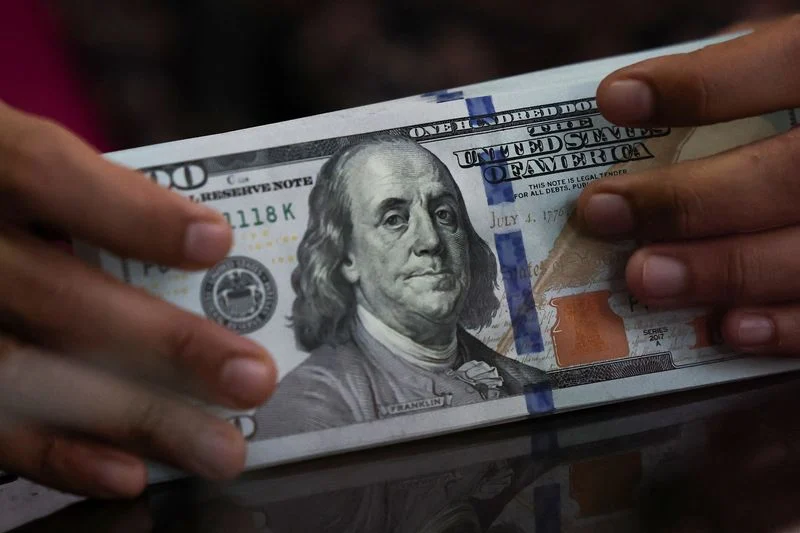
The U.S. dollar slipped against several major currencies on Wednesday after producer inflation came in below market expectations.
The weaker data reinforced signs that price pressures are easing. It also supported the view that the Federal Reserve can remain patient before raising interest rates again.
However, renewed military action involving Iran kept geopolitical risks and energy-driven inflation concerns in focus.
U.S. Producer Prices Fall in June
The Producer Price Index for final demand declined by 0.3% in June, according to the Bureau of Labor Statistics.
May’s increase was revised down to 0.6%. Economists surveyed by Reuters had expected producer prices to remain unchanged after an initially reported 1.1% rise in May.
The unexpected decline suggested that inflationary pressures at the wholesale level may be cooling faster than anticipated.
Dollar Index Extends Its Pullback
The U.S. dollar index, which measures the currency against six major peers, fell by 0.09% to 100.79.
The index had already dropped 0.4% during the previous session. That was its largest one-day decline in nearly two weeks, after briefly reaching its highest level since July 2.
Against the Japanese yen, the dollar was little changed at 162.19 yen.
The euro held steady near $1.1433, while the British pound advanced by 0.44% to $1.3447.
Softer PPI Supports a Patient Federal Reserve
Juan Perez, director of trading at Monex USA, said the latest producer price figures strengthened the argument that the Federal Reserve can wait before increasing borrowing costs again.
New York Federal Reserve President John Williams also acknowledged that inflation remained too high. However, he suggested that price pressures may have peaked and could begin moving lower.
Williams added that monetary policy remained well positioned to guide inflation back toward the central bank’s target.
Middle East Escalation Keeps Oil Prices Elevated
Renewed tensions between the United States and Iran prevented the dollar from falling more sharply.
Oil prices remained close to one-month highs as investors considered the inflationary impact of further military escalation.
The U.S. military announced a new wave of strikes on Iran beginning at 6 a.m. Eastern Time on Wednesday.
The action followed President Donald Trump’s announcement that Washington had reintroduced a naval blockade covering Iranian ports.
Safe-Haven Demand Could Support the Dollar
The dollar has generally benefited during periods of heightened conflict because investors often view it as a safe-haven asset.
The U.S. economy is also considered less vulnerable to rising energy costs than some major trading partners. This relative advantage can support the dollar when oil prices increase sharply.
As a result, geopolitical uncertainty may limit the currency’s losses even when softer inflation data reduces expectations for tighter Federal Reserve policy.
Consumer Inflation Also Cools
The producer price report followed weaker-than-expected U.S. consumer inflation data released on Tuesday.
Annual consumer inflation slowed to 3.5% in June. Meanwhile, the headline Consumer Price Index fell by 0.4% from the previous month.
It was the first monthly decline in consumer prices since April 2020, largely because energy costs moved lower.
Steve Kolano, chief investment officer at Integrated Partners, said recent declines in both consumer and producer inflation were mainly linked to energy price volatility after the earlier Iran ceasefire.
However, he warned that the latest geopolitical developments could reverse that trend.
Kevin Warsh Maintains a Firm Inflation Position
Federal Reserve Chair Kevin Warsh told the House Financial Services Committee that the central bank would not accept persistently high inflation.
He also pledged to carry out his responsibilities even if political pressure emerged from the Trump administration.
His comments reinforced the view that the Federal Reserve could still tighten monetary policy if renewed energy inflation begins spreading into the broader economy.
Traders Reduce December Rate-Hike Expectations
Interest-rate markets are now pricing in approximately a 74% probability of a Federal Reserve rate increase in December.
That figure declined from around 80% during the previous session, according to LSEG data.
A rate increase later this month is considered highly unlikely.
The shift in market expectations reflects the competing influence of cooling domestic inflation and renewed risks from oil prices and geopolitical conflict.
China’s Growth Slows Sharply
Elsewhere, China’s economy expanded by 4.3% during the second quarter.
That was the country’s weakest growth rate in more than three years.
The Chinese yuan briefly strengthened to a one-month high as the disappointing figures increased expectations that Beijing could introduce additional economic support.
Dollar Outlook Remains Supported
Elias Haddad, global head of markets strategy at Brown Brothers Harriman, said the dollar’s decline following the inflation reports may have limited room to continue.
He pointed to the relative strength of the U.S. economy, the Federal Reserve’s commitment to controlling inflation, and continued foreign demand for U.S. assets.
These factors could provide support for the dollar despite softer CPI and PPI figures.
Investors will now monitor developments in the Middle East, oil prices, Federal Reserve commentary, and upcoming economic data for further direction.