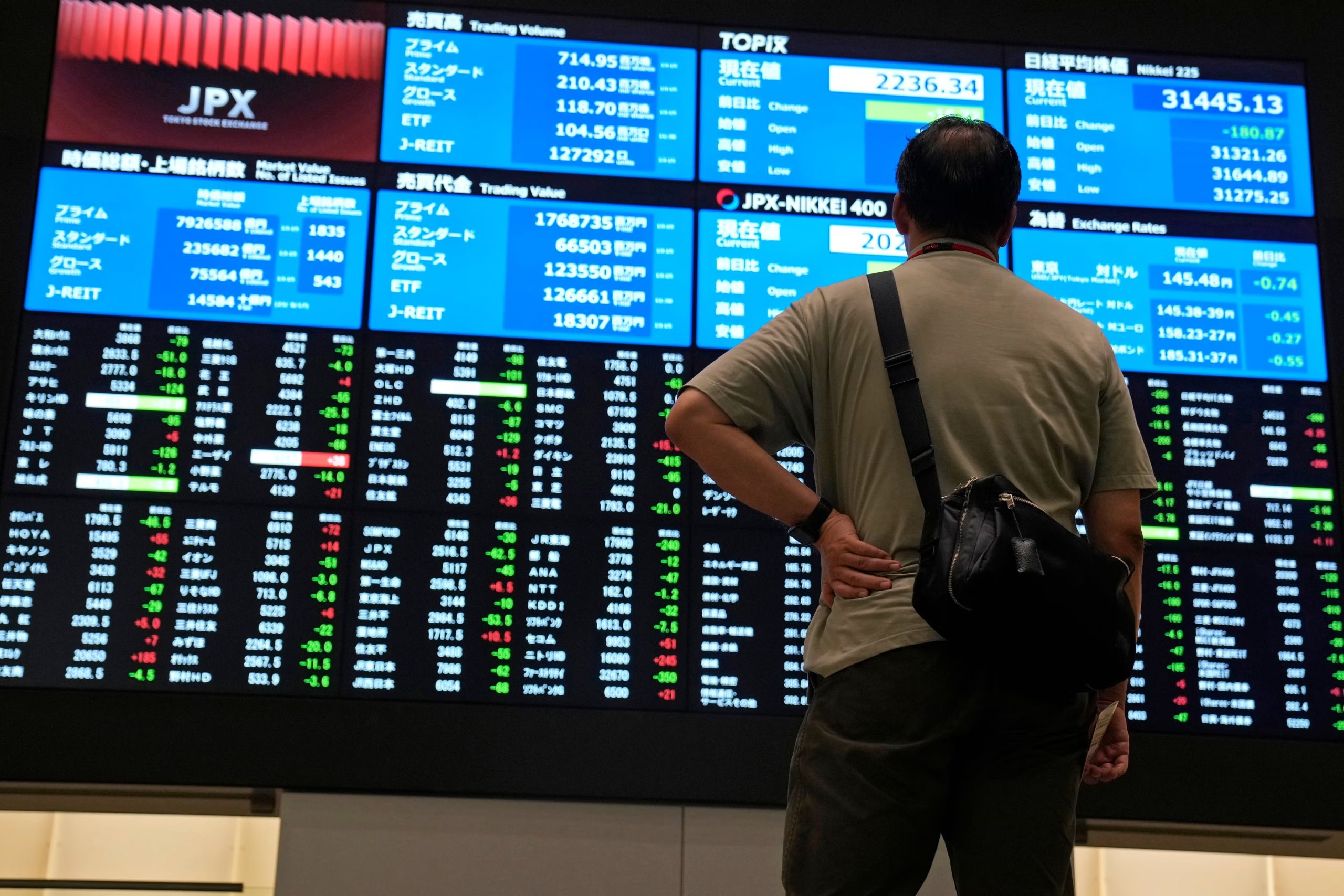
Asian stock markets moved mostly higher on Thursday. Investors reacted positively to mixed Chinese inflation data, which strengthened hopes that Beijing may introduce more policy support.
However, market sentiment remained cautious. Renewed U.S. military strikes on Iran kept geopolitical risk in focus, especially after a volatile week for artificial intelligence-linked stocks.
Wall Street Ends Mixed as Fed Stays Cautious
Wall Street closed mixed overnight after the Federal Reserve’s June meeting minutes showed a cautious stance on interest rates.
In Asian trade, Nasdaq 100 Futures rose 0.3%, while S&P 500 Futures also gained 0.3%. This helped support broader market sentiment across the region.
AI Stocks Stabilize After Sharp Valuation Reset
The rebound came after a difficult week for semiconductor and AI-related shares.
Samsung Electronics reported a 19-fold increase in quarterly operating profit. Still, the result failed to meet high investor expectations. As a result, global AI stocks came under pressure earlier in the week.
An initial attempt to buy the dip faded in the previous session. However, sentiment appeared more stable on Thursday.
Investors Question AI Stock Valuations
Investors are now watching whether AI-related earnings can continue to support elevated valuations.
The long-term AI investment trend remains strong. Even so, the sector’s powerful first-half rally has made investors more sensitive to disappointing results.
South Korea remained at the center of the regional AI trade. Samsung Electronics fell another 1.7%, extending losses after its nearly 7% drop on Tuesday. LG Innotek also declined more than 4%.
However, SK Hynix rebounded nearly 3%. Demand for its planned $28 billion U.S. share sale was more than seven times the available shares. This showed that investor appetite for AI infrastructure remains strong despite the recent correction.
KOSPI Recovers but Bear Market Concerns Remain
South Korea’s KOSPI recovered around 0.6% on Thursday.
Still, the index remained under pressure after officially entering bear-market territory earlier this week. It has now fallen more than 20% from last month’s record high, as investors reassess stretched AI valuations.
Japan Stocks Outperform Regional Markets
Japan was one of the strongest markets in Asia.
The Nikkei 225 climbed nearly 1.9%, while the TOPIX gained 0.2%. Semiconductor suppliers supported the move higher.
Murata Manufacturing advanced almost 4%, and TDK rose more than 2%. Kioxia Holdings climbed over 7% after Bain Capital confirmed it had fully exited its investment. The deal marked one of Japan’s most successful private-equity investments.
China Inflation Data Boosts Stimulus Hopes
Mainland Chinese stocks outperformed after June inflation data increased expectations for more policy support from Beijing.
Consumer prices remained weak, while producer prices stayed in deflation. This reinforced the view that China may need further stimulus to support domestic demand.
The Shanghai Shenzhen CSI 300 rose about 1.8%. The Shanghai Composite also reversed earlier losses and gained nearly 0.9%.
However, Hong Kong’s Hang Seng fell around 0.8%, giving back part of its recent rally.
Regional Markets React to China Stimulus Expectations
Hopes for further Chinese stimulus supported sentiment across Asia.
Investors are betting that stronger demand in China could help regional exports. This is especially important because China remains Asia’s largest economy and a key trading partner for Southeast Asia.
Australia’s S&P/ASX 200 slipped 0.3%. Singapore’s STI rose nearly 1%, while India’s Nifty 50 gained around 0.7%.
Thailand’s SET advanced roughly 1.5%, and Indonesia’s benchmark index edged slightly higher.
Investors will now focus on China’s June trade data next week. The report could offer a clearer view of external demand.
Inflation Data Points to Easing Price Pressures
Regional inflation data this week showed easing headline price pressures in Thailand, Taiwan and the Philippines.
However, Maybank noted that stronger core inflation in the Philippines still supports its view that the Bangko Sentral ng Pilipinas may raise rates by another 25 basis points later this year.
Iran Tensions Keep Risk Appetite Limited
Geopolitical risk remained a key concern for investors.
The United States launched another round of strikes on Iranian military infrastructure. The attacks were aimed at protecting shipping through the Strait of Hormuz.
In response, Iran launched fresh missile and drone attacks targeting U.S. military facilities in Kuwait and Bahrain.
President Donald Trump said a temporary understanding with Tehran was effectively “over.” However, he later played down the chances of a wider conflict.
Oil Prices Keep Inflation Risks in Focus
Higher oil prices continued to worry investors.
Although crude prices remained below the highs reached earlier in the conflict, the market stayed alert to any further escalation in the Middle East.
A prolonged rise in oil prices could increase inflation pressure and complicate the global interest-rate outlook.
Fed Minutes Highlight Inflation and Rate Risks
The Federal Reserve’s June meeting minutes showed that policymakers remain cautious about inflation.
Officials discussed several risks that could keep prices elevated. These included strong AI-related demand, Middle East tensions and tariffs.
The minutes also suggested that additional policy tightening could still be needed if inflation remains persistent.
Malaysia Holds Rates as Investors Await Key Data
Bank Negara Malaysia kept its Overnight Policy Rate unchanged at 2.75%, as widely expected.
Investor focus now shifts to China’s June trade figures and upcoming U.S. consumer inflation data. Both reports could provide important clues about the global interest-rate outlook.
The next earnings season will also be important. Investors will be watching closely to see whether AI-driven profit growth can justify high semiconductor valuations.