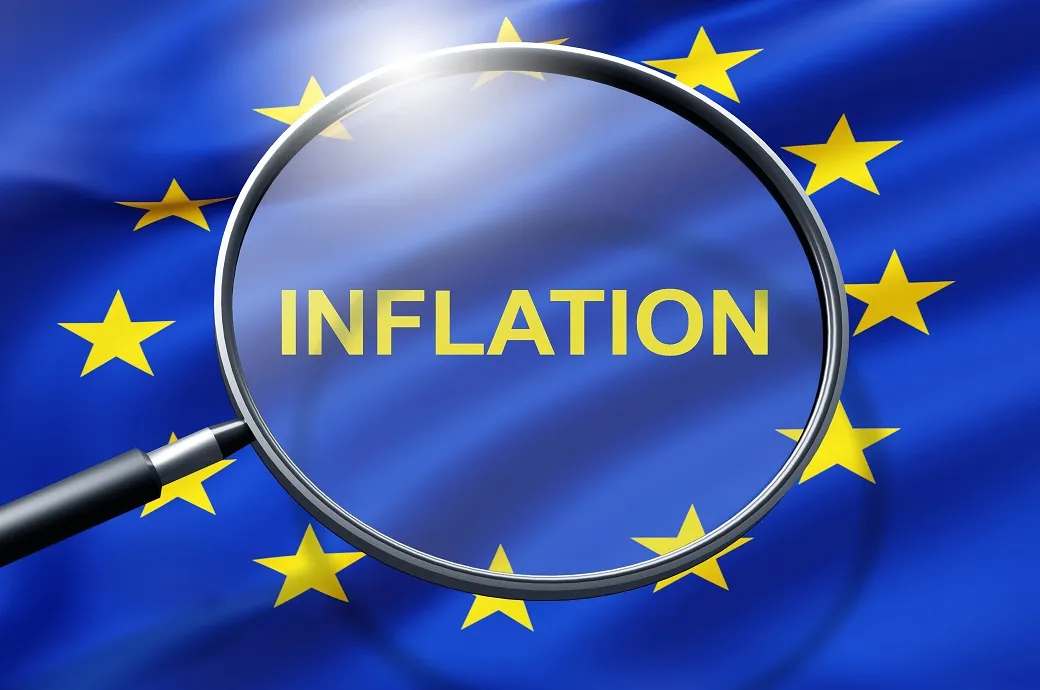
Consumer price growth across the Eurozone slowed in June as energy inflation began to ease.
The decline may reduce concerns that the conflict involving Iran would trigger a lasting surge in prices across Europe.
According to preliminary Eurostat data, consumer prices in the 21-member currency bloc rose 2.8% in the 12 months to June.
That was below the 3.2% increase recorded in May and weaker than economists’ forecast of 3.0%.
Inflation Undershoots the ECB Forecast
The latest reading brought average Eurozone inflation for the second quarter to 3.0%.
Capital Economics noted that this was below the European Central Bank’s forecast of 3.2%.
The softer data may give policymakers some reassurance that recent energy price pressures are beginning to fade.
Energy Inflation Remains High but Slows
Energy prices recorded the strongest annual increase among the main inflation categories.
However, energy inflation slowed to 8.7% in June from 10.8% in May.
Oil prices have also returned to around their pre-war levels following a framework peace agreement between the United States and Iran.
Brent crude had previously climbed above $110 per barrel after the conflict began in late February.
The surge was largely driven by the effective closure of the Strait of Hormuz, a crucial route for around one-fifth of the world’s oil and liquefied natural gas supplies.
Energy Inflation Could Fall Again in July
Capital Economics said energy inflation could decline further in July if oil and natural gas prices remain close to current levels.
The earlier rise in energy costs had raised fears that inflation would spread across a wider range of goods and services.
Europe was less exposed than some other regions to the disruption in the Strait of Hormuz. Even so, the continent was affected by the conflict, particularly through attacks on important natural gas facilities in the Gulf.
Core Inflation Also Eases
Price growth for services, food, alcohol and tobacco also moderated in June.
Core inflation, which excludes volatile items such as food and energy, slowed to 2.4%.
That was down from 2.6% in May and below economists’ forecast of 2.5%.
Capital Economics suggested that airlines may have absorbed much of the earlier increase in jet fuel costs.
Jet fuel prices have now returned to around the levels seen before the conflict began.
ECB Faces a Difficult Policy Decision
The European Central Bank raised interest rates last month for the first time in around three years.
It became the first G7 central bank to respond to renewed inflation concerns by increasing borrowing costs.
ECB policymakers also raised their inflation forecasts for 2026 and 2027. At the time, they warned that the conflict in the Middle East was creating additional price pressures.
Further ECB Rate Hikes Remain Possible
The ECB’s latest rate decision came before the United States and Iran signed their memorandum of understanding.
European policymakers have welcomed the preliminary agreement.
However, they have also indicated that the deal may not be enough to prevent further interest rate increases.
The ECB remains focused on keeping inflation under control, particularly while energy prices and geopolitical risks remain uncertain.