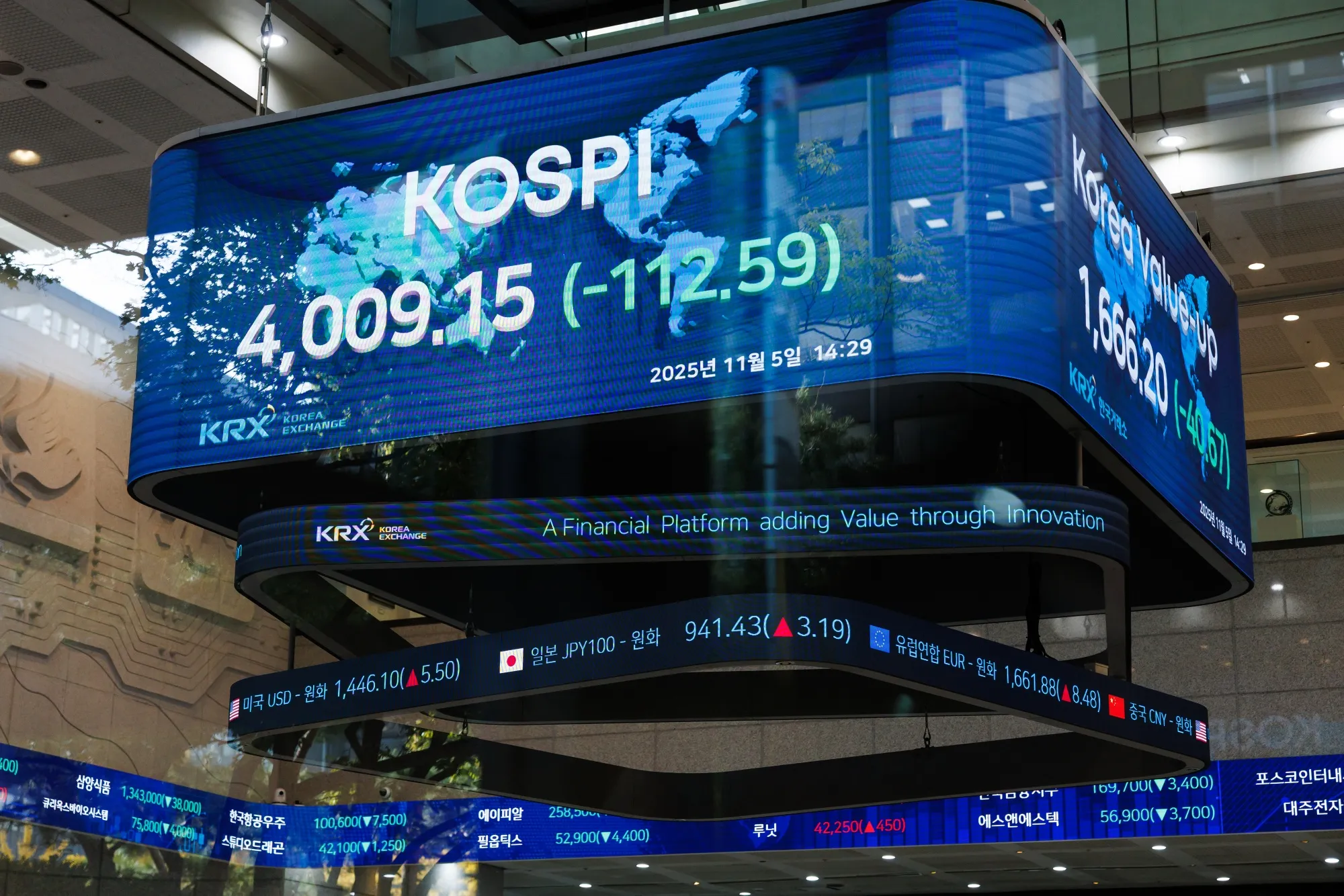
Asian stock markets traded mixed on Wednesday as South Korean shares fell sharply after a powerful quarterly rally. Meanwhile, stronger manufacturing data supported gains in China and Japan.
Investors also remained cautious ahead of key US economic data, fresh Federal Reserve signals, and further developments in the Middle East.
KOSPI Falls After Exceptional Quarterly Rally
South Korea’s KOSPI recorded the steepest decline in the region, falling about 2%.
The drop came as investors took profits following one of the index’s strongest quarterly performances in years. The KOSPI surged nearly 65% during the three months through June, helped by strong demand for artificial intelligence and semiconductor stocks.
Japan’s Nikkei 225 also delivered a strong quarter, rising more than 36%. Meanwhile, the MSCI Asia ex-Japan Index gained approximately 21%.
Wall Street Records Strong Second Quarter
Cautious sentiment followed a strong finish on Wall Street, where major US stock indexes ended the second quarter near record highs.
However, US stock futures moved lower on Wednesday as investors waited for new market drivers.
S&P 500 futures fell 0.3%, while Nasdaq 100 futures declined 0.5%.
Iran-US Talks Keep Markets Cautious
Geopolitical uncertainty also remained in focus.
Iran rejected direct talks with US representatives in Qatar, although indirect negotiations continued through Qatari mediators.
The discussions focused partly on maintaining access through the Strait of Hormuz, a vital shipping route for global oil supplies.
Reduced fears of major disruptions in the strait supported broader risk appetite. However, uncertainty over a final agreement continued to limit market confidence.
China Stocks Rise on Strong Factory Data
Chinese equities advanced after manufacturing data showed continued expansion in June.
A private RatingDog survey also indicated that factory activity remained in growth territory. Strong export demand helped offset weaker domestic consumption.
The Shanghai Composite gained 0.6%, while the CSI 300 rose 0.3%.
Hong Kong markets remained closed for a public holiday.
Japan Shares Gain on Improving Business Confidence
Japanese stocks also moved higher after several positive economic reports.
The Bank of Japan’s Tankan survey showed that confidence among large manufacturers improved during the second quarter.
The final au Jibun Bank manufacturing PMI remained above the 50 level that separates growth from contraction. It also came in higher than May’s reading.
The Nikkei 225 rose 0.6%, while the broader TOPIX gained 0.4%.
AI Demand Supports Japan Market Outlook
Bank of America raised its year-end forecasts for the Nikkei 225 and TOPIX.
The bank cited stronger-than-expected artificial intelligence demand and a greater likelihood that the Strait of Hormuz would remain open.
Improving factory activity and continued investment in AI-related industries have strengthened confidence in the outlook for Japanese companies.
South Korea Exports Surge Despite Market Decline
The fall in the KOSPI came despite strong South Korean trade data.
Exports increased 70.9% from a year earlier in June, while imports rose 30.1%.
The country’s trade surplus widened to a record $36.15 billion.
However, investors focused on taking profits after the KOSPI’s sharp second-quarter rally.
SK Holdings Drops More Than 8%
SK Holdings was among the session’s weakest individual performers.
The stock fell more than 8%, underperforming the broader South Korean market.
The decline came despite the company announcing a 2 trillion won, or approximately $1.3 billion, renewable energy joint venture with private equity firm KKR.
Southeast Asian Markets Show Mixed Performance
Indonesia’s Jakarta Composite Index gained more than 1.3%.
The rise followed data showing a moderate increase in inflation and a continued trade surplus. The figures supported confidence in Indonesia’s economy, even though manufacturing activity remained in contraction.
Factory conditions across Southeast Asia were broadly resilient.
Thailand’s manufacturing PMI rose to 53.6, while Malaysia’s improved to 50.7. Manufacturing activity in the Philippines also strengthened slightly.
However, Indonesia’s manufacturing PMI remained below the expansion threshold.
Thailand Stocks Slip Despite Stronger PMI
Thailand’s SET Index fell around 0.4% despite improved factory activity.
Investors remained cautious ahead of important US economic data and continued to monitor domestic political uncertainty.
The stronger manufacturing figures still suggested that industrial momentum in the region was improving.
Australian Shares Fall on Weak Building Approvals
Australia’s S&P/ASX 200 declined approximately 0.6%.
The market came under pressure after building approvals unexpectedly fell 1.1% in May.
The weaker result raised concerns about the outlook for construction and the broader Australian economy.
Investors Await US Payrolls and Fed Signals
Markets are now focused on several major events that could shape sentiment during the second half of the year.
Investors will closely watch Federal Reserve comments, Thursday’s US employment report, the start of the US earnings season, and further developments in the Middle East.
These factors are likely to influence risk appetite across Asian stock markets in the coming sessions.