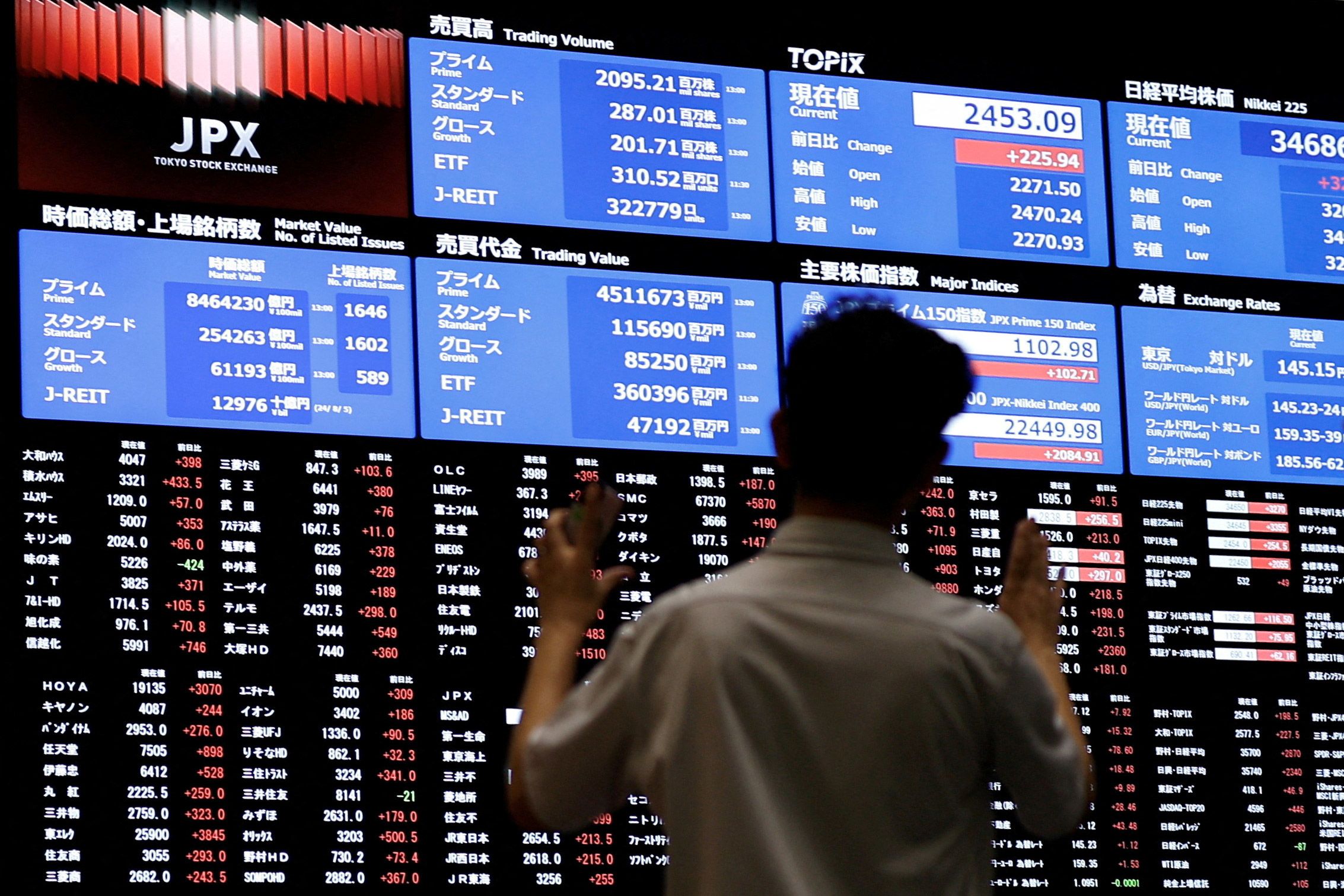
Asian stocks climbed on Thursday as Micron Technology’s upbeat earnings and outlook renewed confidence in artificial intelligence spending.
The positive forecast triggered another rally in semiconductor shares and helped regional markets recover further from the technology-led sell-off earlier in the week.
U.S. stock futures also moved higher during Asian trading. S&P 500 futures gained around 0.6%, while Nasdaq 100 futures jumped approximately 2%.
Micron’s stronger-than-expected results and bullish guidance eased concerns that elevated technology valuations could bring the AI-driven market rally to an end.
Markets Await US PCE Inflation Data
Investors are also preparing for the release of the latest U.S. Personal Consumption Expenditures price index.
The PCE index is the Federal Reserve’s preferred inflation measure. Therefore, the report could provide important clues about the future direction of U.S. interest rates.
A stronger-than-expected inflation reading could reinforce expectations that the Federal Reserve will maintain restrictive monetary policy for longer.
Semiconductor Rally Lifts South Korea and Japan
South Korea and Japan led gains across Asian stock markets as semiconductor companies rebounded sharply.
South Korea’s KOSPI surged 5.7%, while Japan’s Nikkei 225 rallied approximately 5%.
The advance followed Micron’s positive outlook, which highlighted resilient demand for memory chips used in artificial intelligence applications.
Earlier in the week, concerns about stretched technology valuations had contributed to a sharp global sell-off.
Samsung and SK Hynix Lead KOSPI Recovery
Samsung Electronics closed 5.3% higher, while SK Hynix surged 13.9%.
The gains helped recover part of the approximately $1.3 trillion erased from global technology stocks during the earlier rout.
Memory chipmakers benefited from renewed expectations that AI infrastructure investment will continue supporting demand for advanced semiconductors.
SK Hynix was among the strongest-performing companies as investors returned to stocks connected to AI data centres and high-performance computing.
Japanese Chip Stocks Record Strong Gains
Japanese semiconductor shares also posted substantial advances.
Advantest climbed 14.9%, Tokyo Electron rose 8.1% and Kioxia Holdings gained 13.1%.
The strong performance reflected broader optimism that Asian chip manufacturers could remain major beneficiaries of global AI spending.
Chinese Stocks Supported by Sovereign Bond Sale
Mainland Chinese stocks recorded more moderate gains.
The CSI 300 index rose 1.2%, while the Shanghai Composite remained broadly unchanged.
Market sentiment received some support after Beijing began marketing up to €5 billion in sovereign bonds. The transaction could become China’s largest euro-denominated debt sale.
The People’s Bank of China also announced changes to its reverse repo operations. The adjustments are intended to improve the transmission of monetary policy throughout the economy.
Hong Kong Stocks Lag Regional Markets
Hong Kong’s Hang Seng Index fell 1.8%, underperforming most other Asian markets.
Heavyweight banking shares came under pressure amid continued regulatory audit scrutiny. Bank of China and Agricultural Bank of China were among the major decliners.
Losses in financial stocks offset gains across parts of the technology sector.
However, Chinese semiconductor companies followed the broader regional chip rally. Semiconductor Manufacturing International Corporation gained 0.9%, while Hua Hong Semiconductor advanced 0.7%.
Southeast Asian and Indian Markets Advance
Several other Asian stock markets also moved higher.
Indonesia’s Jakarta Composite rallied 2.7%, while the Philippines’ PSEi Composite gained 1.6%.
India’s Nifty 50 advanced 0.9%, and Thailand’s SET Index rose approximately 0.8%.
The widespread gains showed improving risk appetite following Micron’s strong outlook and the rebound in global semiconductor shares.
Australian Stocks Underperform Despite Jobs Data
Australia’s S&P/ASX 200 fell approximately 0.7%, underperforming most regional markets.
The decline came despite data showing that employment increased by 40,300 in May. Australia’s unemployment rate also unexpectedly eased to 4.4%.
The resilient labour market strengthened expectations that the Reserve Bank of Australia could keep monetary policy restrictive for longer.
US-Iran Negotiations Remain in Focus
Investors also continued to monitor negotiations between the United States and Iran.
Markets are watching whether the two countries can build on their interim ceasefire despite continued disagreements over nuclear inspections and regional security.
Further progress could reduce geopolitical uncertainty, while renewed tensions may influence risk sentiment across global stock and commodity markets.