European stocks traded close to flat on Wednesday as investors struggled to regain confidence following a sharp global technology sell-off.
Persistent concerns about the Federal Reserve’s hawkish policy outlook also kept demand for riskier assets under pressure.
Major European Indexes Trade Mixed
The pan-European STOXX 600 opened largely unchanged.
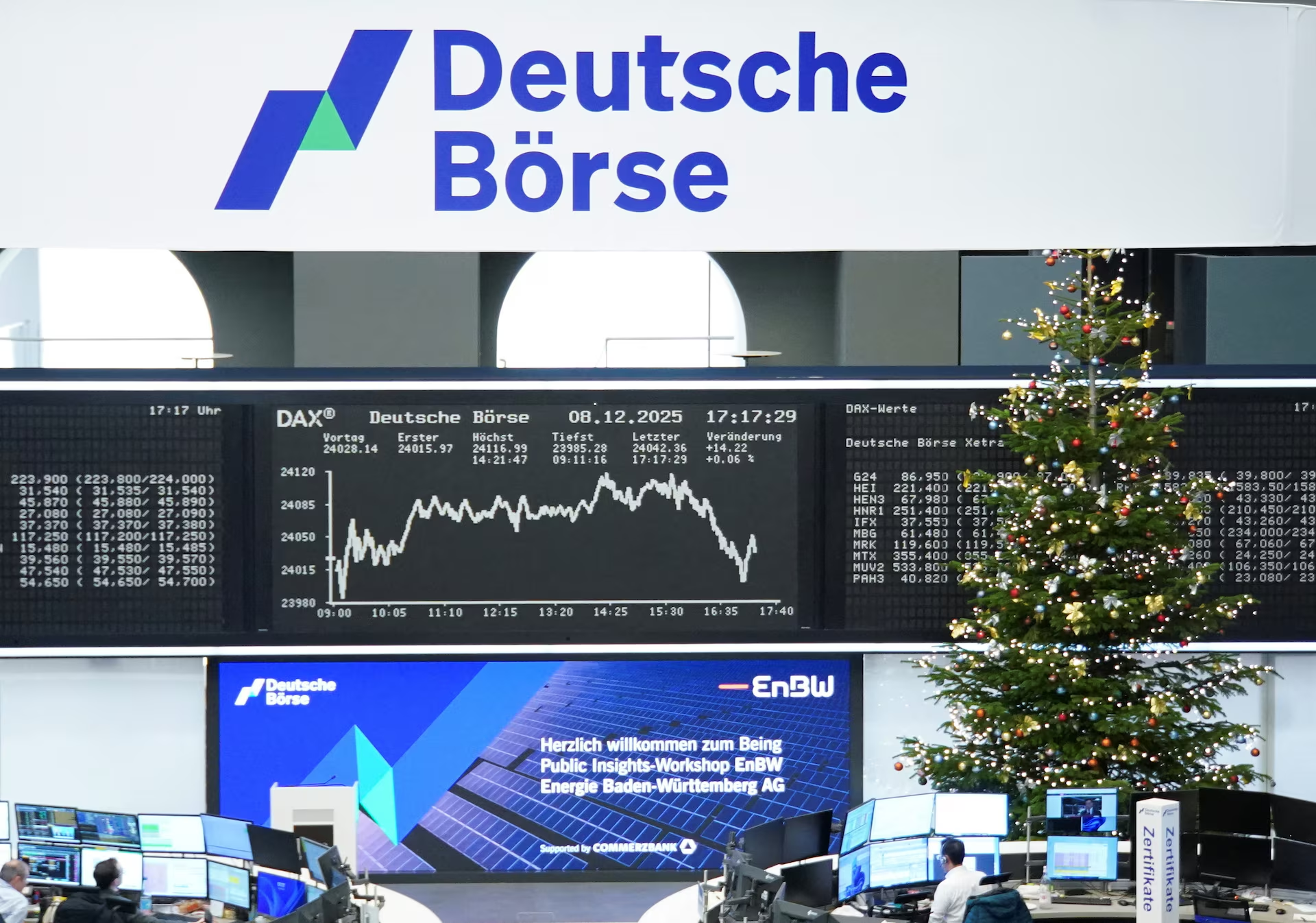
Germany’s DAX fell 0.6%, while France’s CAC 40 gained 0.1%. Italy’s FTSE MIB and the UK’s FTSE 100 both declined by approximately 0.2%.
The quiet session followed heavy technology-sector losses on Tuesday, which pushed the STOXX 600 to its lowest level in more than a week.
Technology Valuations Face Greater Scrutiny
Investors are becoming increasingly cautious about elevated technology valuations and the enormous amounts companies are spending on artificial intelligence.
AI-related shares had previously benefited from strong expectations of future growth. However, investors are now questioning whether corporate earnings can rise quickly enough to justify current prices.
Danni Hewson, head of financial analysis at AJ Bell, said enthusiasm driven by fear of missing out was being replaced by concern that earnings growth may fail to meet high expectations.
Newly Listed Stocks Remain Volatile
Recently listed companies have also experienced greater volatility.
Shares often move sharply after an initial public offering as early investors take profits and new market participants assess what price they are prepared to pay.
This price-discovery process can create significant fluctuations, particularly when overall market sentiment is already weak.
Markets Price in Further Federal Reserve Tightening
Investors are also preparing for the possibility of additional U.S. interest-rate increases.
According to the CME FedWatch tool, bond markets were pricing in approximately 50 basis points of total Federal Reserve tightening before the end of the year.
Markets also assigned a probability of almost 40% to a rate increase as early as July.
Higher U.S. interest rates could place further pressure on global equities by increasing borrowing costs and making government bonds more attractive.
Eurozone Growth Concerns Add Pressure
European investors face additional uncertainty as forward-looking economic indicators continue to point toward weaker growth across the Eurozone.
A restrictive Federal Reserve policy could reduce global demand, while Europe’s domestic economy is already showing signs of slowing.
This combination creates a difficult environment for regional companies, particularly those that depend heavily on international trade and consumer spending.
ECB Faces Inflation and Growth Dilemma
The European Central Bank also faces a difficult policy decision.
Economic momentum remains weak, but inflationary pressures linked to recent geopolitical disruption in the Middle East have not fully disappeared.
As a result, the ECB may need to maintain relatively high borrowing costs even as tighter financial conditions weigh on growth.
UK Markets Confront Political and Economic Risk
British investors are dealing with a separate group of challenges.
The UK economy remains close to stagnation, while the Bank of England has chosen to leave interest rates unchanged.
Markets are also assessing increased political uncertainty following the reported sudden resignation of Prime Minister Keir Starmer.
Together, these factors have added another layer of risk for UK assets.
Segro Surges After Rejecting Prologis Bid
Among individual European stocks, Segro jumped nearly 20% after rejecting a $16 billion takeover offer from Prologis.
The sharp increase suggested that investors believe the bid could highlight substantial underlying value in the logistics property company.
Saipem Gains Following Brazilian Approval
Saipem shares rose 4% after Brazilian authorities approved its proposed merger with Subsea7.
The approval removed an important regulatory obstacle and increased expectations that the transaction could move closer to completion.
Rheinmetall Slumps on Contract Concerns
Rheinmetall shares fell approximately 15% following a report that the German government could cancel an important contract with the defense company.
The report suggested that the contract could instead be awarded to TKMS.
The potential loss of the agreement raised concerns about Rheinmetall’s future revenue outlook and contributed to the steep decline in its share price.