Asian Stocks Fall as US-Iran Uncertainty Returns
Asian stocks moved lower on Friday as renewed uncertainty surrounding the US-Iran peace process weighed on investor sentiment. Technology and semiconductor shares also reversed early gains after a strong rally earlier in the week.
Trading activity across the region remained subdued because markets in China and Hong Kong were closed for holidays. US stock markets were also scheduled to remain closed on Friday.
A positive session on Wall Street initially supported Asian chipmakers, particularly after a rally in Intel shares. However, that momentum faded as geopolitical and interest-rate concerns returned.
US-Iran Peace Talks Face Fresh Doubts
US stock index futures declined during Asian trading after Iranian media reported that Tehran wanted clearer evidence that Washington was implementing their recently signed memorandum of understanding.
Iran reportedly wanted this confirmation before committing to further peace negotiations.
US Vice President JD Vance also withdrew from a planned meeting with Iranian negotiators in Switzerland. Iranian officials appeared reluctant to continue the talks while Israeli military action against Hezbollah in Lebanon remained unresolved.
The developments raised new concerns about the durability of the US-Iran agreement and weakened demand for risk-sensitive assets.
KOSPI Retreats From Record High
South Korea’s KOSPI experienced sharp volatility during the session. The index initially reached a record high of 9,385.59 points before reversing direction and falling by 0.6%.
The decline was mainly driven by profit-taking in major semiconductor companies following their strong performance earlier in the week.
Samsung Electronics shares dropped nearly 2%. SK Hynix remained around 2% higher but pulled back from a record level reached earlier in the session.
Hyundai Shares Fall on Boston Dynamics Report
Hyundai Motor shares declined by almost 1% after local media reported that the automaker planned to purchase SoftBank’s remaining 9.65% stake in Boston Dynamics.
The proposed transaction would give Hyundai full ownership of the robotics company.
Higher US Rates Weigh on Technology Stocks
Semiconductor shares initially followed Wall Street higher, but those gains faded as uncertainty surrounding the US-Iran agreement increased.
The prospect of higher US interest rates also pressured technology stocks. Earlier in the week, the Federal Reserve delivered a more hawkish policy outlook than markets had expected.
Higher borrowing costs can reduce the appeal of technology companies because their valuations often depend heavily on expectations for future growth.
Japan Stocks Pull Back as Inflation Remains Weak
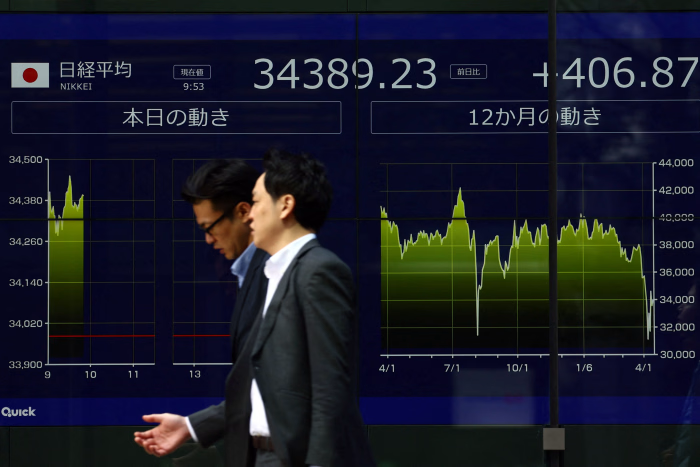
Japan’s Nikkei 225 retreated from a record high reached earlier in the session but remained 0.2% higher. The broader TOPIX index fell by 0.9%.
Official data showed that Japanese consumer inflation remained subdued in May. Core inflation also stayed below the Bank of Japan’s 2% annual target.
Japan’s CPI remained near a four-year low as government subsidies continued to limit the impact of elevated fuel and utility costs.
The inflation report followed the Bank of Japan’s latest interest-rate increase. The central bank also warned that further rate hikes could be necessary if inflationary pressures strengthen.
Although government measures have restricted consumer price growth, producer price inflation has risen sharply in recent months. This trend could eventually lead businesses to pass higher costs on to consumers.
Broader Asian Markets Trade Lower
Most other Asian stock markets also declined during Friday’s session.
Australia’s ASX 200 fell by 1.2%, partly because of losses in BHP Group. The mining company warned of additional cost overruns at a potash project in Canada.
Singapore’s Straits Times Index declined by 0.6%, while India’s Nifty 50 fell by 0.8%.