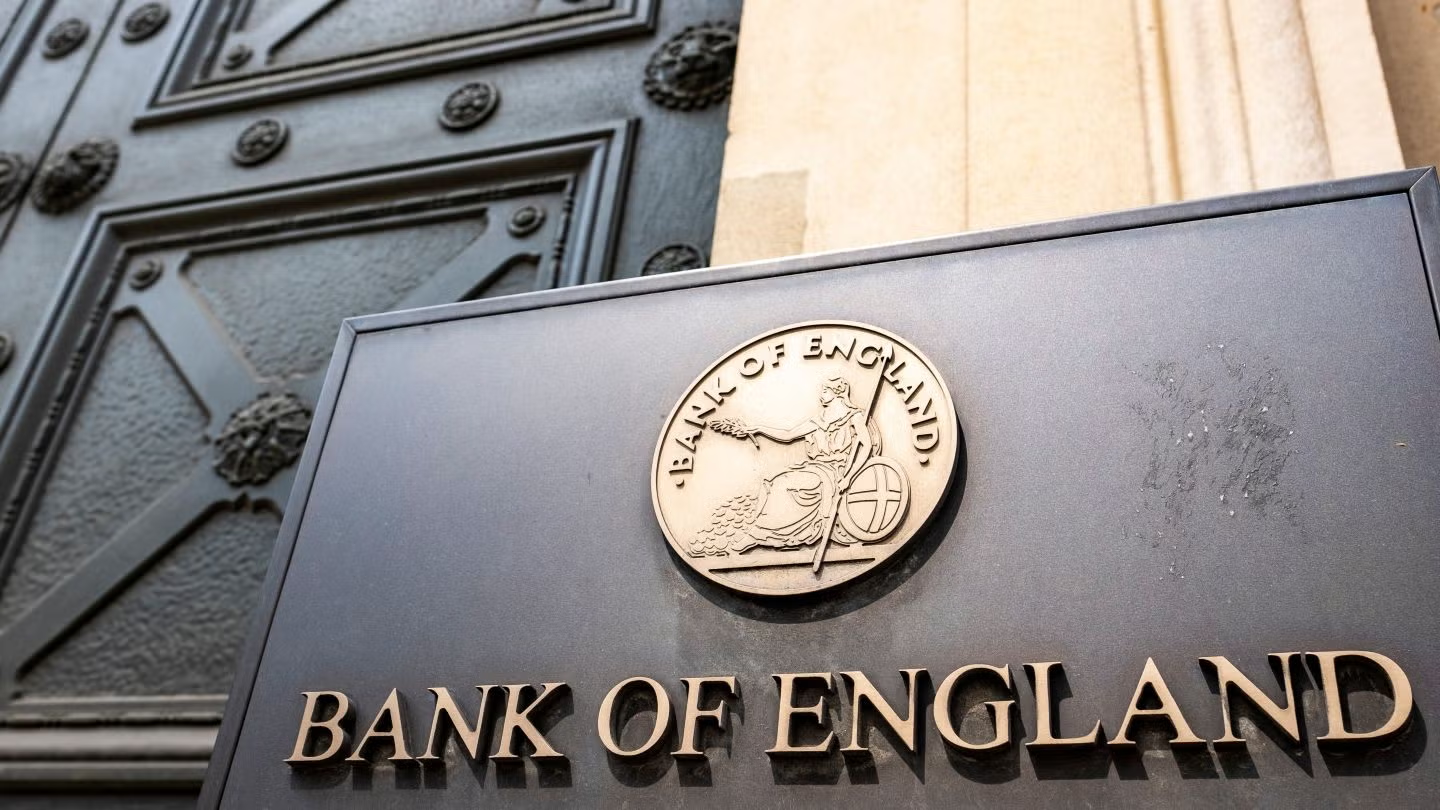
The Bank of England kept UK interest rates unchanged at 3.75% on Thursday, matching market expectations.
The decision followed a similar move by the Federal Reserve earlier in the week. Bank of England policymakers warned that energy prices, although now falling, remain high enough to create further inflation risks.
Energy Prices Remain a Concern for the UK Economy
The Bank of England said global energy prices had declined since its previous meeting following developments in the Middle East.
However, energy costs remain above the levels recorded before the conflict. Prices have also continued to fluctuate sharply, leaving the overall effect on the UK economy uncertain.
Higher energy costs can affect households and businesses through more expensive fuel, electricity, transportation and production. These pressures may eventually spread into the prices of other goods and services.
Bank of England Votes to Hold Rates at 3.75%
The Monetary Policy Committee voted by a majority of seven to two to maintain the Bank Rate at 3.75%.
Like other major central banks, the Bank of England has been assessing how to respond to the rise in energy costs caused by the conflict involving Iran.
The Federal Reserve also kept interest rates unchanged on Wednesday. However, it presented a more hawkish policy outlook. Meanwhile, the European Central Bank raised rates at its meeting the previous week.
U.S.-Iran Agreement Pushes Oil Prices Lower
Oil prices have started moving closer to the levels seen before the joint U.S.-Israeli offensive against Iran began in late February.
The decline followed the signing of an interim peace agreement between Washington and Tehran. The deal is intended to end hostilities and reopen the Strait of Hormuz.
The strait is one of the world’s most important energy shipping routes. Its reopening could reduce concerns about an extended disruption to global oil supplies.
Nevertheless, some analysts believe crude oil prices may remain elevated for an extended period. Markets could continue to include a geopolitical risk premium because Iran may still close the shipping route again if tensions return.
UK Inflation Holds at 2.8%
Recent data showed that UK consumer price inflation remained at 2.8% in May. This matched the 13-month low recorded in April.
However, the Bank of England expects inflation to rise later in the year as the effects of higher energy prices spread through the wider economy.
Policymakers warned that prolonged energy inflation could influence wage negotiations and corporate pricing decisions. These so-called second-round effects could make inflation more difficult to control.
At the same time, a softer labour market and signs of weaker economic growth could help limit some of these pressures.
Inflation Forecasts Remain Above the BoE Target
UK inflation has remained above the Bank of England’s 2% target for much of the past five years.
In April, policymakers warned that the Consumer Price Index could reach 3.5% by the end of 2026.
The latest outlook is slightly more encouraging. Lower energy and non-energy prices have led the central bank to revise parts of its inflation forecast.
CPI inflation is now expected to remain slightly below 3% during the third quarter. It could then increase to just above 3.25% in the fourth quarter.
Both estimates are lower than the path projected in the Bank’s April report. Nevertheless, inflation is still expected to remain well above the official target.
Bank of England Adopts a Wait-and-See Approach
After considering the inflation outlook, energy risks and signs of economic weakness, the Bank of England concluded that keeping rates unchanged was the appropriate decision.
The move reflects the cautious approach that economists had expected before the meeting.
Policymakers also stressed that they remain prepared to adjust monetary policy when necessary. Their objective is to ensure that inflation continues moving sustainably toward the 2% target.
Rate Hold Does Not Rule Out Future Increases
Nick Saunders, chief executive of Webull UK, said the decision to hold rates should not be interpreted as a lack of concern about inflation.
He argued that risks remain tilted toward higher interest rates because a prolonged energy shock could push prices and wages higher.
Keeping the Bank Rate unchanged allows policymakers to preserve the option of raising rates later if inflation accelerates again.
However, this strategy involves a difficult balance. The Bank may eventually need to tighten monetary policy even if the UK economy continues to lose momentum.
Andrew Bailey Says Policy Is Already Restrictive
Bank of England Governor Andrew Bailey previously said the central bank had already tightened monetary policy significantly.
The Bank demonstrated this shift by abandoning earlier plans for a possible interest rate cut in 2026.
Bailey believes policymakers have time to assess the economic consequences of the Middle East conflict before making another move.
Other officials remain concerned that businesses may continue raising prices. Such increases could weaken household confidence in the Bank of England’s ability to control inflation.
British Pound Weakens After the Decision
The British pound declined slightly against the U.S. dollar following the announcement.
Sterling traded close to its lowest level since early April. Meanwhile, the yield on the rate-sensitive two-year UK government bond remained largely unchanged from its level before the decision.
The limited market reaction suggested that investors had already anticipated the Bank of England’s decision to leave interest rates at 3.75%.