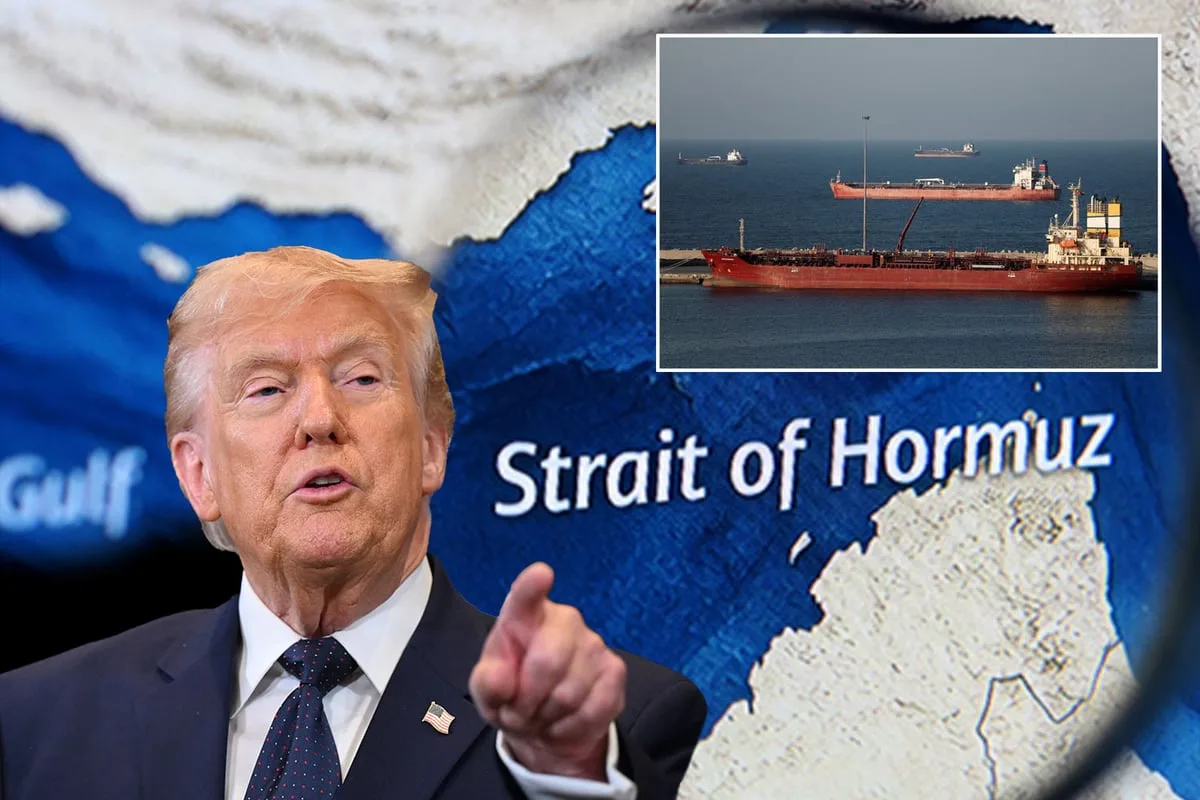
U.S. President Donald Trump said oil tankers have started moving through the Strait of Hormuz as Washington and Tehran work toward finalizing an interim peace agreement.
In a social media post, Trump said ships carrying oil were using a southern route that he described as safe and secure. He added that other shipping routes were also available.
Oil Tankers Return to the Strait of Hormuz
Trump previously said the Strait of Hormuz would reopen after the United States and Iran formally sign their preliminary agreement on Friday.
The waterway, located off Iran’s southern coast, has been largely closed to tanker traffic for several months. Mine-clearing operations were reportedly needed before commercial shipping could safely resume.
Trump also said the United States would lift its long-standing naval blockade of Iranian ports.
The Strait of Hormuz is one of the world’s most important energy routes. Therefore, the return of oil shipments could ease concerns about global supply disruptions.
U.S. and Iran Prepare to Finalize Peace Deal
Officials from the United States and Iran said they had reached a framework designed to end a conflict that has lasted for more than three months.
The war disrupted energy markets, increased inflation concerns and weakened the outlook for global economic growth.
However, neither side has released the full terms of the proposed agreement.
U.S. Vice President JD Vance said he expects the text of the deal to be published this week. Still, he acknowledged that several important details remain unresolved.
Technical Talks Will Address Hormuz Access
Vance said the long-term status of the Strait of Hormuz would be discussed during upcoming technical negotiations.
He added that Washington expects the waterway to remain open without tolls over the long term. However, the two countries must still negotiate the exact arrangements.
Iran appears to have a different interpretation of the proposed framework.
Mehdi Mohammadi, an adviser to the head of Iran’s negotiating team, said the agreement recognizes Tehran’s authority over the Strait of Hormuz. He also said Iran and Oman would continue charging fees for safe passage through the waterway.
Deal Could Remove Sanctions on Iranian Oil
Iran’s Mehr news agency reported that the agreement may include the removal of U.S. sanctions on Iranian oil exports.
The proposed deal could also unfreeze approximately $12 billion in Iranian funds held abroad. Reconstruction plans are reportedly included as well.
These measures could eventually allow more Iranian crude to return to international markets. As a result, global oil supplies could increase if the agreement is implemented successfully.
Nuclear Negotiations May Enter a Second Phase
Media reports suggest the agreement could include a 60-day period for negotiations over Iran’s nuclear program.
Trump said Iran had agreed not to acquire nuclear weapons. However, he did not include that detail in his initial social media announcement.
Washington has repeatedly demanded that Iran stop enriching uranium. Tehran, by contrast, maintains that its nuclear activities are intended for peaceful purposes.
Iranian Foreign Minister Abbas Araghchi suggested that the nuclear issue would be addressed during a second phase of negotiations.
Reports have also indicated that the United States could resume military action if the two sides fail to reach a nuclear agreement.
Stocks Rise as Oil Prices Decline
Global stock markets rallied on Monday following news of the preliminary U.S.-Iran agreement.
Oil prices moved sharply lower as investors reduced expectations of a prolonged disruption to Gulf energy supplies.
Analysts at Capital Economics said the announcement improved sentiment across financial markets.
The closure of the Strait of Hormuz had raised fears of an energy shock. Investors were concerned that higher fuel prices could drive inflation upward and force major central banks to raise interest rates.
Lower Oil Prices Could Ease Inflation Pressure
Recent economic data has suggested that U.S. inflation accelerated, partly because of higher gasoline prices.
The Federal Reserve is widely expected to leave interest rates unchanged when its two-day policy meeting concludes on Wednesday.
However, markets still see a possibility that the central bank could raise borrowing costs later in 2026. Expectations for interest rate cuts have weakened significantly since the beginning of the year.
Analysts at Trade Nation said the decline in oil prices should provide some relief to central banks dealing with persistent inflation.
Nevertheless, investors remain alert to the possibility that political or military setbacks could threaten the agreement during the coming week.
European Leaders Call for Shipping to Resume
Leaders from France, Germany, Italy and the United Kingdom urged both sides to restore shipping through the Strait of Hormuz and quickly complete the remaining negotiations.
Trump is expected to visit France this week for a Group of Seven summit.
Reports suggest that discussions at the summit will focus heavily on the preliminary U.S.-Iran agreement, regional security and the reopening of critical energy routes.