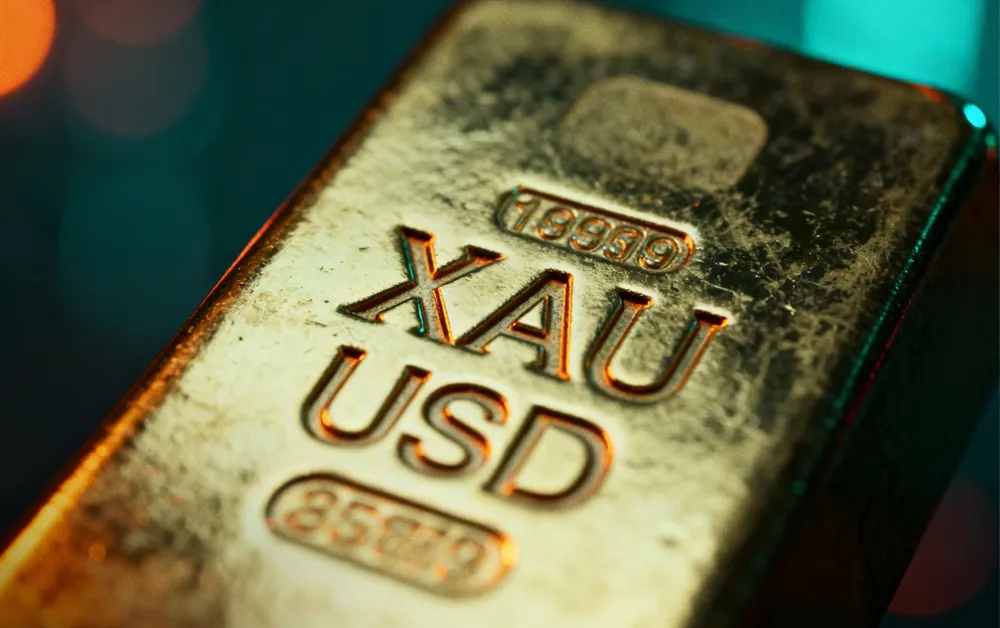
Gold Prices Slip as Investors Monitor Middle East Tensions and Key U.S. Economic Data
Gold prices moved lower on Wednesday as traders evaluated ongoing geopolitical developments in the Middle East while awaiting important U.S. economic reports that could influence expectations for future Federal Reserve interest rate decisions.
Spot gold fell 0.6% to $4,460.87 per ounce, while U.S. gold futures declined 0.7% to $4,488.84 per ounce during early trading hours.
The precious metal has remained largely rangebound in recent sessions as investors balance geopolitical uncertainty against expectations for higher U.S. interest rates.
Middle East Conflict Remains in Focus
Market participants continued to closely monitor developments in the Middle East as tensions remained elevated.
Israel maintained military operations in southern Lebanon, while Iran reportedly launched ballistic missiles targeting Kuwait and Bahrain.
Adding to concerns, the U.S. Central Command confirmed that American forces carried out strikes on Iran’s Qeshm Island. The island is strategically located near the Strait of Hormuz, one of the world’s most important oil shipping routes through which roughly 20% of global oil consumption passes.
The geopolitical situation remains fluid, with another round of talks involving Israel and Lebanon scheduled for Wednesday.
Uncertainty Surrounds U.S.-Iran Negotiations
Investors are also watching developments surrounding diplomatic efforts between the United States and Iran.
Last week, both countries announced that they had reached a preliminary framework agreement aimed at reducing tensions and ending the conflict. However, the agreement has not yet received formal approval.
Reports from Iranian media suggest that communication between Tehran and Washington has stalled in recent days, raising doubts about the progress of negotiations.
Despite these reports, U.S. President Donald Trump stated that discussions are continuing and expressed optimism that a final agreement can still be achieved.
Inflation Concerns Offset Safe-Haven Demand
While geopolitical instability often increases demand for safe-haven assets such as gold, rising oil prices have created additional inflation concerns.
Investors are increasingly worried that higher energy costs could contribute to inflationary pressures, potentially prompting the Federal Reserve to maintain a more restrictive monetary policy stance or even consider additional rate hikes.
These expectations have limited gold’s upside potential despite heightened geopolitical risks.
U.S. Economic Data Takes Center Stage
Attention is now shifting toward several important U.S. economic reports scheduled for release later this week.
On Tuesday, data showed that U.S. job openings unexpectedly increased in April, reinforcing the view that the labor market remains resilient.
Investors are now awaiting the ADP employment report, the ISM Services PMI, and factory orders data, all due later on Wednesday.
These reports will be followed by Friday’s highly anticipated nonfarm payrolls report, which is expected to provide crucial insights into the strength of the U.S. economy and the future path of Federal Reserve policy.
Federal Reserve Expectations Support the Dollar
Financial markets currently expect the Federal Reserve to leave interest rates unchanged at its upcoming June meeting.
However, traders continue to price in the possibility of an additional rate increase later this year if economic data remains strong and inflation pressures persist.
Higher interest rates generally weigh on gold because the metal does not generate income, making interest-bearing assets more attractive by comparison.
Supporting this view, the U.S. Dollar Index gained 0.1% on Wednesday, adding further pressure to precious metals prices.
Silver, Platinum, and Copper Also Decline
Other metals also traded lower during the session.
Silver prices fell 0.9% to $74.47 per ounce, while platinum declined 0.4% to $1,929.60 per ounce.
In industrial metals, benchmark copper futures on the London Metal Exchange dropped 1% to $13,885.90 per ton. U.S. copper futures also moved lower, falling 1.1% to $6.61 per pound.
The declines reflected broader caution across commodity markets as investors await further clarity on both geopolitical developments and upcoming U.S. economic data.