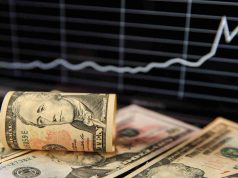
U.S. Dollar Holds Firm as Middle East Tensions and Inflation Risks Persist
The U.S. dollar traded largely unchanged on Monday as investors assessed ongoing geopolitical tensions in the Middle East and rising inflation concerns that could force the Federal Reserve to keep interest rates higher for longer.
The U.S. Dollar Index (DXY), which measures the greenback against a basket of major currencies, rose 0.2% to 99.05 after posting losses during the previous week. Meanwhile, the euro slipped 0.1% against the dollar to $1.1647, while the British pound remained relatively stable at $1.3459.
U.S.-Iran Conflict Keeps Markets on Alert
Financial markets continued to closely monitor developments in the Middle East as tensions between the United States and Iran showed little sign of easing.
Over the weekend, the U.S. military confirmed strikes on Iranian military infrastructure, including air defense and drone-related facilities, following reports that Iran had shot down an American drone.
Iran responded with attacks targeting a military base used by U.S. forces. At the same time, Israel expanded military operations in southern Lebanon as clashes with the Iran-backed Hezbollah group intensified.
Although reports emerged last week suggesting Washington and Tehran were discussing an extension of a temporary ceasefire and the reopening of critical shipping routes through the Strait of Hormuz, major disagreements remain unresolved. Any final agreement would still require approval from U.S. President Donald Trump.
Rising Oil Prices Fuel Inflation Concerns
Crude oil prices moved higher on Monday, adding to concerns that elevated energy costs could reignite inflation pressures across the global economy.
Investors are increasingly focused on the possibility that higher oil prices may force central banks, including the Federal Reserve, to maintain restrictive monetary policies for longer or potentially consider additional interest rate hikes.
The prospect of energy-driven inflation has become a key factor influencing currency, bond, and equity markets as traders reassess expectations for future monetary policy decisions.
Key Economic Data Could Shape Fed Outlook
Market attention is now turning toward several important U.S. economic reports scheduled for release this week.
Friday’s highly anticipated nonfarm payrolls report will provide fresh insight into the strength of the labor market and could play a major role in shaping expectations for future Federal Reserve decisions.
Investors will also monitor data from the Institute for Supply Management (ISM), which may offer additional clues about business activity and inflationary pressures across the U.S. economy.
Analysts See Potential for Additional Fed Tightening
According to analysts at ING, stronger-than-expected employment data combined with persistent price pressures in upcoming ISM surveys could lead markets to fully price in another 25-basis-point Federal Reserve rate hike before year-end.
Such a scenario would likely provide additional support for the U.S. dollar while maintaining pressure on risk assets and global financial markets.
As geopolitical uncertainty and inflation risks continue to dominate investor sentiment, upcoming economic data releases could prove crucial in determining the next move for both the Federal Reserve and the U.S. dollar.