Global Stocks Rise While Oil Falls on Hopes for U.S.-Iran Peace Progress
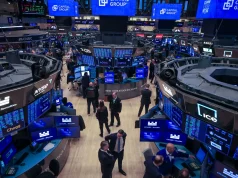
Global stock markets moved higher on Monday while oil prices declined sharply, as investors reacted positively to signs that the United States and Iran may be moving closer to a long-term agreement to ease tensions.
Despite improving sentiment, both Washington and Tehran have attempted to lower expectations regarding the likelihood of an immediate breakthrough.
European Stocks Climb as Risk Appetite Improves
European equity markets posted strong gains:
- The Stoxx 600 index rose 0.9%, approaching levels last seen in early March.
- Stocks in Germany and France also advanced despite reduced trading activity due to public holidays in several countries, including the U.S. and the UK.
The stronger performance reflected growing optimism over easing geopolitical risks and lower energy prices.
U.S. Stock Futures Move Higher Ahead of Market Holiday
U.S. equity futures also gained:
- Dow Jones futures increased by 432 points (0.9%)
- S&P 500 futures climbed 70 points (0.9%)
- Nasdaq 100 futures advanced 409 points (1.4%)
Wall Street remained closed on Monday in observance of Memorial Day, resulting in lighter trading volumes.
Reports Suggest Progress Toward U.S.-Iran Framework Agreement
According to reports citing Iranian officials, the United States and Iran have reached a framework agreement aimed at ending a conflict that has lasted more than two months.
However, Iranian representatives emphasized that no final agreement is imminent, despite progress on multiple negotiation topics.
One major unresolved issue remains the future management of the Strait of Hormuz, a critical global shipping route.
Why the Strait of Hormuz Matters for Markets
The Strait of Hormuz handles approximately 20% of global oil supply, making it one of the world’s most important energy transit routes.
Disruptions to tanker traffic in recent weeks contributed to:
- Rising oil prices
- Higher inflation concerns
- Expectations of additional central bank interest rate increases
Any reopening of the route could potentially ease supply pressures and improve market sentiment.
Oil Prices Drop Below Key Levels
Oil prices reacted sharply to hopes of reduced geopolitical tensions.
Brent crude oil fell below $100 per barrel, although prices remain significantly above pre-conflict levels near $70 per barrel.
The decline in energy costs helped support equity markets, particularly sectors sensitive to inflation and borrowing costs.
Iran Signals No Direct Charges for Hormuz Passage
Iranian officials stated that Tehran would not impose tolls on ships using the Strait of Hormuz.
However, authorities noted that services provided along the route could still involve fees, although these would not be considered formal tolls.
The comments reduced concerns over long-term restrictions on one of the world’s most important shipping corridors.
Nuclear Programme Remains a Major Obstacle
Reports indicate any draft agreement could include commitments by Iran to avoid developing nuclear weapons and participate in discussions regarding future uranium enrichment.
However, Tehran has continued rejecting U.S. demands to surrender enriched uranium reserves.
Iran’s nuclear programme remains one of the biggest barriers to achieving a final agreement.
Trump and Rubio Urge Caution Despite Progress
President Donald Trump said negotiators should not rush toward an agreement and stressed that restrictions on Iranian ports would remain until any deal is officially finalized.
Meanwhile, Marco Rubio stated that diplomatic solutions remain the preferred approach, while warning that alternative actions remain possible if negotiations fail.
Analysts Warn Markets May Be Getting Ahead of Events
Analysts at ING Group noted that enthusiasm around a possible agreement appears to be moderating.
According to the firm, one of the biggest unanswered questions remains how the United States and Iran will ultimately resolve disagreements surrounding Iran’s nuclear ambitions.
For investors, future market direction may continue depending heavily on developments in diplomacy, oil prices and inflation expectations.