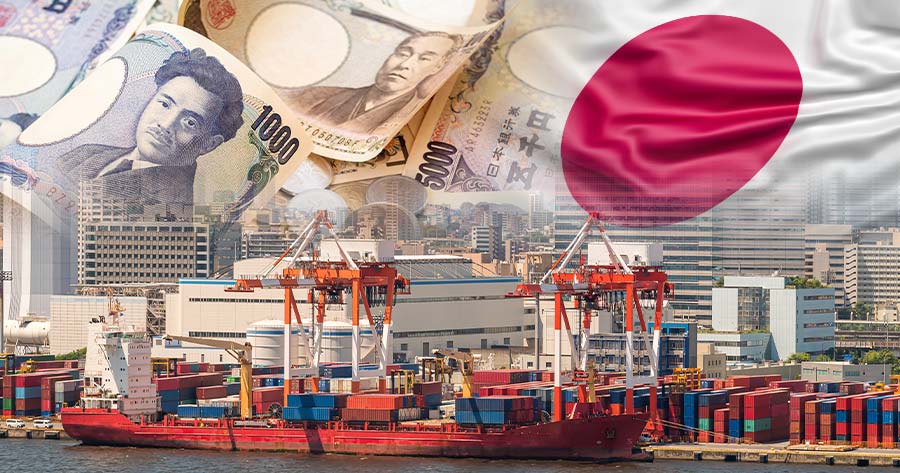
Japan Records Larger-Than-Expected Trade Surplus as Exports Offset Rising Imports
Japan posted a stronger-than-expected trade surplus in April, supported by a sharp increase in exports and continued demand from its largest trading partners, the United States and China.
Robust export growth helped counterbalance rising import costs, even as Japan increased purchases of semiconductors and computing equipment. Meanwhile, energy imports unexpectedly declined despite higher global oil and gas prices linked to tensions in the Middle East.
According to data released Thursday by Japan’s Ministry of Finance, the country recorded a trade surplus of 301.9 billion yen ($1.90 billion).
The figure exceeded forecasts, which had predicted a 29.7 billion yen deficit, although it remained below March’s 643.0 billion yen surplus.
Export Growth Continues to Strengthen Japan’s Economy
Exports were the main contributor to Japan’s stronger trade balance, rising 14.8% year-over-year in April, well above market expectations of 9.3% growth.
Export growth also accelerated compared to March, when shipments increased by 11.5%.
Several sectors played a key role in driving overseas demand, including:
- Plastics
- Chemicals
- Industrial and capital machinery
- Automobiles
Exports to both the United States and China continued expanding steadily, reinforcing the importance of these markets to Japan’s economy.
Weak Japanese Yen Supports Export Competitiveness
A weaker yen also contributed significantly to export growth by making Japanese products more competitively priced in international markets.
Currency weakness has remained an important factor supporting manufacturers and exporters throughout the year.
Rising Imports Driven by Semiconductors and Technology Demand
Despite stronger exports, Japan’s imports increased 9.7% in April, surpassing expectations for an 8.3% rise.
The increase was largely fueled by growing demand for:
- Semiconductors
- Electrical equipment
- Computing technology
Analysts suggest the surge reflects expanding investment in domestic data center infrastructure and technology development.
Energy Imports Decline Despite Higher Oil Prices
One surprising development in April’s trade data was a decline in Japan’s petroleum and gas imports, despite elevated global energy prices caused by conflict in the Middle East.
However, imports of U.S. oil increased during the month, suggesting Japan may be seeking alternative energy suppliers amid disruptions affecting the Strait of Hormuz, one of the world’s most important shipping routes for crude oil.
The shift highlights how geopolitical tensions continue influencing global energy flows and trade patterns.
Outlook for Japan’s Trade Performance
Strong export momentum combined with resilient demand from major economies has helped Japan maintain a positive trade balance despite higher technology imports and ongoing global uncertainty.
Future trade performance may depend on factors including currency movements, semiconductor demand, energy markets, and economic conditions in the U.S. and China.