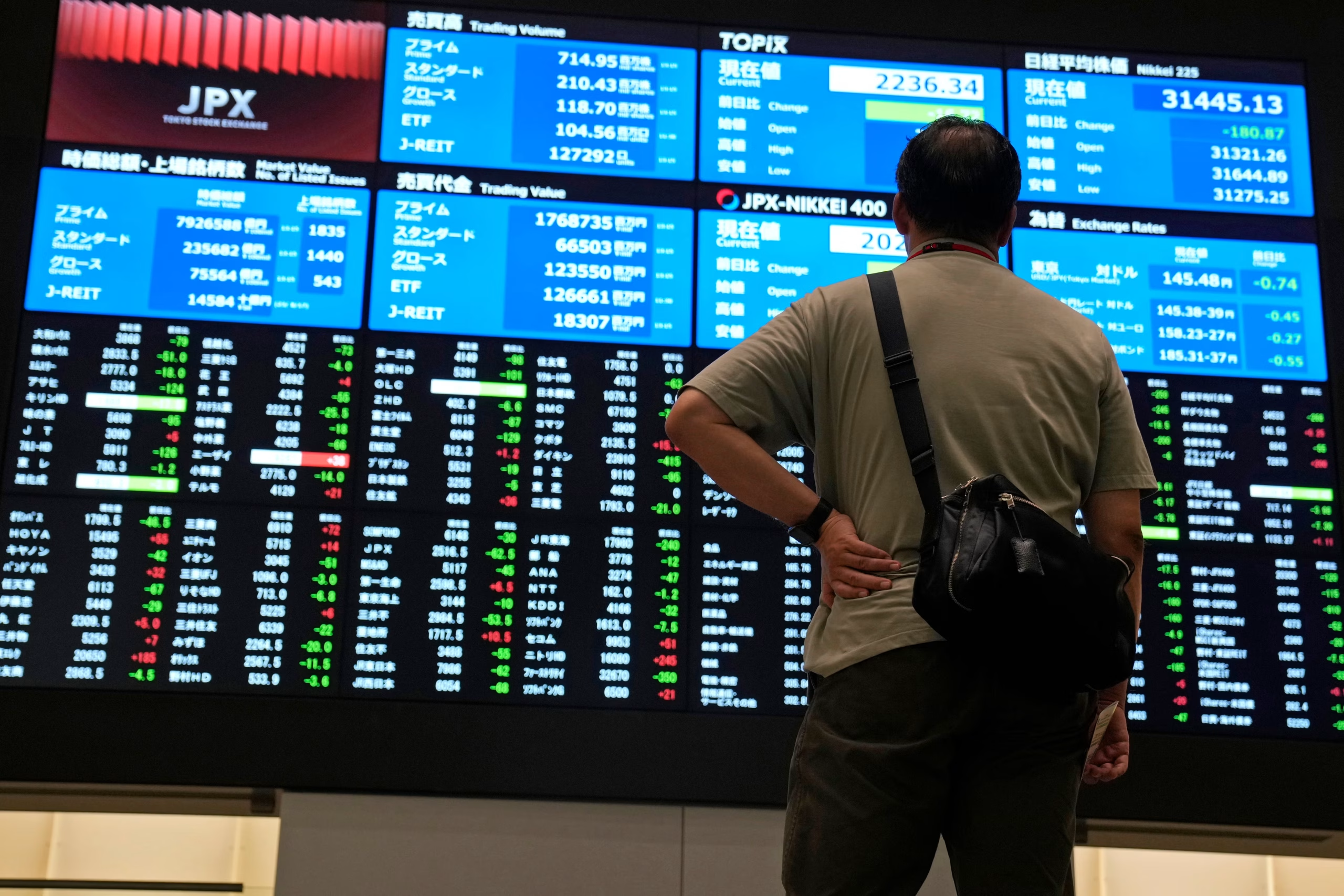
Asian Stocks Decline as Tech Shares Slide, Iran Tensions Rise and Nvidia Earnings Loom
Most Asian stock markets moved lower on Monday as investors pulled back from risk assets ahead of upcoming earnings from AI leader NVIDIA. Rising oil prices, geopolitical tensions in the Middle East and weaker economic data from China also weighed heavily on market sentiment.
The cautious mood followed losses on Wall Street at the end of last week, driven by inflation concerns linked to higher energy prices.
U.S. stock index futures also traded lower during Asian market hours.
Investors Focus on Nvidia Earnings and AI Market Outlook
Markets are closely watching Nvidia’s earnings report scheduled for Wednesday.
The results are expected to provide insight into whether the artificial intelligence-driven rally that has supported global equity markets can continue.
Technology stocks across Asia weakened as investors adopted a more defensive approach ahead of the announcement.
Asian Stock Markets Post Broad Declines
Major Asian indexes recorded losses:
- Japan’s Nikkei 225 declined 1%
- Japan’s broader TOPIX index fell 0.8%
- Hong Kong’s Hang Seng Index dropped 1.7%
- The Hang Seng Tech Index lost 2.5%
- China’s CSI 300 Index fell 1%
- The Shanghai Composite slipped 0.5%
- Australia’s S&P/ASX 200 dropped 1.6%
- Singapore’s Straits Times Index declined 0.6%
- Futures linked to India’s Nifty 50 moved roughly 1% lower
The broad weakness reflected growing investor caution toward technology stocks and geopolitical risks.
Middle East Tensions Add Pressure to Market Sentiment
Investor confidence was further affected by escalating tensions in the Middle East.
The United Arab Emirates reported a drone strike that caused a fire at a nuclear facility, while Saudi Arabia stated it intercepted three drones over the weekend.
Meanwhile, current U.S. President Donald Trump warned Iran that time was running out to reach an agreement with Washington.
The comments increased concerns about a deeper regional conflict.
Rising Oil Prices Increase Inflation Concerns
Oil prices moved higher as disruptions surrounding the Strait of Hormuz continued to raise concerns over global energy supplies.
Higher energy costs have strengthened fears that inflation could remain elevated for longer, potentially affecting interest rate expectations worldwide.
These worries contributed to weaker performance across equity markets.
Samsung Shares Outperform on Positive Labor Negotiation Developments
Unlike most regional markets, South Korea’s KOSPI index rose slightly, supported by gains in Samsung Electronics shares.
Samsung stock rebounded as signs emerged that labor negotiations may be progressing.
The company and its labor union resumed talks with mediation from South Korean government officials.
In addition, a South Korean court warned Samsung’s union that daily fines could be imposed if court orders regarding strike activities are not followed.
Investors interpreted the developments as reducing near-term risks of production disruptions.
Weak China Economic Data Raises Growth Concerns
Markets also reacted to disappointing economic figures from China released earlier in the day.
China’s industrial production grew 4.1% year-on-year in April, below expectations for 6% growth.
Retail sales increased only 0.2%, significantly weaker than forecasts for a 2% rise.
The data reinforced concerns about fragile domestic demand and slowing economic momentum in the world’s second-largest economy.
Outlook: Markets Remain Sensitive to AI, Inflation and Geopolitical Risks
Asian markets continue facing pressure from multiple factors, including uncertainty around AI-related earnings, rising oil prices, inflation fears and geopolitical tensions.
Upcoming results from Nvidia, alongside developments in the Middle East and economic data from China, may play a major role in shaping investor sentiment in the coming weeks.