Trump’s China Policy in 2025: Strategy or Drift?
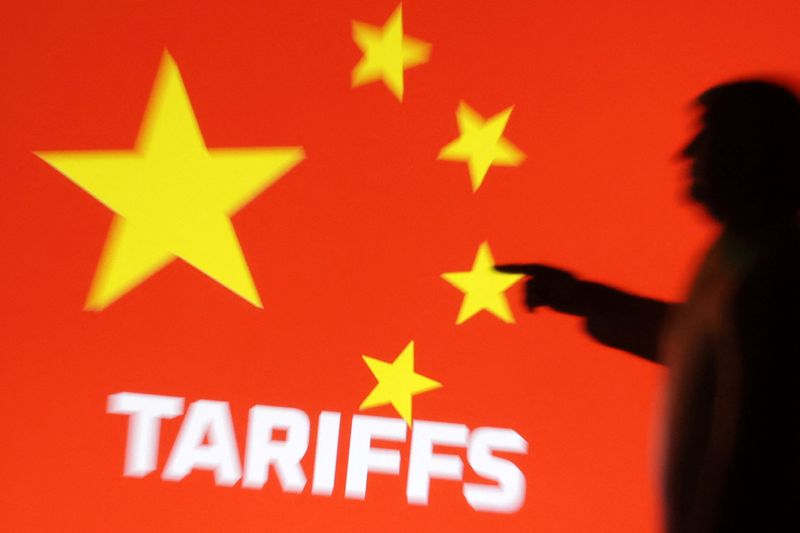
When President Donald Trump returned to office in 2025, he pledged to use tariffs as a tool to reshape U.S.-China relations, accusing Beijing of “killing” the American economy through its trade practices.
More than a year into his second term, however, these aggressive trade measures have not significantly changed China’s economic or military behavior. Instead, Washington’s China strategy appears increasingly uncertain, marked by mixed signals, internal disagreements, and inconsistent decision-making.
Confusion and Contradictions in Policy
Recent developments highlight the administration’s unpredictable approach toward China. In one instance, top Chinese firms were added to a U.S. military blacklist, only for the decision to be reversed shortly afterward. In another case, Trump approved the sale of advanced AI semiconductors to China just minutes after officials labeled such access a national security risk.
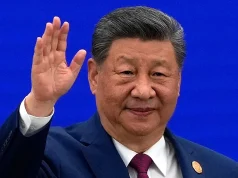
As Trump prepares for his May 14–15 visit to China to meet President Xi Jinping — the first such visit by a U.S. president in eight years — critics argue that these inconsistencies weaken America’s competitive position against Beijing.
Ely Ratner, former Assistant Secretary of Defense for Indo-Pacific Security Affairs, noted that various U.S. agencies appear to operate independently, often pursuing conflicting goals. According to him, policy direction can shift rapidly, creating uncertainty across government institutions.
The Administration’s Defense
Despite criticism, the White House maintains that Trump’s approach has reversed decades of ineffective policy. Spokesperson Kush Desai stated that leveraging the strength of the U.S. consumer market, combined with Trump’s relationship with Xi Jinping, has positioned America more favorably in global trade and diplomacy.
No Clear Plan B
At the start of his second term, Trump launched a major tariff offensive, raising duties on Chinese imports to approximately 145%. China responded with retaliatory tariffs, leading to heightened tensions between the two nations.
Eventually, both sides reached a fragile balance, particularly after China threatened to restrict rare earth exports — critical materials for U.S. industries. A Supreme Court ruling in February that invalidated several tariffs further weakened the administration’s strategy.
Experts argue that the initial plan relied heavily on tariffs to force concessions from China, but that approach quickly lost momentum. According to analysts, no coherent alternative strategy has emerged.
Economic Impact and Trade Shifts
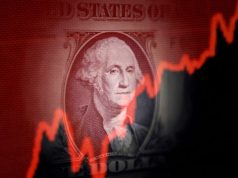
Tariffs have delivered mixed results. On one hand, the U.S. trade deficit with China dropped by 32%, reaching $202 billion in 2025 compared to the previous year.
On the other hand, China’s core trade practices remain largely unchanged. Additionally, inconsistent tariff policies may have discouraged companies from bringing manufacturing back to the United States — a key objective of Trump’s economic agenda. Between February and December of last year, the U.S. lost approximately 91,000 manufacturing jobs.
Treasury Secretary Scott Bessent and U.S. Trade Representative Jamieson Greer have since shifted focus toward a “managed trade” approach, aiming for more stable and balanced economic relations, particularly in non-sensitive goods.
Meanwhile, China has attempted to position itself as a stable global force, contrasting its approach with what it describes as U.S. policy instability.
Conflicting Signals Beyond Tariffs
Policy inconsistencies extend beyond trade. In December, Trump publicly approved the sale of Nvidia H200 AI chips to China, even as U.S. officials warned of their potential national security implications.
Similarly, the Pentagon briefly blacklisted major Chinese tech firms before abruptly reversing the decision. The Commerce Department also introduced — and then paused — expanded export controls targeting Chinese subsidiaries, alongside proposed port fees on Chinese-built ships.
These repeated reversals have created confusion within the U.S. government, with officials struggling to interpret the administration’s direction.
Strategic Moves and Geopolitical Pressure
Despite the challenges, some of Trump’s actions have pressured China indirectly. Military operations involving Iran and Venezuela have weakened key partners of Beijing and disrupted global energy dynamics.
The administration also approved $11 billion in arms sales to Taiwan, strengthening the island’s defense amid ongoing tensions with China. Additionally, the U.S. pressured Panama to remove a Hong Kong-linked port operator near the Panama Canal and took steps to restrict oil flows to Cuba.
However, these moves come with trade-offs. The conflict with Iran has depleted U.S. missile stockpiles and diverted military focus away from Asia. At the same time, concerns remain that support for Taiwan could be used as leverage in trade negotiations with China.
A Strategy Under Scrutiny
Some analysts argue that U.S. actions resemble tactical moves rather than a cohesive long-term strategy. While these steps may create pressure points for China, they do not fundamentally shift the broader balance of power.
Additionally, tensions between the U.S. and its allies — driven by disputes over NATO, tariffs, and Middle East conflicts — risk undermining international coordination against China.
From Beijing’s perspective, the U.S. approach appears disjointed and inconsistent. Experts suggest that China is unlikely to alter its long-term strategy based on short-term U.S. policy fluctuations.
As a result, concerns are growing that internal coordination failures within the U.S. government may be weakening its global credibility and effectiveness in managing one of the world’s most important geopolitical relationships.