European Stocks Rally as Strait of Hormuz Reopens
European stock markets moved sharply higher on Friday afternoon, while oil prices dropped below $90 per barrel, after Iran confirmed that the Strait of Hormuz had been temporarily reopened to commercial shipping.
Major European Indices Post Strong Gains
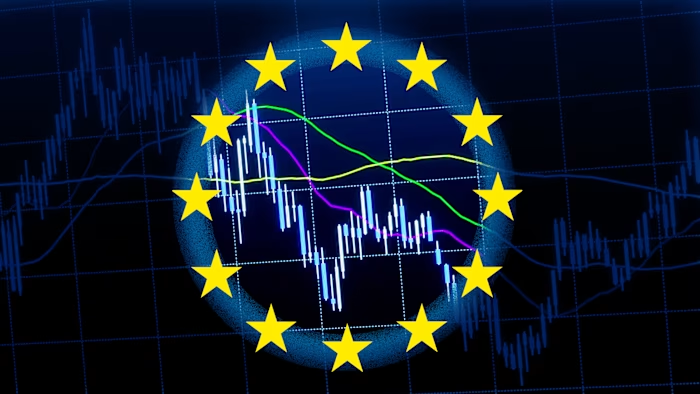
By 09:35 ET (13:35 GMT), the pan-European Stoxx 600 index had risen by 1.3%. Germany’s DAX surged 2.3%, France’s CAC 40 gained 2.1%, while the UK’s FTSE 100 recorded a more modest increase of 0.5%.
Iran Confirms Shipping Access Through Hormuz
Iran’s Foreign Minister Abbas Araghchi announced on X that, following the ceasefire in Lebanon, all commercial vessels would be allowed to pass freely through the Strait of Hormuz for the duration of the truce.
Trump Reacts to Strategic Reopening
U.S. President Donald Trump acknowledged the development on social media, emphasizing that the vital shipping route is now fully open and operational, a move seen as critical for stabilizing global trade flows.
Market Reaction: Travel, Luxury and Energy Stocks
The reopening of the key oil route triggered a strong market reaction. European travel and leisure stocks rebounded after facing pressure from rising fuel costs. Luxury brands such as Burberry, LVMH, and Kering also advanced, reflecting renewed optimism after concerns over war-related disruptions earlier in the week.
In contrast, energy stocks declined sharply as oil prices dropped. Italy’s Eni saw trading briefly halted after a fall of over 4%. Brent crude, the global benchmark, fell by 10.5% to $88.96 per barrel, while European natural gas prices also moved lower.
Bond Yields Ease, Supporting Equities
European government bond yields also declined, providing additional support to equity markets. Yields had previously risen due to inflation concerns driven by the energy shock, and typically move inversely to bond prices.
Euro Strengthens Against the Dollar
In currency markets, the euro climbed to $1.1834 against the U.S. dollar, reversing earlier gains made by the greenback during a flight to safety amid geopolitical tensions.
Progress in Iran Peace Talks
Earlier in the week, Trump announced a 10-day ceasefire between Israel and Lebanon, which appears to be holding. Ongoing Israeli strikes on Hezbollah targets had previously complicated negotiations between Iran and the United States.
U.S. and Iran Close to Agreement
Trump stated that Washington and Tehran are “very close” to reaching a deal, with Iran reportedly agreeing not to pursue nuclear weapons for over 20 years. The issue of Iran’s nuclear program has been a central factor behind the conflict, which began with joint U.S. and Israeli strikes in late February.
Sanctions Relief and Proposed Deal Terms
In exchange, Iran is seeking the removal of international sanctions. Reports indicate that both sides are discussing a structured agreement, including the potential release of $20 billion in frozen Iranian assets in return for limits on uranium enrichment.
Ceasefire Extension Under Consideration
Trump also signaled that the temporary ceasefire could be extended if negotiations continue to progress. A reported draft plan outlines key steps toward ending the conflict and stabilizing the region.