China’s Economy Beats Expectations in Q1 2026
China’s economy expanded more than expected in the first quarter of 2026, according to official GDP data released on Thursday. Strong export demand and improving resilience in domestic consumption played a key role in supporting overall growth.
Gross domestic product increased by 5% year-on-year, surpassing market expectations of 4.8%. This also marked an acceleration from the 4.5% growth recorded in the previous quarter.
On a quarterly basis, GDP rose by 1.3%, slightly below forecasts of 1.4%, but still an improvement from the 1.2% increase seen in the final quarter of 2025.
Consumer Spending and Inflation Support Growth
The first quarter typically benefits from the Lunar New Year holiday, and 2026 was no exception. Strong consumer spending during the festive period continued to underpin economic activity.
A modest rise in inflation, particularly in producer prices, also contributed to growth momentum. However, concerns around industrial overcapacity in China’s manufacturing sector persisted.
Exports Remain the Key Growth Driver
Exports were a major contributor to China’s economic expansion. Shipments surged in January and February following the removal of several U.S. trade tariffs after a late-2025 Supreme Court ruling.
Demand from regions outside the United States also remained solid. However, export growth appeared to lose some momentum toward the end of the first quarter.
China’s GDP Target and Policy Support
China has set a 2026 GDP growth target between 4.5% and 5%, slightly lower than in previous years and the weakest target since 1991. Despite this, the latest data suggests the economy is performing at the upper end of Beijing’s range, maintaining a pace consistent with recent years.
Authorities have pledged to continue fiscal support through increased spending on infrastructure and public services. At the same time, policymakers aim to boost household consumption and strengthen savings.
Signs of Economic Slowdown Emerge
Despite the strong headline GDP figures, more recent data indicates that the Chinese economy may be losing some momentum.
Industrial production rose 5.7% year-on-year in March, exceeding expectations but slowing from the 6.3% growth recorded in February.
Fixed asset investment, a key indicator of public and private spending, increased by 1.7%, falling short of forecasts and slightly below the previous month’s reading.
Retail sales also disappointed, growing 1.7% year-on-year, missing expectations of 2.4% and slowing significantly from February’s 2.8%.
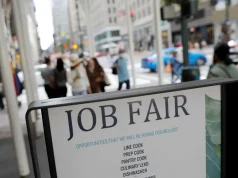
Meanwhile, China’s unemployment rate unexpectedly climbed to 5.4% in March, up from 5.3% and above expectations for a decline.
Iran Conflict May Increase Export Dependence
Analysts at Capital Economics suggest that the ongoing Iran war could further increase China’s reliance on exports.
According to their analysis, while the Chinese economy remains relatively stable, it is becoming increasingly dependent on external demand. Rising fuel prices linked to the conflict are expected to weigh on domestic consumption, while simultaneously supporting export activity, particularly in renewable energy sectors.
However, the conflict may also pose risks to China’s trade outlook. Disruptions in global shipping routes could create headwinds for exports in the coming months.