US Dollar Slides as Ceasefire Sparks Market Shift
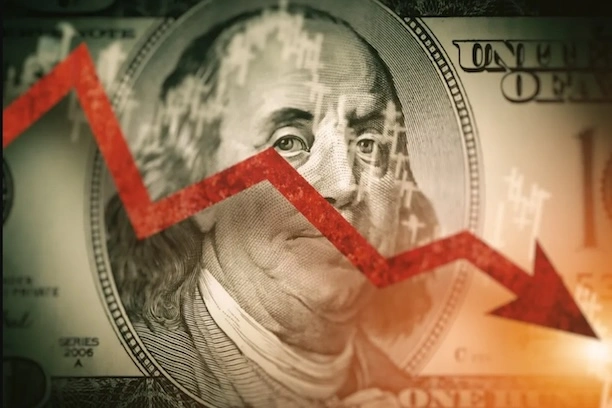
The U.S. dollar weakened significantly on Wednesday, heading for its worst daily performance since April last year. Investors moved away from the traditional safe-haven currency and shifted capital into equities after a ceasefire agreement between the U.S. and Iran eased geopolitical tensions.
At 12:17 ET (16:17 GMT), the US Dollar Index, which measures the greenback against six major currencies, dropped 1% to 98.90. This marked its sharpest single-day decline since April 21, 2025.
US and Iran Agree on Temporary Ceasefire
On Tuesday, Washington and Tehran reached a two-week ceasefire agreement aimed at halting ongoing hostilities. The deal followed earlier warnings from President Donald Trump, who had threatened severe consequences if Iran failed to reopen the Strait of Hormuz.
Trump later stated that the agreement was facilitated through discussions involving Pakistan, which has taken on a key mediating role. He revealed that Iran had submitted a 10-point proposal that could serve as a foundation for further negotiations. Trump also claimed that U.S. military objectives had already been achieved, and that the ceasefire period would allow time to finalize a broader agreement.
Iran Signals Conditional Cooperation
Iran’s Foreign Minister, Abbas Araghchi, confirmed that Tehran would pause its defensive operations. He also indicated that safe passage through the Strait of Hormuz could be ensured, provided shipping activities are coordinated with Iranian authorities.
Meanwhile, Pakistan’s Prime Minister Shehbaz Sharif has invited both U.S. and Iranian officials to Islamabad for further talks scheduled later this week.
Markets Rally as Risk Appetite Returns
Financial markets reacted positively to the ceasefire announcement. U.S. stock futures surged ahead of the Wall Street open, with equities posting strong gains as investor sentiment shifted toward riskier assets.
According to David Morrison, senior market analyst at Trade Nation, the dollar declined as investors rotated away from safe-haven positions following Trump’s decision to suspend military action against Iran. This triggered a broad “risk-on” rally across global markets.
Dollar Index Faces Technical Pressure
The Dollar Index was trading near 98.50, an area seen as mild support. However, recent attempts to break above the key 100.00 level have failed, raising questions about the dollar’s near-term direction.
Morrison noted that while the dollar has remained strong during periods of market stress, repeated rejection at resistance levels could signal a potential reversal. If bearish momentum builds, the index may move toward lows last seen in late January, below 96.00.
Rate Cut Expectations Return
The dollar had previously benefited from its safe-haven status during the Iran conflict, as rising oil prices fueled expectations of higher inflation and prolonged elevated interest rates.
Following the ceasefire, expectations for potential Federal Reserve rate cuts later this year have started to increase again, according to the CME FedWatch tool.
Inflation Concerns Still Loom
Despite easing geopolitical tensions, inflation risks remain. Analysts at Wells Fargo warned that higher energy prices have already contributed to rising consumer inflation, potentially delaying monetary easing.
They expect headline inflation to increase further, with the Federal Reserve’s preferred measure—the PCE index—projected to peak around 3.7% in the second quarter. Core inflation is also expected to remain elevated throughout the year.
Key Economic Data Ahead
Investors are now closely watching upcoming economic releases. This week will bring key updates, including the February PCE inflation report and the March nonfarm payrolls data. The latter will be particularly important, as it reflects the period during heightened Middle East tensions.
Euro, Sterling and Yen Strengthen
Other major currencies gained against the weaker dollar. The euro rose 0.7% to 1.1680, while the British pound climbed 1% to 1.3424. The Japanese yen also strengthened, with USD/JPY falling 0.8% to 158.40.
Global Energy Dependence Remains Key Factor
Regions such as Asia remain highly dependent on oil and gas flows through the Strait of Hormuz, while Europe also relies on energy supplies from the Middle East, though to a lesser degree.
JPMorgan analysts noted that inflation trends vary globally. Economies more exposed to fuel price increases are already seeing higher inflation, while others are experiencing delayed effects. In some emerging Asian markets, fiscal policies have helped cushion the initial impact of rising energy costs.