U.S. Stocks Slide as Middle East Tensions Weigh on Markets
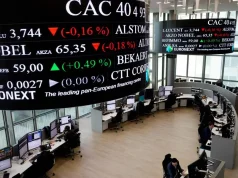
U.S. equities declined sharply on Friday, as ongoing conflict in the Middle East continued to pressure investor sentiment. A decision by President Donald Trump to extend the deadline for potential strikes on Iranian energy infrastructure failed to reassure markets.
By 12:32 ET (16:32 GMT), the S&P 500 dropped 1% to 6,413.83 points, the Nasdaq Composite fell 1.4% to 21,105.19, and the Dow Jones Industrial Average declined 1% to 45,493.13.
Nasdaq Enters Correction Territory
Wall Street indices had already weakened in the previous session, as uncertainty persisted over potential peace negotiations between the U.S. and Iran.
The Nasdaq Composite has now fallen more than 10% from its recent peak, officially entering correction territory. The Nasdaq 100 followed suit on Friday, while the broader S&P 500 remains about 7.2% below its latest record high.
Ongoing Conflict Fuels Market Uncertainty
Tensions in the Middle East remain elevated, with continued military exchanges between Israel and Iran. The Strait of Hormuz remains effectively closed, raising concerns over global energy supply disruptions.
Meanwhile, the Pentagon has been increasing its military presence in the region, fueling speculation among investors about a possible escalation involving U.S. ground forces.
Reports also indicated that U.S. strikes targeted Iranian industrial facilities, while Iran issued warnings to regional populations near sites with American interests.
Market Correction Driven by Geopolitics
Market analysts noted that the recent selloff is largely driven by geopolitical uncertainty rather than structural economic weakness.
According to Glen Smith, CIO at GDS Wealth Management, corrections of 5–10% are common in equity markets. He emphasized that the current decline appears to be a correction rather than the beginning of a prolonged bear market.
Trump Extends Iran Deadline
President Trump announced that the deadline for Iran to reopen the Strait of Hormuz has been extended to April 6, delaying potential U.S. military action against Iranian energy infrastructure.
Trump stated that the extension followed requests from Iran and claimed that negotiations were progressing positively. However, Iran has publicly denied that any such talks are taking place.
Diplomats from the G7 are expected to address the situation, although international support for U.S. efforts remains limited.
Oil Prices Surge on Supply Disruptions
Oil markets reacted strongly to the ongoing crisis, with Brent crude rising 3.5% to $111.79 per barrel and U.S. WTI crude climbing 4.3% to $98.51.
The disruption of tanker traffic through the Strait of Hormuz has raised concerns over global supply shortages, contributing to higher energy prices and increasing inflation risks.
Inflation Fears Reshape Interest Rate Outlook
The surge in oil prices has fueled expectations that inflation could accelerate, prompting markets to reassess the outlook for monetary policy.
Expectations for Federal Reserve rate cuts have largely disappeared, with some investors now considering the possibility of future rate hikes. U.S. Treasury yields rose to their highest levels since July before stabilizing slightly later in the session.
Consumer Sentiment Weakens
Data from the University of Michigan showed that consumer sentiment declined by 6% in March, reaching its lowest level since December 2025.
The drop was widespread across income groups and demographics, with rising fuel costs and volatile financial markets cited as key factors behind the decline.
Mixed Moves Across Other Markets
The U.S. dollar strengthened amid safe-haven demand, while gold prices rose but remained on track for a weekly loss.
Carnival Shares Fall on Profit Warning
In corporate news, Carnival shares dropped around 4% after the cruise operator lowered its full-year 2026 profit guidance.
The company cited rising fuel costs as a key concern, with expectations for Brent crude averaging between $80 and $90 per barrel in the coming months. Shares of competitor Norwegian Cruise Line also moved lower.