UK Inflation Holds Steady in February Despite Rising Energy Risks
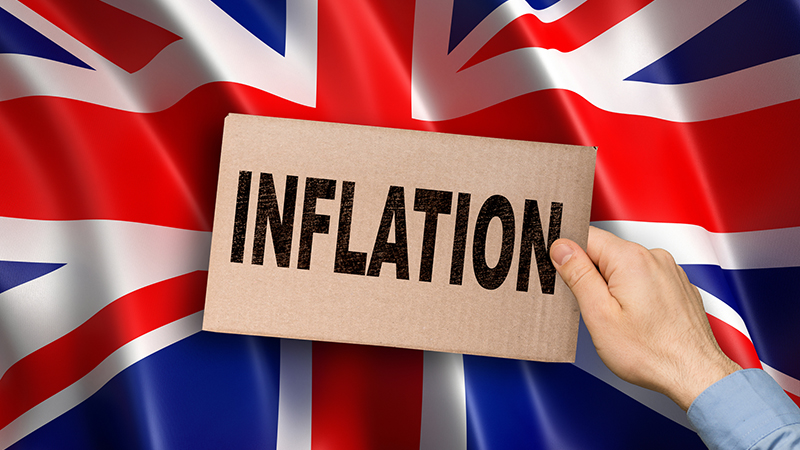
UK consumer price inflation remained unchanged at 3.0% in February 2026, in line with market expectations, as the country prepares for a potential surge in energy costs driven by escalating tensions in the Middle East.
Official data released on Wednesday showed that headline CPI stayed at 3.0% year-over-year, matching January’s figure.
Core Inflation Edges Higher While Services Slow
Core inflation, which excludes volatile food and energy components, increased slightly to 3.2% from 3.1%. Meanwhile, services inflation eased to 4.3% from 4.4%, marking its lowest level since March 2022.
Clothing prices were a key driver of upward pressure, with inflation in the sector rising to 0.9% from 0.0% due to base effects. However, this was partly offset by declines in fuel and food inflation.
Fuel prices saw a sharper contraction, dropping to -4.6% from -2.2%, while food and beverage inflation slowed to 3.3% from 3.6%, reaching its lowest level since March 2025.
Energy Prices Expected to Push Inflation Higher
Despite stable February figures, economists warn that inflation could rise in the coming months. Capital Economics noted that higher oil prices have already lifted average petrol and diesel costs to around 159 pence per litre.
This increase is expected to add approximately 0.3 percentage points to inflation in March, with fuel prices potentially rising by another 9.8% to 175 pence per litre in the near term.
Ofgem Price Cap Could Trigger Further Inflation Spike
Additional pressure may come from the UK energy regulator Ofgem, which is expected to raise its utility price cap by as much as 30% starting July 1.
According to estimates, this move could add around 1 percentage point to inflation in July alone. Capital Economics now forecasts that CPI could peak at approximately 4.6% in the fourth quarter of the year.
Energy markets have already reflected these pressures, with Brent crude prices rising more than 40% since late February, while UK natural gas futures have surged nearly 75% amid ongoing geopolitical tensions.
Bank of England Likely to Stay Cautious on Rates
Despite the expected inflation increase, economists believe the Bank of England is more likely to maintain a pause in interest rates rather than pursue aggressive tightening. The energy shock is expected to weigh on economic growth and contribute to higher unemployment.
Michael Brown, senior research strategist at Pepperstone, noted that services inflation came in slightly above the Bank of England’s projections. However, the central bank had already anticipated a rise in headline inflation to around 3.5% in March.
At its latest meeting, the Bank of England voted unanimously to keep rates unchanged—the first unanimous decision in nearly five years. Policymakers emphasized their readiness to act if needed to bring inflation back toward the 2% target over the medium term.
Market Expectations and Inflation Outlook
Financial markets are currently pricing in around 74 basis points of tightening by the end of the year, with roughly a 75% probability of a 25 basis point rate hike as early as next month.
However, analysts suggest that the central bank may hold rates steady for the remainder of the year, provided that second-round inflation effects do not emerge.
Such risks appear limited for now, supported by stable inflation expectations, slack in the labor market, and weak corporate pricing power amid subdued economic momentum.