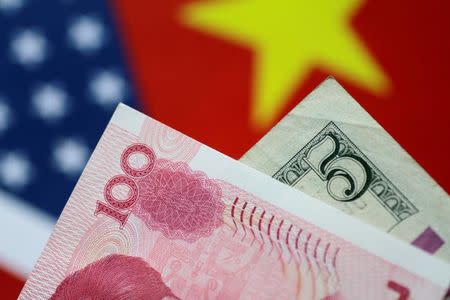
Asian Currencies Weaken Amid Oil Price Fears
Most Asian currencies declined on Friday, while the U.S. dollar also slipped as investors grew concerned about the economic fallout from rising oil prices linked to the ongoing U.S.-Israel conflict with Iran.
Market sentiment was further pressured by hawkish signals from major global central banks. Policymakers warned that elevated oil prices could fuel inflation, likely keeping interest rates higher for longer.
Trading activity across the region remained subdued due to a market holiday in Japan. However, the Japanese yen managed to hold onto most of its previous gains, supported by hawkish remarks from the Bank of Japan.
Dollar Set for Weekly Loss as Oil and Rate Concerns Rise
The U.S. dollar retreated from recent multi-month highs this week and is on track to post its first weekly loss in three weeks.
Although the dollar index and its futures edged up 0.2% during Asian trading hours, both benchmarks are still down დაახლოებით 0.8% for the week.
The greenback found some support as expectations for Federal Reserve rate cuts diminished. However, it underperformed against several major developed-market currencies.
The Federal Reserve kept interest rates unchanged earlier this week and highlighted growing uncertainty around oil-driven inflation. Unlike other central banks, it stopped short of signaling further rate hikes. In contrast, institutions such as the Bank of Japan, European Central Bank, Swiss National Bank, and Bank of England maintained a more hawkish stance.
As a result, currencies including the Japanese yen, euro, Swiss franc, and British pound are all heading for weekly gains. Meanwhile, the Australian dollar strengthened after the Reserve Bank of Australia raised interest rates and indicated the possibility of further tightening if inflation persists.
Asian Markets Under Pressure from Energy Supply Risks
Broader Asian currencies weakened both on Friday and over the week, as investors remained cautious about the impact of rising oil prices on regional economies.
Asian countries are particularly vulnerable to energy supply disruptions stemming from tensions involving Iran. Major economies such as India, South Korea, and Japan rely heavily on imported energy.
The Indian rupee fell to record lows during the week, with the USD/INR pair hovering near the 93 level on Friday and gaining حوالي 0.4% over the period.
Similarly, the South Korean won weakened significantly, with the USD/KRW pair reaching its highest level since 2009 and rising დაახლოებით 0.5% this week.
Concerns have intensified as Iran is believed to be keeping the Strait of Hormuz largely restricted amid ongoing conflict with the U.S. and Israel. This strategic waterway is a crucial route for oil and gas shipments to Asia.
Chinese Yuan Shows Resilience
In contrast to its regional peers, the Chinese yuan demonstrated relative stability, with the USD/CNY pair remaining largely unchanged throughout the week.
The currency showed limited reaction after the People’s Bank of China decided to keep its benchmark loan prime rate unchanged.
China is considered better positioned to withstand energy supply shocks compared to other Asian economies. This is largely due to its substantial petroleum reserves and lower reliance on natural gas for energy production.