Wall Street pulled back from earlier session highs on Tuesday but remained in positive territory, even as oil prices stayed elevated due to the ongoing U.S.-Israel conflict with Iran and Tehran’s response.
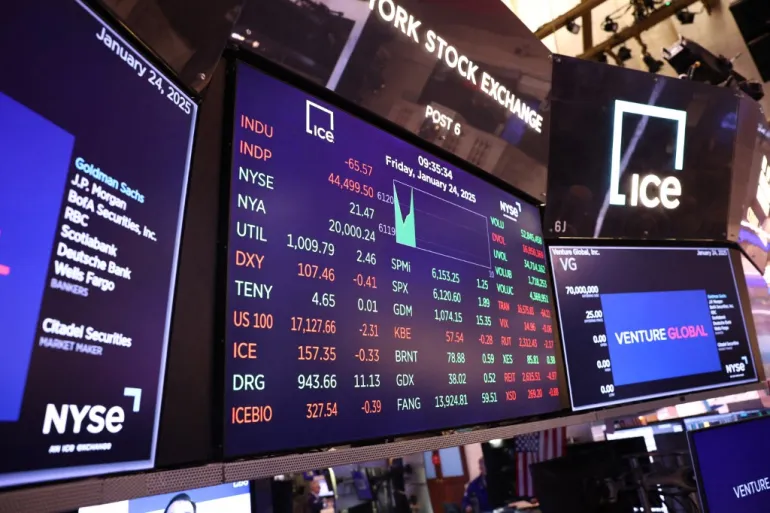
By midday trading, the S&P 500 was up 0.3% at 6,717 points, after rising as much as 0.8% earlier in the session. The Nasdaq Composite also gained 0.3%, trimming a stronger advance, while the Dow Jones Industrial Average added 0.1%, easing from earlier gains of around 1%.
Markets had posted solid gains on Monday, supported by strength in technology stocks and lower oil prices. However, Tuesday’s session saw momentum fade as crude prices moved higher again, highlighting the fragile balance between equity optimism and geopolitical risks.
Market analysts noted that the combination of rising oil prices and higher stock levels reflects mixed sentiment. While there is some short-term optimism, the broader outlook remains uncertain. Any negative developments related to oil supply or the duration of the conflict could quickly reverse gains and increase market volatility.
Geopolitical tensions intensified following reports that Israeli airstrikes may have killed senior Iranian figures, including security official Ali Larijani and Basij commander Gholamreza Soleimani. However, these reports have not yet been officially confirmed by Iranian authorities.
The Strait of Hormuz, a key global oil transit route handling roughly 20% of the world’s supply, remains largely restricted. Iran has indicated that the passage is open only to certain vessels, excluding those linked to the United States and its allies.
At the same time, President Donald Trump criticized NATO members for not supporting efforts to secure the strait. While some countries such as the United Kingdom and France have shown openness to discussions, others including Germany and Japan have declined to participate.
Oil prices continued to climb, with Brent crude rising to around $102.66 per barrel and West Texas Intermediate (WTI) reaching $94.85. Crude prices have surged more than 40% since the escalation of the conflict earlier this year.
Further supply concerns emerged after a projectile struck a tanker near the UAE port of Fujairah, causing minor damage. Authorities also reported a drone-related fire at a major oil facility, adding to fears of tighter global supply.
The risk of a prolonged conflict has increased concerns about a potential energy shock, which could push inflation higher worldwide. Rising fuel costs are already impacting businesses, with airlines such as Delta adjusting fares to offset increased expenses.
Central banks are now facing a complex environment, balancing inflation risks driven by geopolitical tensions with slowing economic growth. Key policy decisions from the Federal Reserve, European Central Bank, and Bank of Japan are expected this week, which could drive further market volatility.
In addition to geopolitical developments, investors are also monitoring corporate earnings. Companies such as DocuSign and Lululemon are set to report results, while Nvidia remains in focus after projecting strong long-term growth driven by artificial intelligence demand.
Meanwhile, President Trump has requested a delay in a planned meeting with Chinese President Xi Jinping, as tensions continue over the Strait of Hormuz. China, a major importer of Iranian oil, has shown little willingness to intervene, while Iran has allowed Chinese vessels to pass through the strait under certain conditions.