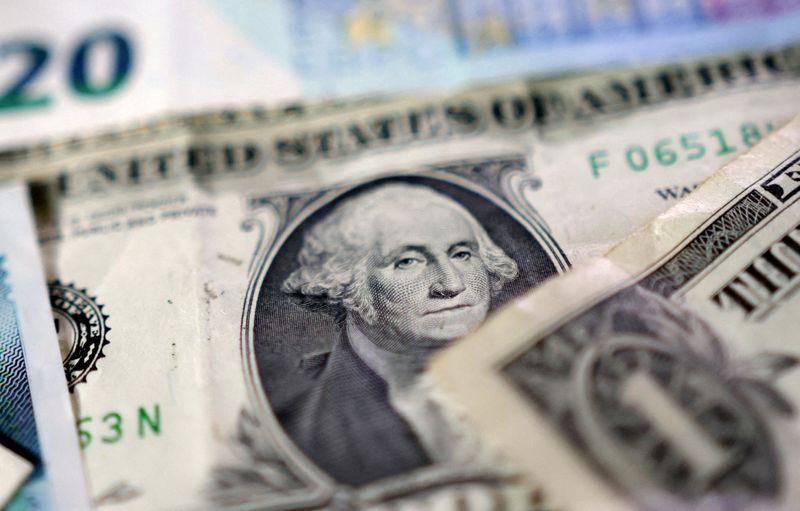
The U.S. dollar strengthened on Tuesday as escalating conflict in the Middle East dampened global risk appetite, driving investors toward safe-haven assets. At the same time, the Australian dollar traded unevenly after the Reserve Bank of Australia (RBA) delivered a hawkish message following a narrowly split decision on interest rates.
The euro declined 0.23% to $1.1479, moving closer to its lowest level in more than seven months reached earlier in the week. Meanwhile, the British pound fell 0.3% to $1.3279.
The U.S. Dollar Index, which tracks the greenback against a basket of major currencies, rose 0.19% to 100.05. The index has now gained approximately 2.5% since tensions between the U.S., Israel, and Iran intensified in late February.
Ongoing hostilities in the region, now entering a third week, have disrupted key energy routes, including the Strait of Hormuz. Efforts to reopen the passage have faced resistance from U.S. allies, adding upward pressure on oil prices and increasing concerns over global inflation.
Higher oil prices have led to a reassessment of global interest rate expectations, supporting the U.S. dollar as investors shift toward safer investments. Analysts note that reduced expectations for rate cuts, combined with geopolitical risks, have made the dollar an attractive hedge in the current environment.
Given the uncertainty surrounding the Middle East, analysts expect the dollar to remain supported in the near term, particularly as long as elevated oil prices and geopolitical risks persist.
In Australia, the RBA raised its benchmark interest rate by 25 basis points to 4.1%, responding to renewed inflation pressures. However, the decision was closely contested, with five policymakers voting in favor and four against, marking one of the tightest votes in recent years.
The Australian dollar initially dropped to $0.7050 following the announcement before stabilizing slightly at $0.7057. The central bank warned that inflation could remain above target for longer than expected, with geopolitical tensions potentially adding further pressure.
The RBA’s decision marks the beginning of a busy week for global central banks, with several major institutions—including the Federal Reserve, the Bank of England, and the European Central Bank—set to provide updates on monetary policy. While no immediate changes are expected, investors will closely monitor policymakers’ commentary on inflation and geopolitical risks.
Elsewhere, the Japanese yen weakened to 159.40 per dollar, approaching the key 160 level despite verbal intervention warnings from Japanese authorities. The currency has declined more than 2% against the dollar so far this month.
Bank of Japan Governor Kazuo Ueda noted that underlying inflation is gradually moving toward the central bank’s 2% target, although policymakers are widely expected to keep interest rates unchanged at the conclusion of their upcoming meeting.
Analysts highlight that rising oil prices are putting additional pressure on the yen, as Japan’s heavy reliance on energy imports increases inflation risks and weighs on its trade balance. This dynamic is forcing authorities to weigh the difficult trade-off between supporting the currency and maintaining stability in the bond market.