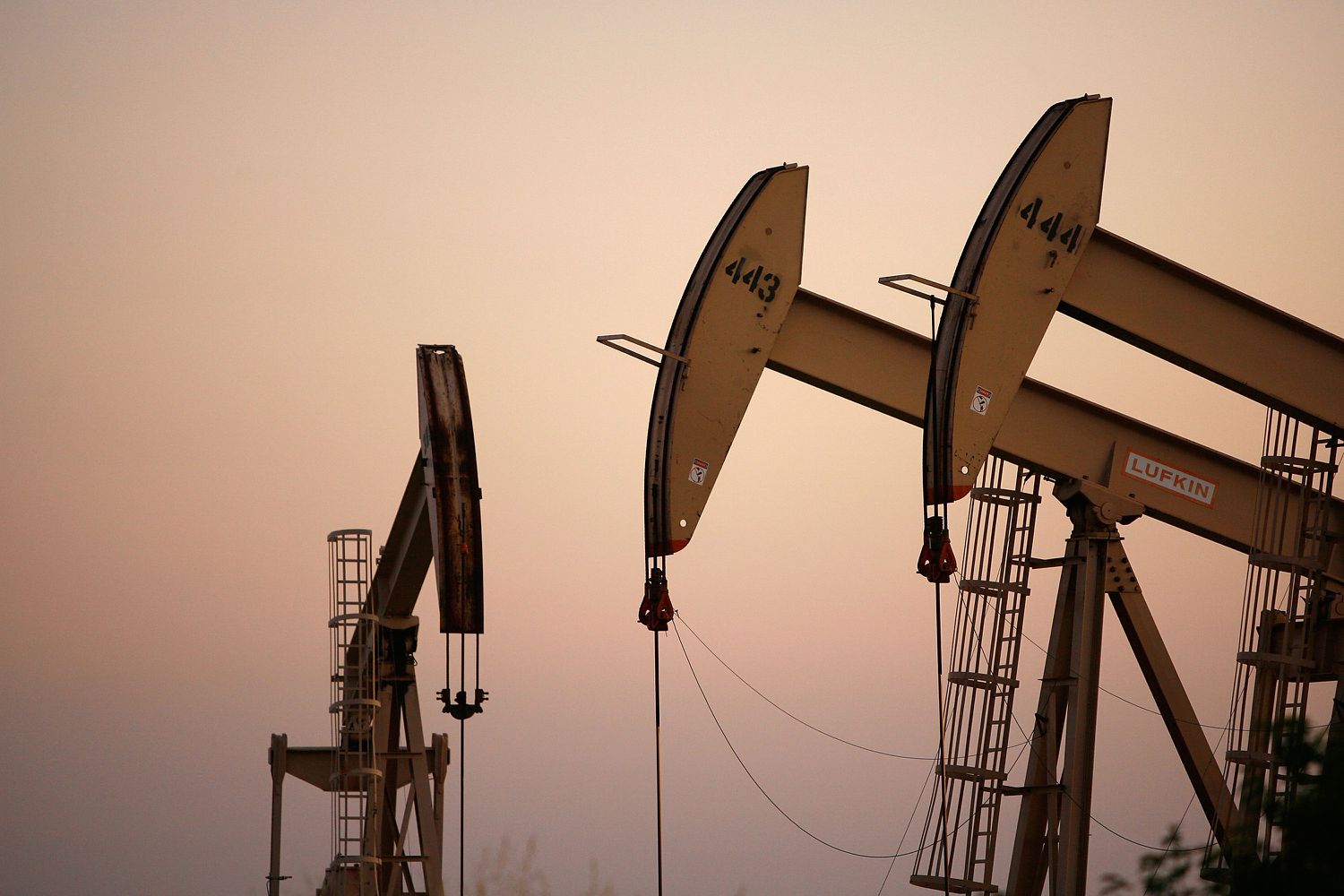
Oil prices declined by roughly 1% on Monday as the United States and Iran prepared for a third round of nuclear negotiations, reducing immediate fears of military escalation. At the same time, fresh tariff measures announced by President Donald Trump added new uncertainty over global economic growth and fuel demand.
Brent crude futures fell 87 cents, or 1.21%, to $70.89 per barrel by 07:22 GMT. U.S. West Texas Intermediate (WTI) crude dropped 85 cents, or 1.28%, to $65.63 per barrel.
Tariff uncertainty weighs on oil markets
Over the weekend, President Donald Trump said he would raise a temporary U.S. import tariff from 10% to 15%, the highest level permitted under the relevant law. The move followed a U.S. Supreme Court decision that struck down his earlier tariff programme.
Meanwhile, the U.S. Customs and Border Protection agency confirmed it would stop collecting tariffs imposed under the International Emergency Economic Powers Act starting at 12:01 a.m. EST (05:01 GMT) on Tuesday.
Market analysts noted that the renewed tariff headlines triggered risk-averse flows across global markets. Safe-haven assets such as gold strengthened, while U.S. equity futures softened. This cautious sentiment also pressured crude oil prices.
The latest tariff developments offset recent geopolitical tensions that had supported oil markets. Last week, concerns about a possible U.S.-Iran military confrontation pushed Brent and WTI prices up by more than 5%.
US-Iran nuclear talks in focus
Iran and the United States are scheduled to hold a third round of nuclear talks on Thursday in Geneva, according to Oman’s Foreign Minister. Diplomatic efforts have helped ease fears of an immediate escalation in the Middle East.
A senior Iranian official indicated that Tehran may be willing to make concessions on its nuclear programme in exchange for sanctions relief and formal recognition of its right to enrich uranium.
Despite the diplomatic progress, analysts believe a geopolitical risk premium remains embedded in oil prices. Estimates suggest that Brent crude includes roughly a $10 per barrel premium linked to Iran-related risks. As long as the threat of potential U.S. strikes lingers, a sharp decline in crude prices may be limited.
Oil market outlook for 2026
Goldman Sachs expects the global oil market to remain in surplus in 2026, assuming no major disruption to Iranian supply. The bank raised its fourth-quarter 2026 price forecasts by $6, projecting Brent at $60 per barrel and WTI at $56 per barrel, citing lower inventories across OECD countries.
However, the bank also warned that sanctions relief for Iran or Russia could increase global supply over time. A faster build-up of oil inventories could put additional downward pressure on prices, creating potential downside risks of $5 to $8 per barrel for late 2026.
For now, oil prices remain sensitive to both geopolitical developments and shifts in U.S. trade policy, as investors balance supply risks against concerns over global demand.