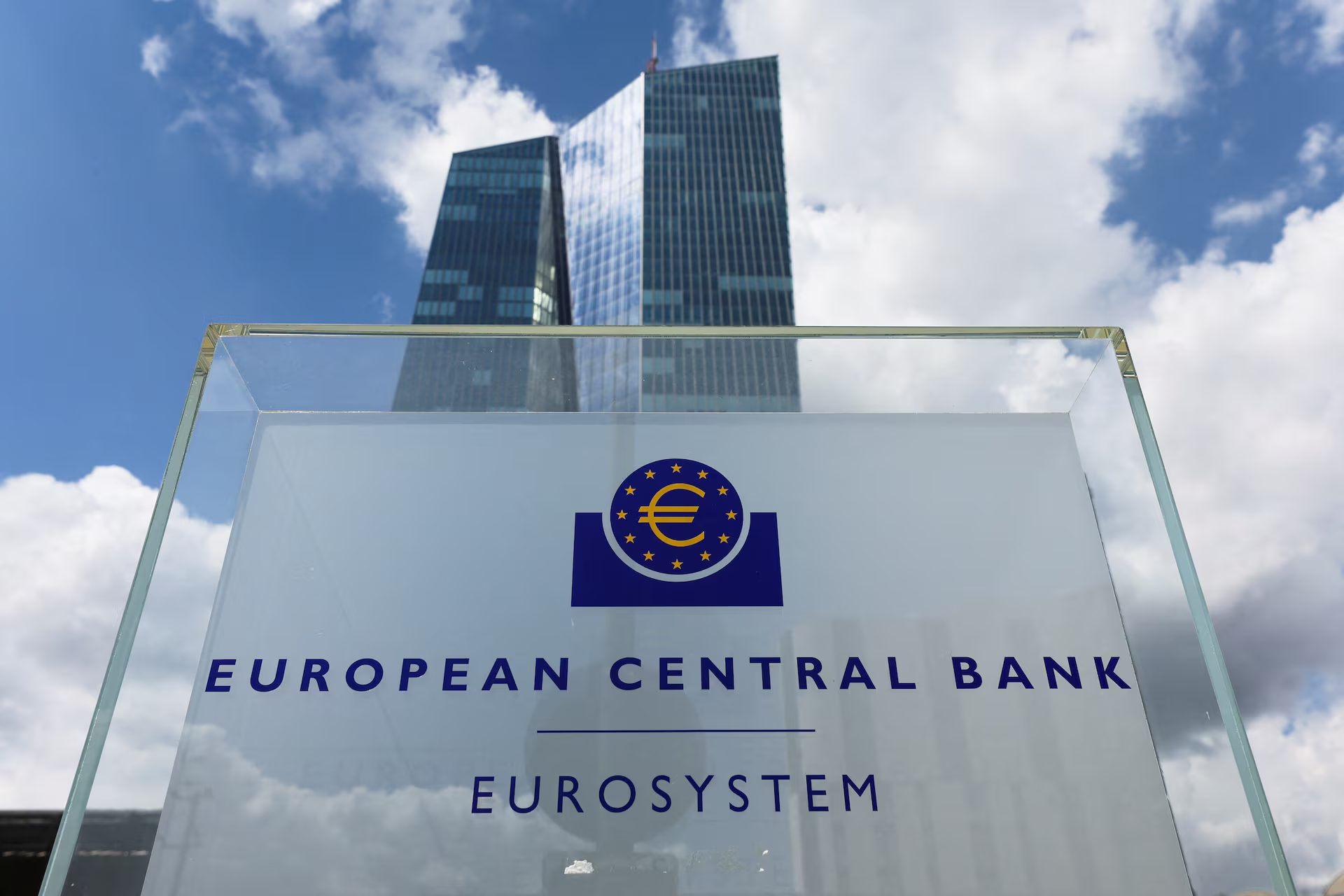
ECB Expected to Keep Interest Rates Steady at 2% Through Year-End
The European Central Bank (ECB) is likely to maintain its deposit rate at 2.00% at least until the end of this year, according to a recent Reuters poll. This would extend the ECB’s longest period of unchanged interest rates since the negative-rate era, despite ongoing geopolitical risks.
The central bank left rates unchanged for a fifth consecutive meeting last week. Most economists surveyed between February 9 and 12 continue to expect stable borrowing costs, inflation close to target, and steady economic growth.
Inflation Falls but Economy Remains Resilient
Eurozone inflation declined to 1.7% in January, marking a 16-month low. The drop has led some policymakers to warn that price pressures could weaken too much, suggesting the ECB must remain ready to adjust policy if necessary.
However, the broader euro area economy has shown resilience. Economic output expanded by 0.3% in the final quarter of 2025 and is projected to grow at a similar pace into 2026.
According to the survey, inflation is expected to average 1.7% this quarter, rise slightly to 1.9% next quarter, and remain near that level throughout 2026. For the full year, inflation is forecast at 1.8%, rising to 2.0% in 2027 — broadly in line with the ECB’s 2% target.
Longest Rate Pause Since Pandemic Period
Out of 74 economists surveyed, 66 expect the ECB to keep interest rates unchanged until at least 2027. If realized, this would mark the longest stretch of steady rates since the pandemic period, when nearly a decade of negative interest rates was coming to an end.
Following that era, record-high inflation forced the ECB to raise borrowing costs aggressively. Now, policymakers appear to be in a more balanced environment, with inflation easing and growth holding steady.
Claus Vistesen, chief eurozone economist at Pantheon Macroeconomics, described the current situation as close to ideal for a central bank. He noted that over the next six months, the ECB is likely to either maintain the 2% rate or potentially consider a cut, depending on economic developments.
Growth Outlook and Euro Impact
The eurozone economy is forecast to expand by 1.2% this year and 1.4% in 2027, following 1.5% growth last year. The outlook has remained largely unchanged since August, supported in part by expectations of increased infrastructure spending.
Some analysts suggest that a stronger euro could exert additional downward pressure on inflation. However, in trade-weighted terms — a measure closely monitored by the ECB — the currency does not currently signal major concerns.
After retreating approximately 1.6% from recent highs above $1.20, the euro is expected to recover those losses over the coming year, according to a separate Reuters survey.