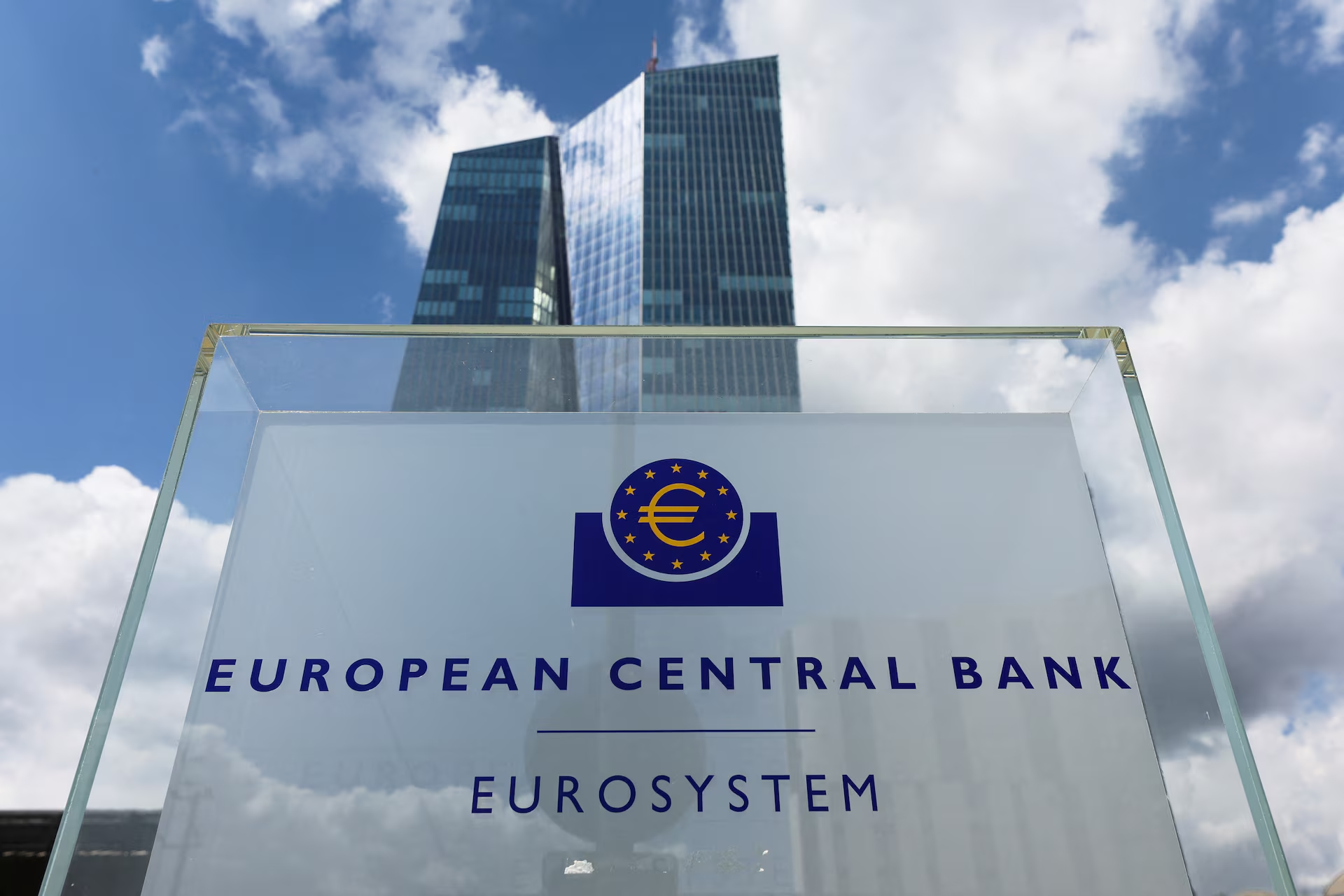
The European Central Bank kept interest rates unchanged on Thursday, as widely expected, downplaying the influence of recent dollar moves on future policy decisions and emphasizing that its inflation outlook remains broadly intact.
The euro zone’s central bank has stayed on hold since ending a year-long cycle of rate cuts in June. Stronger-than-expected economic growth and easing price pressures have largely removed the urgency for additional policy support.
In its statement, the ECB acknowledged ongoing uncertainty tied to global trade policy and geopolitical risks, but said its latest assessment still points to inflation settling around its 2% target over the medium term.
“We are in a broadly balanced situation at the moment,” ECB President Christine Lagarde said at a press conference, noting that risks to the outlook are evenly split and that monetary policy is currently in a “good place.”
Addressing questions about the recent dip and rebound in the U.S. dollar, Lagarde said the Governing Council had discussed the issue but stressed that dollar weakness is not a new phenomenon, dating back to March 2025. She added that exchange rates have largely fluctuated within a range since the summer, meaning recent moves were already factored into the ECB’s baseline projections.
A stronger euro against the dollar typically lowers import costs—particularly for energy—helping to restrain inflation at a time when price growth is already running below target, albeit temporarily. However, as the dollar has recovered in recent days, the euro is now weaker on a trade-weighted basis than it was at the ECB’s December meeting.
This dynamic has reinforced expectations among investors and economists that interest rates will remain unchanged through 2026, with the possibility of gradual tightening later in 2027. Lagarde reiterated that the ECB remains data-dependent and has no pre-set path for rates.
Inflation across the euro zone slipped to 1.7% last month, driven by lower energy prices, and could ease further before rebounding next year. While this has revived memories of the ECB’s long struggle with low inflation before the pandemic, longer-term inflation expectations have edged higher, supported by solid economic activity and rising energy costs.
The euro zone economy has also shown resilience to trade tensions, with domestic consumption offsetting weak exports and subdued industrial output. High household savings and a strong labour market are expected to continue supporting growth, while Germany’s planned increase in spending on defence and infrastructure could provide an additional boost.