European stock markets traded mixed on Thursday as investors weighed overnight weakness on Wall Street against a fresh batch of corporate earnings, while remaining cautious ahead of interest rate decisions from the European Central Bank and the Bank of England.
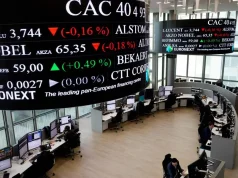
At 03:05 ET (08:05 GMT), Germany’s DAX slipped 0.2% and the UK’s FTSE 100 fell 0.4%, while France’s CAC 40 gained 0.6%, reflecting uneven sentiment across the region.
Earnings season drives market moves
Global risk appetite was dented by renewed concerns over the rising costs of artificial intelligence investment, which triggered a sharp selloff in US technology stocks overnight and pressured Asian markets earlier in the day.
Late Wednesday, Alphabet said its capital expenditure could nearly double this year as it ramps up investment to ease computing constraints and strengthen its position in the AI race.
In Europe, attention shifted back to quarterly results from major companies. Shell reported adjusted earnings of $3.26 billion for the fourth quarter, down from $3.7 billion a year earlier and marking its weakest quarterly profit in almost five years.
Danish shipping group Maersk posted fourth-quarter operating profit broadly in line with expectations, but warned that falling freight rates and ongoing industry challenges could weigh on earnings in 2026.
French lender BNP Paribas lifted its 2028 profitability target after fourth-quarter profit jumped 28%, citing structural cost reductions and a supportive interest rate environment.
Spain’s BBVA reported a 4% rise in fourth-quarter net profit to €2.53 billion, supported by loan growth in Spain and Mexico despite higher provisions.
Meanwhile, Siemens Healthineers delivered solid first-quarter results, with strong demand for imaging and cancer therapy equipment offsetting weakness in its diagnostics unit and currency-related headwinds.
ECB and BoE decisions awaited
Away from earnings, data showed German industrial orders surged 7.8% in December compared with the previous month, defying expectations for a decline.
The European Central Bank is widely expected to keep interest rates unchanged at 2% for a fifth consecutive meeting later Thursday, although January’s sharp drop in eurozone inflation may raise concerns among policymakers. Euro area consumer price inflation eased to 1.7% year-on-year in January, down from 1.9% in December.
The Bank of England is also expected to leave its benchmark interest rate at 3.75%, as policymakers balance easing labour market conditions against persistent inflation pressures.
Oil prices fall on US-Iran talks
Oil prices declined sharply after the United States and Iran agreed to hold talks in Oman on Friday, easing fears that a military confrontation could disrupt supplies from the Middle East.
Brent crude futures for April fell 1.5% to $68.39 a barrel, while West Texas Intermediate crude dropped 1.6% to $64.10 a barrel. Both benchmarks had gained around 3% on Wednesday after reports suggested the planned talks could collapse.
Despite the diplomatic efforts, uncertainty remains as U.S. President Donald Trump has reiterated the possibility of military action against Iran, the fourth-largest producer in OPEC, raising concerns about potential disruption across the oil-rich region.