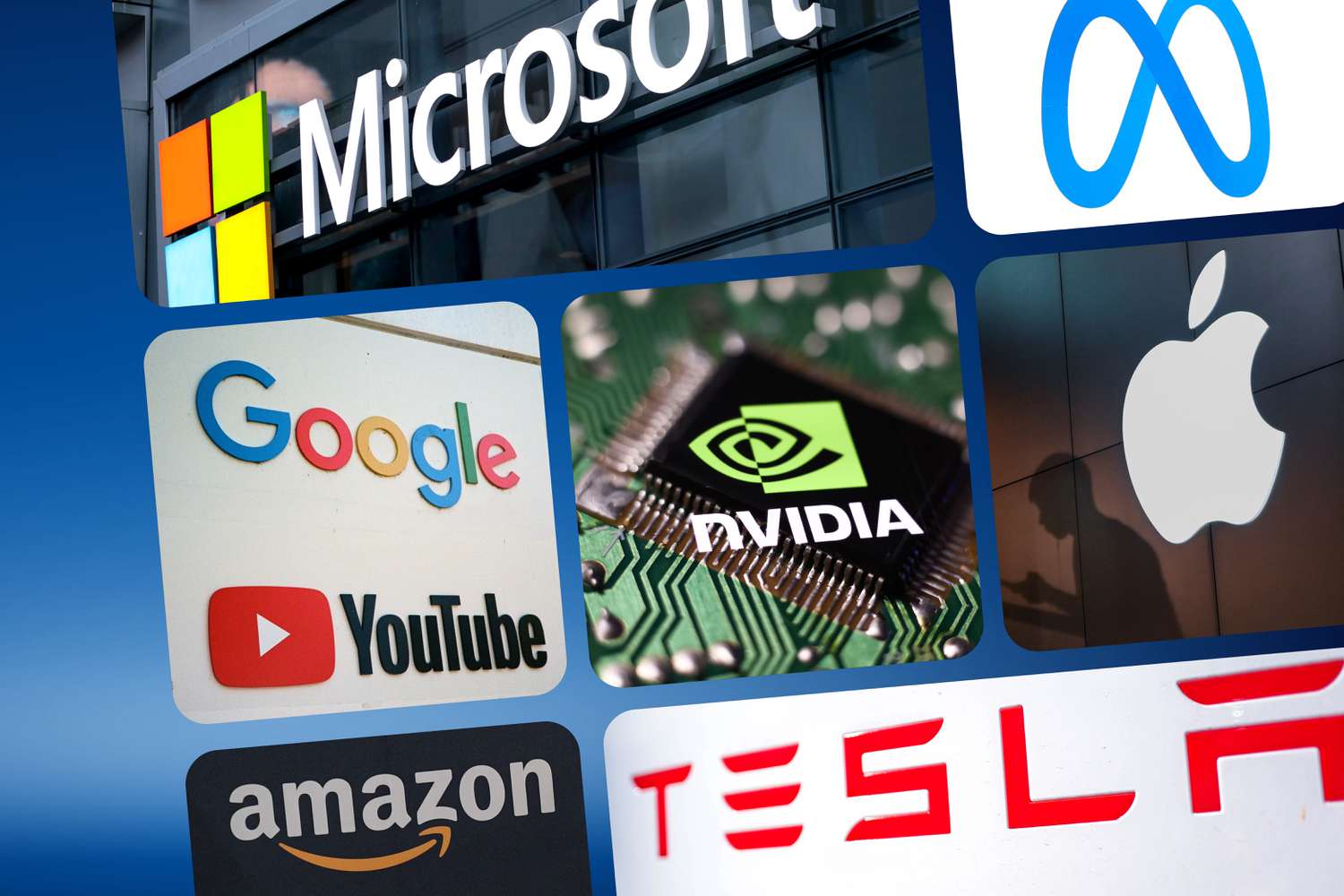
A new analysis from Deutsche Bank released on Wednesday suggests that, despite an ongoing rotation away from technology stocks on Wall Street, the so-called Magnificent 7 remain largely insulated and continue to support the broader equity market.
The artificial intelligence trade has come under pressure amid concerns about stretched valuations and aggressive capital spending by major firms. At the same time, software stocks have suffered sharp losses, driven by fears that advances in AI could disrupt traditional cloud-based business models. This selloff weighed heavily on the technology sector, with steep declines recorded earlier in the week.
Thierry Wizman, global FX and rates strategist at Macquarie, said recent market anxiety was triggered by growing expectations that foundational AI companies could offer cheaper alternatives to legacy software. Such a shift could render existing platforms obsolete sooner than expected, potentially accelerating the productivity gains promised by AI.
Deutsche Bank noted that investor sentiment has shifted meaningfully. Rather than viewing AI as a tide that lifts all technology stocks, markets are now differentiating between clear winners and laggards. Jim Reid, Deutsche Bank’s global head of macro and thematic research, said the era of “every tech stock is a winner” has given way to a far more selective and unforgiving environment.
According to data highlighted by Reid, software companies have experienced some of the steepest drawdowns from their 52-week highs. Duolingo has fallen roughly 78%, while PayPal is down about 55%, and ServiceNow has dropped around 53%.
In contrast, the Magnificent 7 group as a whole is down only about 1% from its most recent peak, even though six of the seven stocks have declined between 5% and 25%. The standout performer is Alphabet, which Reid noted has gained nearly 25% over the past three months and about 75% over the past six months, adding roughly $1.7 trillion in market capitalization.
The Magnificent 7 also includes Tesla, NVIDIA, Microsoft, Meta Platforms, Amazon, and Apple.
Reid pointed out that many companies outside the Magnificent 7 have market capitalizations in the tens of billions, with only a few reaching the hundreds of billions. Alphabet’s gains alone over the past six months have therefore offset a substantial portion of the losses seen across the broader tech universe.
This dynamic helps explain why the S&P 500 remains close to record highs, even as investors rotate into defensive sectors. Reid cautioned, however, that if more members of the Magnificent 7 were to face disruption and slip into the losing category, the impact could extend beyond equities and begin to affect the wider macroeconomic outlook.