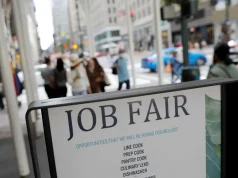
The number of Americans filing new claims for unemployment benefits edged lower last week, signaling that layoffs remain relatively limited. However, weak hiring activity continues to fuel concerns among households about the broader labor market outlook.
According to the U.S. Labor Department, initial jobless claims fell by 1,000 to a seasonally adjusted 209,000 for the week ended January 24. Data for the previous week was revised higher by 10,000, bringing claims to 210,000.
Economists surveyed by Reuters had expected 205,000 new claims. The latest figures included last Monday’s Martin Luther King Jr. Day holiday, which can distort weekly data.
Holiday effects and weather add volatility
Jobless claims often fluctuate around public holidays. Recent data has been particularly uneven due to challenges in adjusting for seasonal patterns around the year-end period. Additional volatility is expected in the coming weeks after a major winter storm brought snow and freezing temperatures to large parts of the country.
Despite these swings, claims remain low by historical standards, reflecting employers’ reluctance to lay off workers as they navigate an uncertain economic environment shaped largely by trade tariffs.
While United Parcel Service and Amazon announced job cuts this week, economists expect these layoffs to have a minimal impact on overall claims. Similar high-profile layoffs last year failed to produce a significant rise in unemployment filings.
Fed sees signs of stabilization
Speaking to reporters on Wednesday, Jerome Powell said labor market indicators suggest conditions may be stabilizing after a period of gradual cooling. The Federal Reserve left its benchmark overnight interest rate unchanged in the 3.50%–3.75% range.
Consumers grow more cautious
Continuing claims, which track the number of people receiving benefits after an initial week and serve as a proxy for hiring conditions, declined by 38,000 to 1.827 million for the week ended January 17.
These figures have also been affected by seasonal adjustment issues. In addition, some recipients may have exhausted their eligibility for unemployment benefits, which are capped at 26 weeks in most states.
The data period for continuing claims overlaps with the government’s household survey used to calculate the unemployment rate. The jobless rate fell to 4.4% in December from 4.5% in November and is expected to remain elevated in January.
Employment indicators from the Conference Board weakened this month. Economists point to soft hiring due to tariffs, immigration enforcement actions that have constrained labor supply, and corporate uncertainty as businesses ramp up investment in artificial intelligence.
Jobs report faces potential delay
The closely watched January employment report from the Bureau of Labor Statistics, due for release next Friday, could be delayed if the federal government shuts down again this weekend.
Democrats in the U.S. Senate have indicated they will oppose funding legislation that includes financing for the Department of Homeland Security, which oversees immigration enforcement. Congress faces a January 30 deadline to avoid a partial government shutdown.