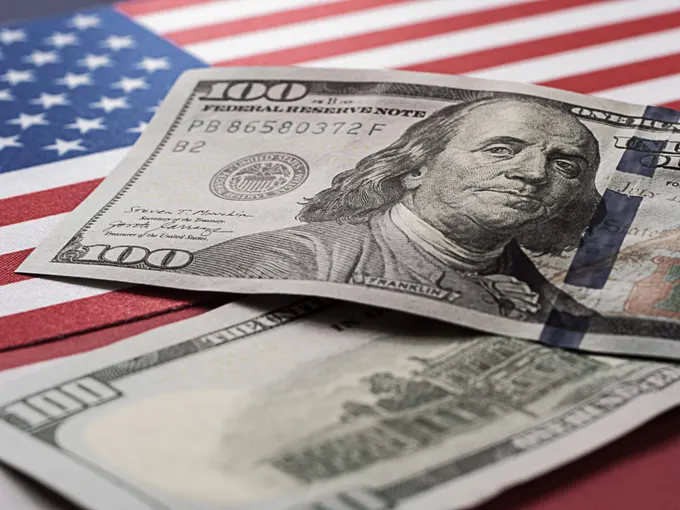
The U.S. dollar has come under renewed pressure in the opening weeks of 2026, as investors reassess long-held assumptions about stability in the greenback. A combination of factors — including Washington’s apparent preference for a weaker currency — is forcing markets to rethink their bullish outlook on the dollar.
On Monday, the dollar was on track for its sharpest three-day decline against a basket of major currencies since last April. That period marked a major selloff in U.S. assets after tariff announcements made during Donald Trump’s so-called “Liberation Day.”
During Trump’s first year in office, unpredictable trade policies, confrontations with allies, public criticism of the Federal Reserve, and a surge in government spending pushed the dollar down more than 9%. That marked its weakest annual performance since 2017.
So far this year, the dollar has continued to lag behind other major currencies, including the euro, British pound, and Swiss franc.
Rapid policy shifts unsettle markets
“There are several forces converging at once,” said Seema Shah, chief global strategist at Principal Asset Management, which oversees more than $600 billion in assets. She noted that while this is not a full-scale retreat from U.S. assets, the underlying fundamentals are shifting faster than many expected.
In recent weeks alone, Trump has floated taking control of Greenland, threatened new tariffs on European allies, pushed for the criminal indictment of Fed Chair Jerome Powell, and overseen an operation targeting Venezuela’s leadership. Over the weekend, he also warned Canada of what could amount to a trade embargo.
Although some of these threats were later softened and markets absorbed the geopolitical shock involving Venezuela, overall sentiment remains tense.
Financial market volatility is elevated, while bond market confidence is fragile. A sharp selloff in Japanese government bonds has raised concerns about spillover risks to U.S. Treasuries. At the same time, gold’s steady march to record highs signals growing demand for alternative safe-haven assets.
Domestic risks add to dollar pressure
Trump’s domestic agenda is also weighing on sentiment. A sweeping crackdown on illegal immigration has led to protests and heightened political tensions, while the threat of another U.S. government shutdown later this month looms over markets.
Mark Spindel, chief investment officer at Potomac River Capital, said the shutdown risk is adding another headwind for the dollar, particularly for investors reconsidering U.S. exposure or increasing currency hedges.
Monetary policy expectations are also working against the greenback. The Federal Reserve is still widely expected to cut interest rates at least twice this year, while several other major central banks have paused easing or may even raise rates. This widening policy divergence reduces the dollar’s appeal relative to higher-yielding alternatives.
Powell is set to step down in May, and speculation over his successor has intensified. Betting markets now assign a 50% probability to BlackRock bond chief Rick Rieder — who supports lower interest rates — taking the role, up sharply from less than 10% a week earlier. That shift has added further pressure to the dollar.
Global investors diversify away from U.S. assets
Global equity markets surged last year, driven largely by enthusiasm around artificial intelligence. However, U.S. stocks have lagged their international peers since Trump returned to office.
The S&P 500 has gained roughly 15% over that period, compared with a 95% rally in South Korea’s Kospi, a 40% rise in Japan’s Nikkei, and nearly a 30% increase in Shanghai’s benchmark index.
Chris Scicluna, an economist at Daiwa Capital Markets, said asset managers are increasingly looking to diversify away from U.S. markets after years of heavy positioning.
Trump has repeatedly defended tariffs as a tool to correct trade imbalances, particularly with Asian economies whose currencies the U.S. runs large deficits against.
Last Friday, the Bank of Japan and the Federal Reserve Bank of New York were suspected of conducting rate checks on the yen. Such actions are often viewed as a precursor to coordinated currency intervention — something not seen between Japan and the U.S. in 15 years.
Despite a sharp rebound, the yen remains roughly 13% weaker against the dollar over the past year.
Trade-weighted dollar shows resilience
On a trade-weighted basis, the dollar has performed more steadily. According to an index compiled by the Bank for International Settlements, the currency has declined by about 5.3% over the past 12 months.
Dominic Bunning, head of G10 FX strategy at Nomura, said investor concerns are shifting from cyclical factors — such as slowing growth — toward policy-driven risks.
He noted that unlike last year, current pressures on the dollar stem more from geopolitical tensions and confrontational policies than from purely economic considerations.