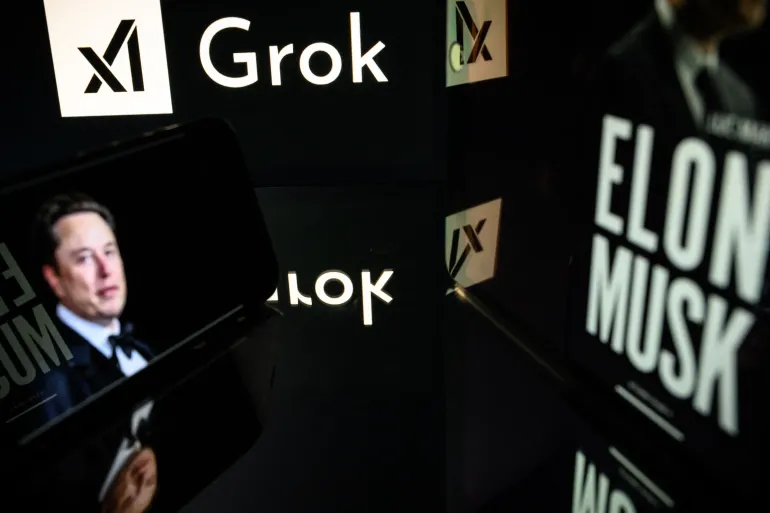
Elon Musk’s social media platform X is under investigation by the European Union over concerns that it may be spreading illegal content, following public backlash over manipulated sexualised images generated by its AI chatbot, Grok.
On Monday, the European Commission announced it would examine whether X adequately protected users by properly identifying, assessing, and reducing risks linked to Grok’s features. The probe focuses on whether the platform complied with its obligations when rolling out the chatbot in Europe.
The EU action comes two weeks after the UK media regulator Ofcom launched a separate investigation into concerns that Grok was producing sexually explicit deepfake images. Around the same time, Indonesia, the Philippines, and Malaysia temporarily blocked access to the chatbot.
Earlier this month, the Commission condemned the circulation of AI-generated images depicting undressed women and children on X, describing the content as unlawful and deeply disturbing. The issue sparked widespread international criticism.
“Non-consensual sexual deepfakes of women and children are a violent and unacceptable form of abuse,” said Henna Virkkunen, the EU’s technology commissioner, in a statement.
Deepfake images raise global alarm
X pointed to a statement released on January 14, saying its owner xAI had limited image-editing capabilities for Grok users and blocked the generation of revealing images of people in jurisdictions where such content is illegal. The company did not specify which countries were affected.
Following the introduction of additional safety measures by xAI, the Philippines and Malaysia restored access to Grok.
The European Commission’s investigation is being conducted under the Digital Services Act, which requires large technology companies to take stronger action against illegal and harmful online material. Violations of the DSA can result in fines of up to 6% of a company’s global annual revenue.
While EU officials welcomed xAI’s recent changes, they stressed that these steps do not fully address the broader systemic risks. A senior Commission official said X appeared not to have carried out a specific risk assessment when Grok’s functionalities were introduced in Europe.
Political tensions add complexity
The probe could strain relations with the administration of U.S. President Donald Trump, as EU enforcement actions against Big Tech have previously drawn criticism from Washington, including threats of retaliatory tariffs.
“With this investigation, we will assess whether X has complied with its legal obligations under the DSA or whether the rights of European citizens—especially women and children—were treated as collateral damage,” Virkkunen said.
Irish lawmaker Regina Doherty argued that the case highlights broader weaknesses in how artificial intelligence is regulated and enforced across the bloc. She said the EU’s AI Act must remain adaptable to address emerging risks and enforcement gaps as they become evident.
Separately, EU regulators have expanded an investigation into X that began in December 2023, examining whether the platform has properly assessed and mitigated systemic risks linked to its recommendation algorithms, including the recent shift toward a Grok-based system.
X, which was fined €150 million in December for breaching transparency rules under the DSA, could face interim measures if regulators determine that meaningful changes are not made to its service.