Most Asian currencies traded within narrow ranges on Tuesday, as the U.S. dollar weakened amid growing investor unease tied to renewed geopolitical tensions involving U.S. President Donald Trump and Greenland. Trump’s persistent push regarding the island increased caution toward U.S.-linked assets, limiting risk appetite across the region.
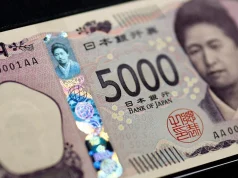
Asian markets showed minimal reaction after China kept a major lending rate unchanged, a move that had been widely anticipated. Meanwhile, the Japanese yen was largely steady after Prime Minister Sanae Takaichi announced plans for a snap general election in early February.
Trading conditions were also subdued following a U.S. market holiday on Monday, resulting in a lack of overnight directional cues. This absence of momentum reinforced risk-averse sentiment in Asia, particularly after Trump announced over the weekend that he would impose tariffs on Europe linked to the Greenland dispute.
Japanese yen steady as election and BOJ meeting loom
The Japanese yen edged slightly higher, with the USD/JPY pair slipping around 0.1% on Tuesday, although it remained close to recent highs due to limited positive catalysts. On Monday, Prime Minister Takaichi confirmed she would dissolve Japan’s lower house later this week and call a snap election for February 8.
Given her strong approval ratings, markets expect the election to strengthen Takaichi’s mandate and potentially support further fiscal stimulus measures. However, investors remain skeptical about how much additional spending Japan can realistically pursue, particularly as Japanese government bonds continued to sell off. This bond market weakness weighed modestly on the yen.
Takaichi’s announcement also came ahead of a closely watched Bank of Japan policy meeting scheduled for Friday. Market participants remain divided over whether the central bank has sufficient justification to deliver another interest rate hike.
The BOJ raised rates at its final policy meeting of 2025 and previously signaled that sustained inflation and wage growth could justify further tightening. However, policymakers may choose to wait for clearer signals from Japan’s spring wage negotiations, which typically take place between March and April.
Dollar weakens amid Trump–Greenland tensions
The dollar index and its futures both slipped around 0.1% during Asian trading hours, as the greenback came under pressure from rising caution toward U.S. assets linked to Trump’s renewed focus on Greenland.
European leaders pushed back strongly against the proposed tariffs and reaffirmed their position that Greenland should remain part of the Kingdom of Denmark. Trump reiterated his demands on Monday and declined to rule out the use of military force, further unsettling markets.
The U.S. president is expected to attend the World Economic Forum in Davos, Switzerland, where discussions with European leaders could bring the Greenland issue into sharper focus.
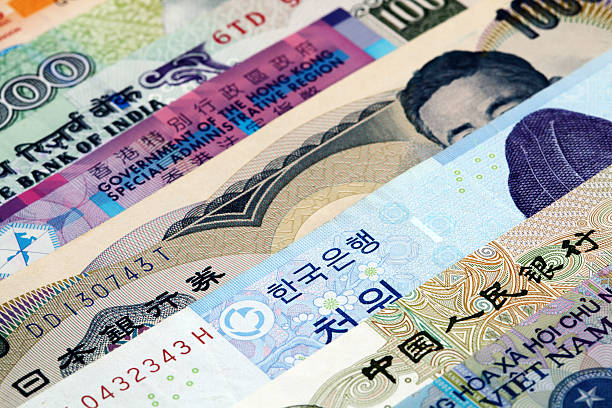
Heightened risk aversion surrounding the situation continued to suppress movements in Asian currencies. The Chinese yuan saw a modest gain, with the USD/CNY pair edging lower despite little reaction to the People’s Bank of China leaving its loan prime rate unchanged. The yuan remained near its strongest levels in more than two years, supported by a series of firm daily midpoint fixings.
The Taiwan dollar weakened, with USD/TWD rising 0.3%, while the Australian dollar advanced by a similar margin against the U.S. dollar, benefiting from broad greenback softness.
Elsewhere, the South Korean won slipped slightly, with USD/KRW up 0.2%, and the Singapore dollar also weakened marginally. The Indian rupee continued to face pressure, with USD/INR rising 0.1% and hovering near the 91-per-dollar level, as concerns mounted over the broader outlook for India’s economy.