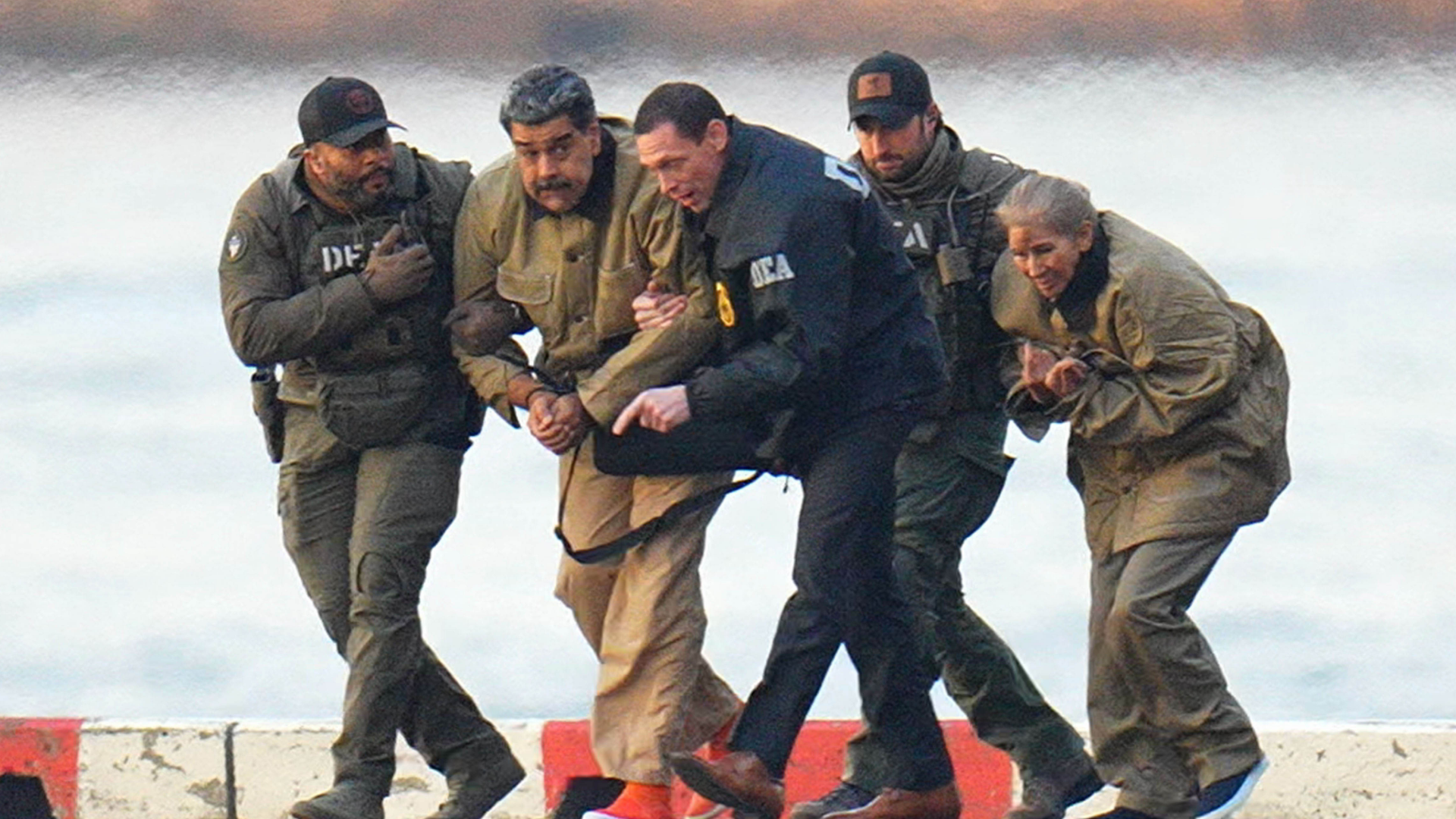
Venezuela’s ousted president Nicolas Maduro pleaded not guilty on Monday to U.S. narcotics charges, following his dramatic capture ordered by U.S. President Donald Trump—an operation that stunned global leaders and forced officials in Caracas to scramble for direction.
“I am innocent. I am not guilty. I am a decent man. I am still president of my country,” Maduro, 63, told the court through an interpreter during a brief appearance before U.S. District Judge Alvin Hellerstein in Manhattan federal court. The judge cut the statement short. Maduro’s wife, Cilia Flores, also entered a not-guilty plea. The next court hearing was scheduled for March 17.
Outside the courthouse, dozens of demonstrators—both supporters and critics of Maduro—gathered ahead of the half-hour proceeding. Inside, Maduro appeared shackled at the ankles and dressed in orange and beige prison clothing. He claimed he had been “kidnapped” and insisted he remained Venezuela’s rightful president while listening to the charges through headphones.
U.S. prosecutors accuse Maduro of overseeing an international cocaine-trafficking operation linked to major drug cartels. He faces four criminal counts, including narco-terrorism, conspiracy to import cocaine, and possession of machine guns and destructive devices. Maduro has long rejected the accusations, arguing they are a pretext for foreign powers seeking control over Venezuela’s vast oil reserves.
His defense attorney, Barry Pollack, said the case would involve extensive and complex litigation, describing Maduro’s capture as a “military abduction.”
Successor sworn in
Hours later in Caracas, Vice President Delcy Rodriguez was sworn in as interim president. While expressing loyalty to Maduro, she did not signal any intention to challenge the U.S. action.
According to a report by the Wall Street Journal, a recent U.S. intelligence assessment concluded Rodriguez was best positioned to lead a temporary government during Maduro’s absence. The report said opposition figures such as Nobel Peace Prize laureate Maria Corina Machado and former presidential candidate Edmundo Gonzalez would struggle to gain broad legitimacy.
Asked about the assessment, White House spokeswoman Karoline Leavitt said the administration was making “realistic decisions” to align Venezuela with U.S. interests. While many anti-Maduro activists had expected a larger role, Trump appeared to sideline the opposition, instead suggesting Rodriguez was open to cooperation with Washington.
Leavitt told Fox News that Secretary of State Marco Rubio was in constant contact with remaining Venezuelan officials and that the United States retained significant leverage over Caracas.
Senior figures from Maduro’s long-ruling government remained in control of the oil-rich nation of 30 million people, alternating between defiant rhetoric and cautious engagement with the Trump administration. The intelligence assessment cited by the Wall Street Journal said Rodriguez, along with the interior and defense ministers, were among the few capable of maintaining order.
Trump told NBC News that the United States was not at war with Venezuela itself, but with drug traffickers. He added that major reforms were needed before any new elections could take place, dismissing a 30-day timeline as unrealistic.
Legal and geopolitical questions
The United States has viewed Maduro as an illegitimate ruler since Venezuela’s disputed 2018 election. However, international law experts have questioned the legality of the operation, with some arguing it undermines the rules-based global order.
Deputy Attorney General Todd Blanche said the administration acted within the law, asserting that the U.S. has the right to arrest individuals charged with serious crimes.
As global leaders reacted, the United Nations Security Council debated the implications of capturing a sitting head of state. Russia, China, and left-leaning allies of Venezuela condemned the move.
Uncertainty also surrounded Venezuela’s future governance after Trump claimed the U.S. was effectively “in charge.” White House Deputy Chief of Staff Stephen Miller echoed that view, citing a sweeping oil embargo that gives Washington control over Venezuela’s ability to trade.
Rubio, Defense Secretary Pete Hegseth, and other senior officials briefed congressional leaders on the operation. Senate Democratic leader Chuck Schumer said the briefing raised more questions than answers and warned the administration would not rule out similar actions elsewhere.
Trump has openly discussed U.S. access to Venezuela’s oil sector, saying American energy companies would return to rebuild infrastructure. He told NBC News that Washington may subsidize the effort, potentially completing it within 18 months. CBS News reported that executives from Exxon Mobil, ConocoPhillips, and Chevron are expected to meet U.S. Energy Secretary Chris Wright later this week.