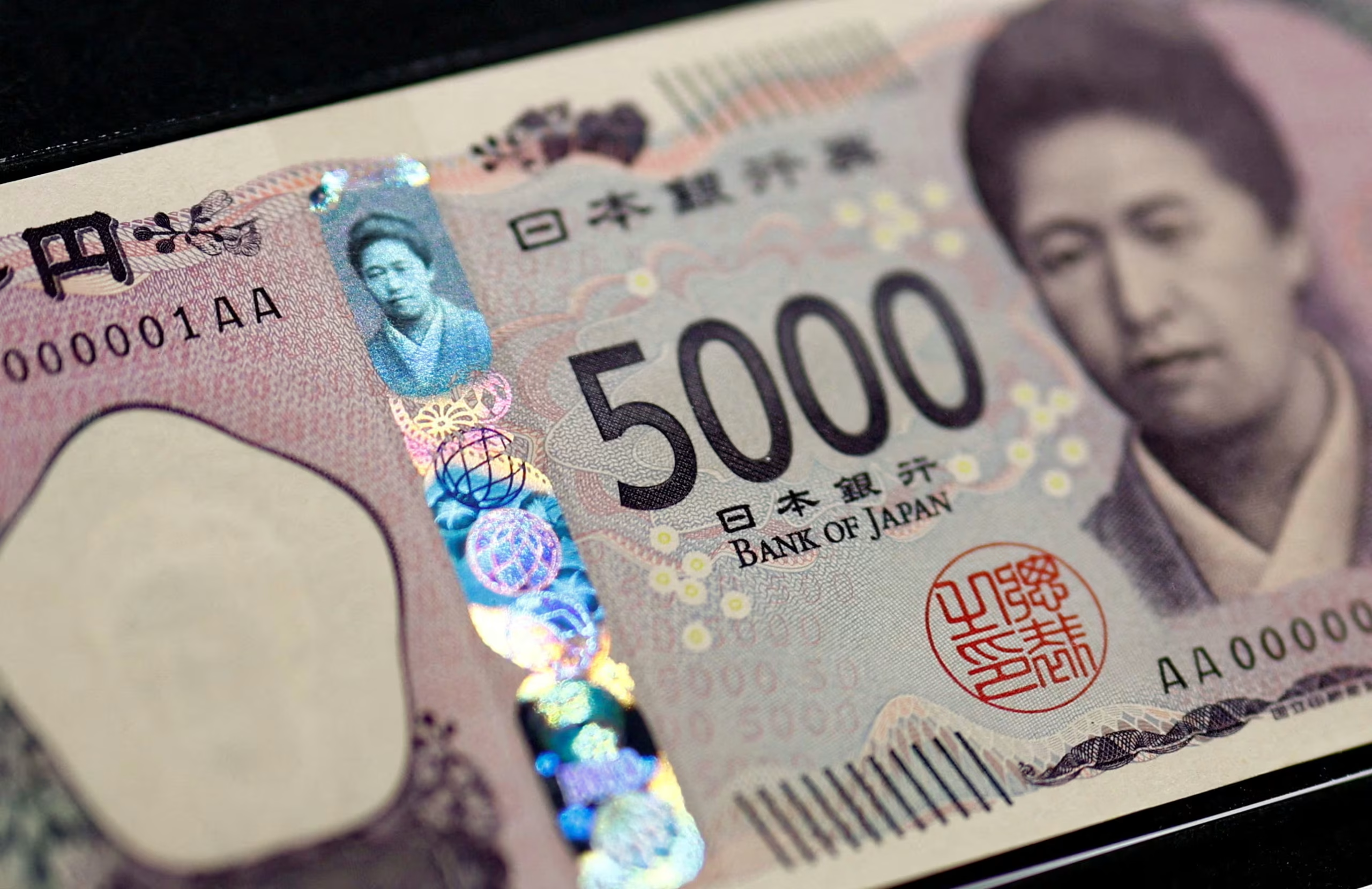
The Japanese yen regained some lost ground on Monday after suffering a sharp decline late last week. Markets remained cautious as investors assessed the outlook for further interest rate hikes in Japan, while also factoring in the risk of currency intervention during thin year-end trading conditions.
Minutes from the Bank of Japan’s December policy meeting, released on Monday, showed policymakers actively debating whether additional rate increases would be necessary. Meanwhile, the euro found support after U.S. President Donald Trump expressed optimism about progress toward a potential peace agreement to end the war in Ukraine.
Japan retains full authority to respond to excessive currency moves, Finance Minister Satsuki Katayama said last week. These intervention warnings have helped restrain aggressive dollar-yen positions. However, broader pessimism toward the yen is becoming more evident in other currency pairs, according to Bart Wakabayashi, Tokyo branch manager at State Street.
Wakabayashi noted that holding long yen positions has proven difficult for investors, with increased short positioning emerging against currencies such as the Australian dollar. He added that markets are still reassessing the yen’s role as a traditional safe-haven asset.
The yen strengthened by 0.3% to 156.14 per dollar after falling 0.5% on Friday. Against the Australian dollar, the yen traded at 105.02, hovering just above a 17-month low reached late last week.
The dollar index, which tracks the U.S. currency against a basket of major peers, was little changed at 98.03. The euro held steady near $1.1770, while sterling edged slightly lower to $1.3491.
At its December meeting, the Bank of Japan raised its policy rate to 0.75%, the highest level in three decades. Despite the move, the yen continued to weaken, highlighting that inflation-adjusted interest rates remain deeply negative. The policy summary indicated that several board members believe further rate increases may be needed.
The yen’s decline intensified after the rate hike, sliding to 157.78 per dollar on December 19. This weakness prompted renewed intervention warnings. Japan last intervened in currency markets in July 2024, when authorities bought yen after it hit a 38-year low near 161.96 per dollar.
With limited economic data scheduled this week and reduced liquidity ahead of New Year holidays, geopolitical developments have taken centre stage. President Trump said on Sunday that talks with Ukrainian President Volodymyr Zelenskiy were nearing a possible agreement to end the conflict, although both leaders acknowledged that major issues remain unresolved.
French President Emmanuel Macron stated that progress had been made on security guarantees and confirmed that a “Coalition of the Willing” would meet in Paris in early January to finalise concrete commitments.
Tensions also rose in Asia. China positioned military units around Taiwan ahead of planned live-fire drills, while North Korea conducted long-range missile launches under the supervision of leader Kim Jong Un. South Korea’s Yonhap News Agency reported that additional missile tests could take place around New Year’s Day.
The key data event this week will be Tuesday’s release of minutes from the U.S. Federal Open Market Committee’s December meeting. While the Federal Reserve cut rates and projected only one additional reduction next year, market pricing continues to reflect expectations for at least two cuts.
The Australian dollar was steady at $0.6717, while the New Zealand dollar slipped 0.2% to $0.582. In cryptocurrency markets, bitcoin rose 2.2% to $89,463, and ether gained 2.6% to $3,012.