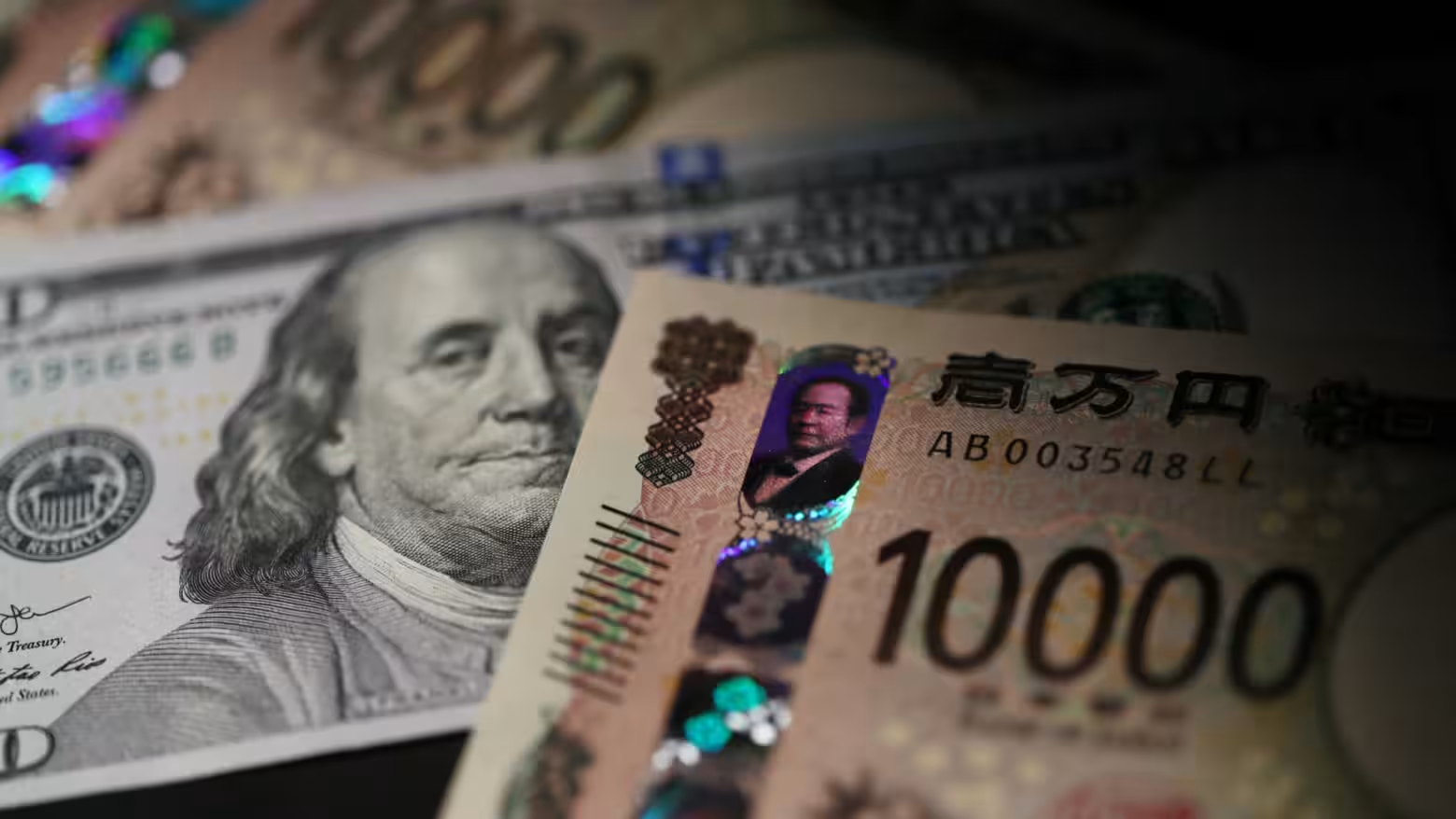
The Japanese yen strengthened against the U.S. dollar on Monday after senior officials warned against “one-sided and sharp” currency moves, signaling a willingness to intervene if volatility becomes excessive. Analysts viewed the comments as a clear warning shot to markets.
The yen also benefited from a broadly weaker dollar, which has remained under pressure since the Federal Reserve delivered a 25-basis-point interest rate cut at its December 10 policy meeting.
Marc Chandler, chief market strategist at Bannockburn Global Forex, said officials had effectively engaged in verbal intervention. He noted that the prospect of direct action became more credible after the Bank of Japan raised interest rates, allowing authorities to argue that the yen is diverging from economic fundamentals.
Chandler added that the policy shift has triggered some short-covering in the yen, contributing to its recent rebound.
Japan’s top currency diplomat, Atsushi Mimura, told reporters that recent foreign-exchange moves had been overly sharp and one-directional, stressing that the government stands ready to respond to excessive volatility.
Chief Cabinet Secretary Minoru Kihara also cautioned against continued yen weakness, emphasizing that exchange rates should move in a stable manner that reflects underlying fundamentals.
By mid-morning trading, the dollar had fallen 0.5% against the yen to 156.96, after briefly touching a low of 156.88.
Dollar slides toward worst annual drop since 2017
The dollar index slipped 0.4% to 98.267, weighed down by losses against both the euro and the yen. The index was on track for its steepest annual decline in eight years.
The euro rose 0.4% to $1.1761, snapping a four-day losing streak. The European Central Bank left interest rates unchanged and signaled that further cuts are unlikely in the near term, a decision that had been widely anticipated. ECB President Christine Lagarde has repeatedly said the central bank is comfortable with its current policy stance.
Sterling also strengthened, climbing 0.6% to $1.3448, after ending the previous week largely flat. Although the Bank of England recently cut rates, policymakers suggested that additional easing may be limited, given inflation remains above target.
The pound has gained 1.1% this month, bringing its total advance for the year to roughly 7%.
Earlier in the session, the euro touched a record high against the yen at 184.92, while the Swiss franc also climbed to an all-time peak of 198.4 yen. Both currencies later eased slightly, with the euro last flat at 184.74 yen and the franc at 198.32 yen, still up about 0.6% on the day.
Japan policy signals under scrutiny
Recent yen weakness has partly been driven by concerns over fiscal policy following new Prime Minister Sanae Takaichi’s spending plans aimed at boosting growth, which investors fear could further strain Japan’s public finances.
Markets are now looking ahead to remarks from BOJ Governor Kazuo Ueda, who is scheduled to speak at Japan’s Keidanren business lobby on December 25, for potential clues on future monetary policy.
Government sources said Japan’s draft budget for fiscal 2026 is expected to exceed 120 trillion yen ($775 billion), setting a new record for public spending.
Derek Halpenny, head of research for Global Markets EMEA at MUFG, warned that FX intervention is unlikely to be effective without clearer signals from the government on managing fiscal risks.
He added that if those concerns persist, selling pressure in Japanese government bonds could intensify, further destabilizing the yen and potentially forcing the Ministry of Finance to take action.