Donald Trump used a campaign-style speech in North Carolina on Friday to promote his party’s electoral prospects, arguing that his economic leadership puts Republicans in a strong position heading into the midterm election year.
Speaking in a key battleground state, Trump sought to reassure voters about the state of the U.S. economy, even as consumer sentiment remains weak and public approval ratings continue to lag. He pointed to rising stock markets, easing inflation data, and a recent agreement aimed at lowering prescription drug costs as evidence of economic progress.
Trump said the pharmaceutical deal alone should be enough to secure victory in the midterms. He also claimed vindication on inflation, telling supporters that recent data confirmed his earlier assertions.
The 90-minute address, billed as an economic speech, frequently drifted into unrelated topics. Trump referenced his cognitive tests, questioned the intelligence of former Democratic presidential nominee Hillary Clinton, and made claims about past law enforcement actions involving his family. He did not address the Justice Department’s release earlier that day of thousands of heavily redacted documents tied to Jeffrey Epstein.
Trump faces pressure ahead of 2026 midterms
With consumer prices still elevated and unemployment rising, Trump faces a challenging political environment ahead of the November 2026 midterm elections. According to a recent Reuters/Ipsos survey, only 33% of U.S. adults approve of how Trump has handled the economy.
Trump reiterated his view that economic conditions are set to improve under his policies and blamed current hardships on Democrats. He has delivered similar messages in recent appearances in Pennsylvania and during a nationwide address earlier in the week. On Friday, he criticized television networks for not airing White House charts that he said supported his economic claims.
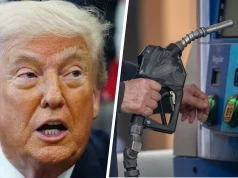
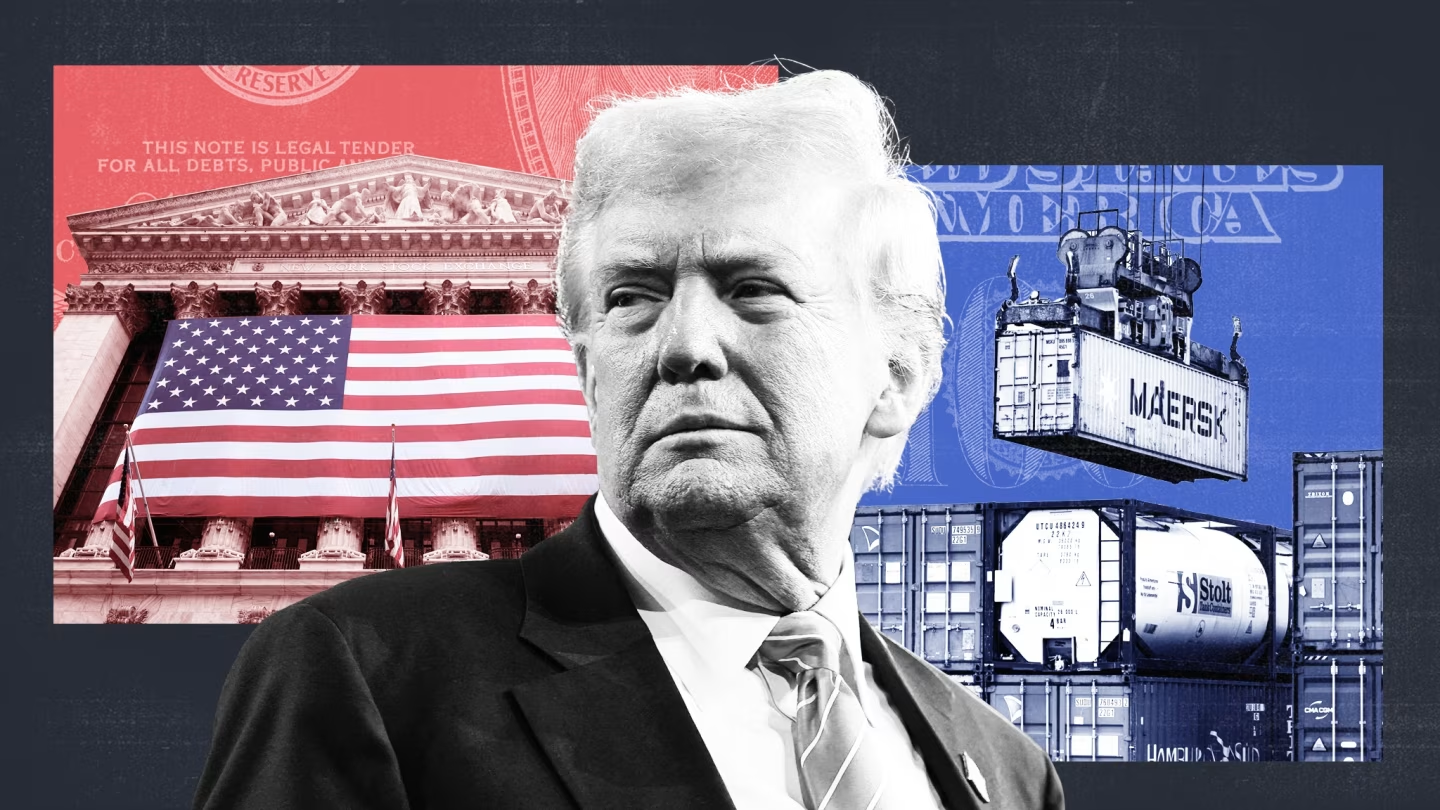
The president argued that his administration has reduced gasoline prices, implemented tariffs that are generating billions of dollars in government revenue, and secured hundreds of billions of dollars in investment commitments from foreign governments.
Despite those claims, many Republicans remain concerned that economic dissatisfaction could undermine their chances of maintaining control of both the House of Representatives and the Senate during the final two years of Trump’s term. Democrats, meanwhile, argue that Trump has mismanaged the economy—an issue that played a central role in his return to the White House last year.
Trump’s speech took place in Rocky Mount, North Carolina, a city represented in Congress by Democrat Don Davis. Davis faces a difficult re-election campaign in 2026 after redistricting reshaped his seat in a way that favors Republicans.
North Carolina is also expected to host one of the most competitive Senate races of the 2026 cycle, as voters prepare to replace retiring Senator Thom Tillis. The state is widely viewed as a political swing state, though Trump carried it in the 2016, 2020, and 2024 presidential elections.
The North Carolina appearance came as Trump traveled to his Mar-a-Lago resort in Palm Beach, Florida, where he plans to spend the Christmas and New Year holidays.
Recent inflation data offered Trump some political encouragement. November’s Consumer Price Index showed housing costs rising at their slowest pace in four years, while food prices increased by the smallest amount since February. Egg prices, a frequent focus of Trump’s remarks, declined for a second consecutive month and posted their largest drop in nearly two years.
However, the report also showed sharp increases in other areas, including beef and electricity prices, underscoring the mixed picture facing U.S. consumers.