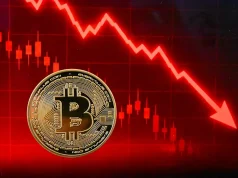
Global macro analyst Luke Gromen has turned cautious on Bitcoin in the near term, warning that the leading cryptocurrency could face downside risks as macroeconomic conditions, market narratives, and technical signals shift.
Speaking recently on the RiskReversal podcast, Gromen said Bitcoin could potentially fall toward the $40,000 level by 2026. While he remains committed to the long-term debasement thesis for fiat currencies, he argued that Bitcoin currently looks more vulnerable compared with alternatives such as gold and select equities.
Debasement thesis intact, but Bitcoin loses momentum
The debasement trade is based on the view that governments will reduce the real value of debt through inflation and currency depreciation, prompting investors to move capital into scarce assets like gold, commodities, and cryptocurrencies. Gromen continues to support this broader framework but said Bitcoin is no longer the strongest vehicle for expressing that view in the short term.
According to Gromen, gold and certain equities are currently outperforming Bitcoin as inflation hedges. He noted that “almost everything except gold and the dollar” could struggle as macro pressures intensify.
Technical signals and narrative shifts raise caution
Gromen highlighted several warning signs weighing on Bitcoin’s risk-reward profile. These include Bitcoin’s failure to make new highs relative to gold, breaks below key moving averages, and growing discussion around potential quantum computing risks.
Bitcoin recently slipped below the $90,000 level, reinforcing concerns that momentum has weakened. For long-time followers of Gromen’s work, the shift in tone marked a notable change, as he has historically grouped Bitcoin alongside gold as a core component of the debasement trade driven by rising debt levels and fiscal dominance.
In contrast to his earlier views, Gromen now frames Bitcoin as a position that can be tactically reduced when conditions turn unfavorable, even as he remains structurally bullish on hard assets over the long run.
Macro uncertainty and quantum risk concerns grow
Gromen’s comments come amid broader unease in crypto markets. Concerns around macroeconomic slowing, softer U.S. labor and consumer data, and questions over whether Bitcoin can sustain gains following the launch of spot ETFs have weighed on sentiment.
At the same time, discussions around quantum computing have evolved from a distant theoretical risk to a medium-term concern in some investor circles. While most cryptography experts argue that practical threats to Bitcoin’s security remain far off, the narrative itself has contributed to market caution.
Bitcoin analysts push back on bearish outlook
Not all analysts agree with Gromen’s assessment. Several Bitcoin-focused commentators have dismissed his arguments, suggesting that broken technical levels and underperformance versus gold are backward-looking indicators rather than signals of a major trend reversal.
On-chain analyst Checkmate argued that much of the bearish case relies on social media narratives rather than blockchain data. Meanwhile, Troy Cross of the Bitcoin Policy Institute said the concern appears driven more by perceptions of quantum risk than by any imminent cryptographic threat.
ETF flows and long-term outlook remain mixed
Market data paints a more balanced picture. After significant outflows in November, U.S. spot Bitcoin ETFs have returned to modest net inflows in December, suggesting institutional interest has not disappeared entirely.
The broader debasement thesis that underpins long-term bullish views on Bitcoin remains intact for many investors. Gromen’s stance appears less like a rejection of Bitcoin’s role as a hedge and more like a tactical adjustment in response to shifting narratives and technical conditions.