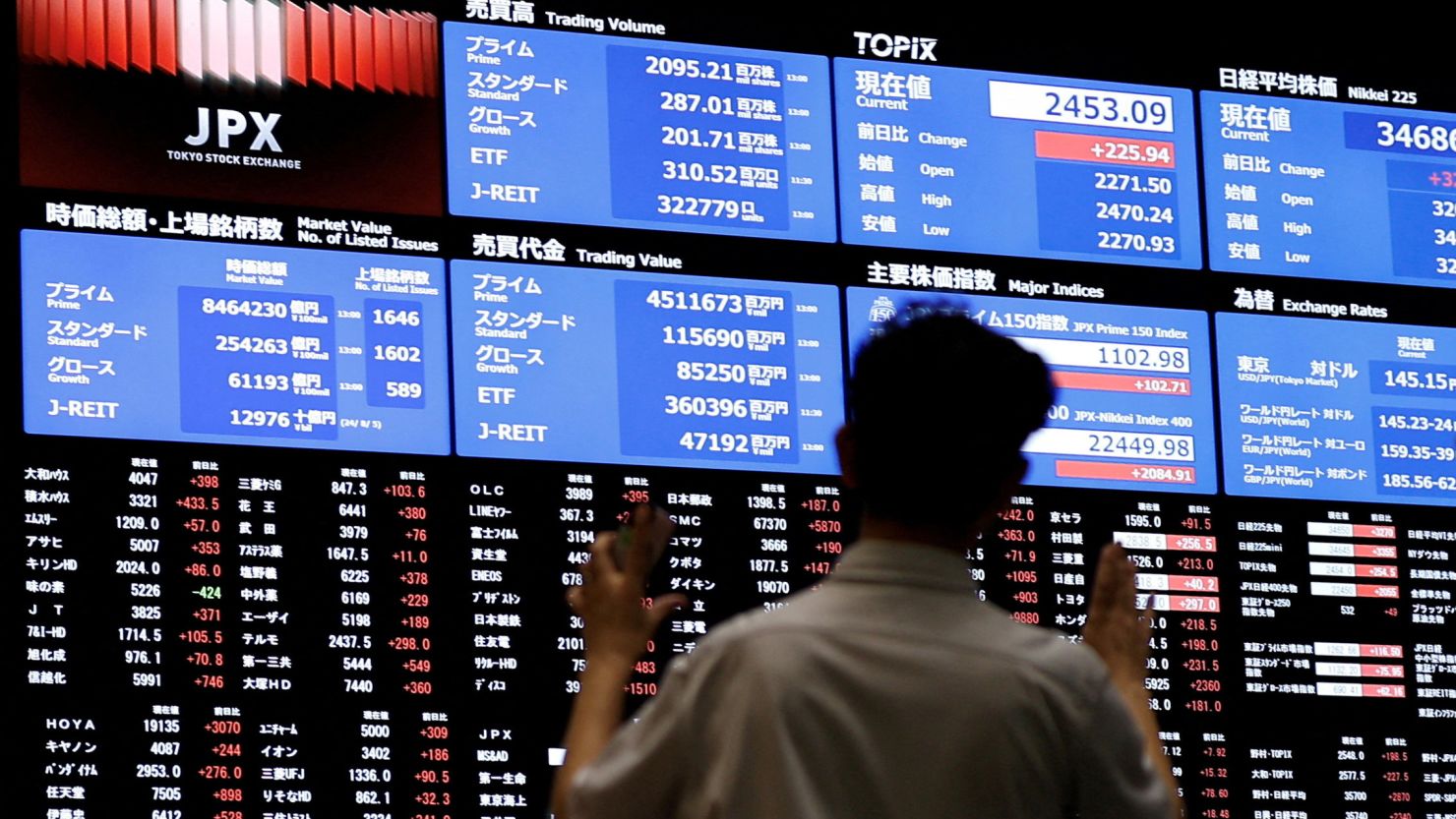
Asian stocks fell to one-month lows on Tuesday, with the sharpest declines seen in Japan and South Korea’s tech-heavy markets. Investor sentiment weakened ahead of Nvidia’s upcoming earnings report, which is expected to be a key test for valuations across the global technology sector.
Bitcoin also retreated, slipping below $90,000 for the first time in seven months. Japan’s Nikkei Index dropped 3%, putting it on track for its largest single-day decline since April. Futures for both the FTSE and major European benchmarks were also down more than 1%.
Market confidence appears to be fading, according to Tareck Horchani, head of prime brokerage dealing at Maybank Securities in Singapore. He noted that the downturn is less about a specific catalyst and more about investors becoming cautious due to high valuations and fatigue in market positioning.
MSCI’s broad Asia-Pacific index outside Japan slid 1.8%, reaching its lowest point since mid-October. South Korea’s KOSPI fell 3.3%, Australia’s S&P/ASX200 lost nearly 2%, and Hong Kong’s Hang Seng Index declined 1.67%.
The weakness followed another selloff on Wall Street, with markets preparing for a busy week of important economic data. According to Besa Deda, chief economist at William Buck in Sydney, global equity markets have shown more volatility in November, with major indices struggling to reach new highs.
Focus on Nvidia’s Earnings
Investors are closely watching Nvidia’s quarterly results due on Wednesday. Any sign of softening demand could challenge a sector that has driven much of the market’s momentum this year.
A basket of Japan’s top AI-related stocks tracked by BNP Paribas fell 4.7% on Tuesday, widening its decline to around 15% since the end of October. Before that downturn, the basket had surged 130% from the start of the year.
Jason Lui of BNP Paribas said that many Asian technology companies sit within the global AI supply chain. As investors reassess spending plans and sustainability within the sector, more selective investment patterns are emerging across both the U.S. and Asia.
In currency markets, investors moved toward traditional safe-haven currencies. The dollar, yen, and Swiss franc all gained. The Swiss franc traded slightly stronger than 0.80 per dollar, while the dollar index held steady at 99.5. The yen strengthened 0.15% to 155 per dollar, offering some relief to Japanese policymakers concerned about recent currency weakness.
Bond Market Pressure in Japan
Japanese government bonds declined further, pushing some long-term yields to record highs amid concerns about Prime Minister Sanae Takaichi’s expansive spending plans.
The meeting between Takaichi and Bank of Japan Governor Kazuo Ueda was being watched closely. Ueda has hinted at the possibility of a rate hike as early as next month, while Takaichi and Finance Minister Satsuki Katayama have signaled a preference for maintaining low rates until inflation consistently reaches the BOJ’s 2% target.
Tai Hui, chief market strategist for Asia at JPMorgan Asset Management, expects any future rate hike to be delayed until 2026, noting that the BOJ tends to take a cautious, wait-and-see approach.
Gold slipped 0.87% to $4,008 an ounce, while Brent crude futures fell 0.67% to $63.77 per barrel. Bitcoin dropped nearly 2%, falling back below $90,000 and now sitting about 30% below its recent peak.