Ryanair Reports 42% Profit Surge but Warns of Fare Pressures and Geopolitical Risks
Ryanair Holdings Plc (IR:RYA) announced on Monday a 42% rise in first-half profit to €2.54 billion, driven by strong summer travel demand and higher average fares. However, the airline cautioned that tougher fare comparisons and rising geopolitical risks could pressure performance in the second half of the year.
In the second quarter, Ryanair’s net profit climbed 20% to €1.72 billion, up from €1.43 billion a year earlier. Revenue increased 13% to €9.82 billion, supported by a 3% rise in passenger traffic to 119 million travelers and a 13% jump in average fares to €58.
The load factor — a measure of how full flights are — remained strong at 95% for the half-year and ticked up to 96% in the quarter. Operating profit rose 42% to €2.86 billion, while operating costs increased 4% to €6.96 billion, with unit costs up only 1%, reflecting tight cost control.
The carrier said its fuel hedging strategy helped offset rising air-traffic-control and environmental costs. Ryanair has hedged around 85% of its jet fuel needs for the second half of fiscal 2026 at $76 per barrel and secured 80% coverage for fiscal 2027 just below $67 per barrel.
Ryanair also declared an interim dividend of €0.193 per share, payable in February 2026, and revealed that it had repurchased over 7 million shares worth €188 million under its ongoing €750 million buyback program launched in May.
As of September 30, the group reported €3 billion in gross cash and €1.5 billion in net cash, following €1.2 billion in debt repayments, €1.1 billion in capital spending, and €400 million in shareholder distributions.
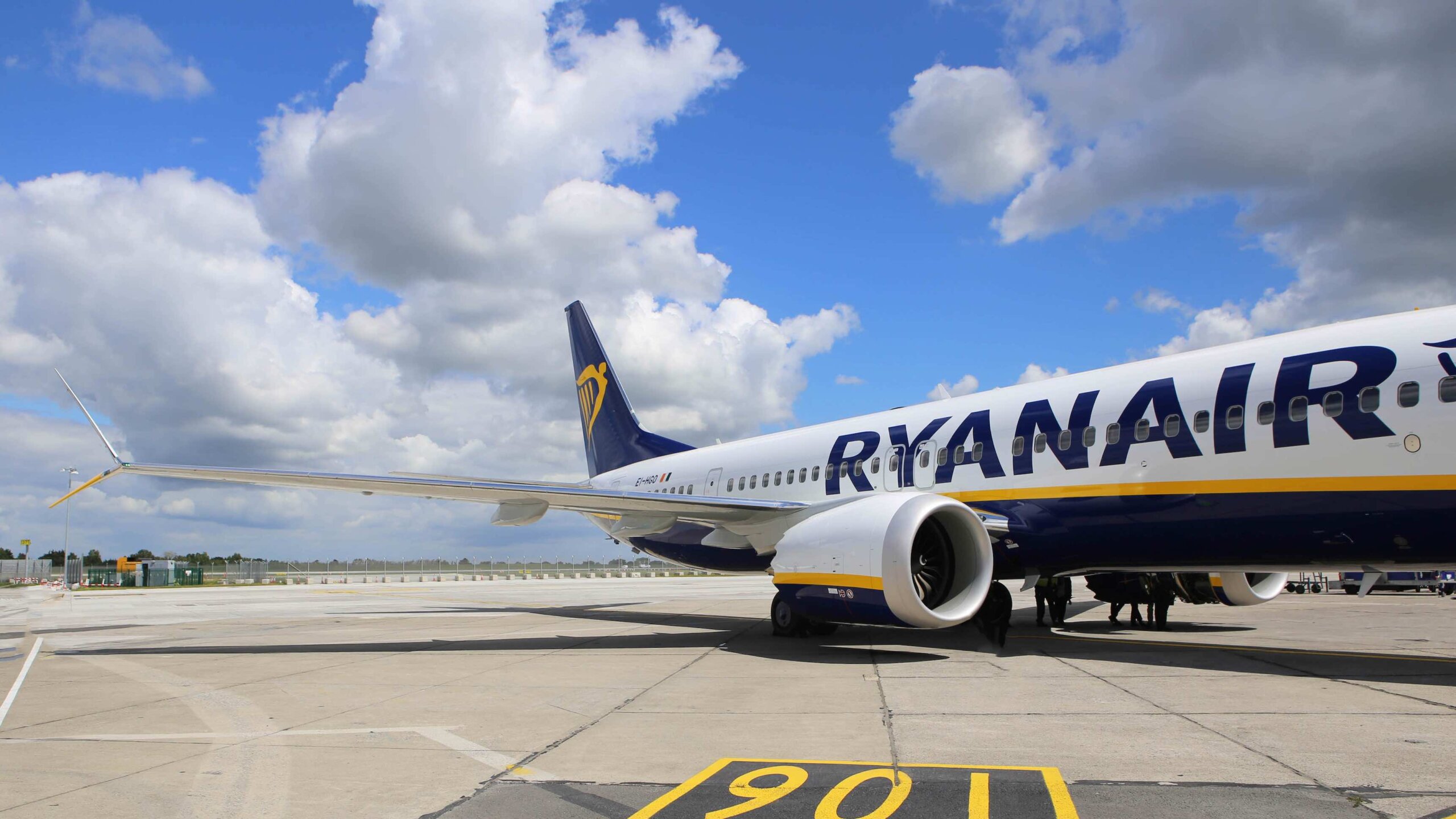
The airline operated 641 aircraft at the end of October, including 204 Boeing 737-8200 “Gamechanger” jets, and expects the final six planes from its 210-aircraft order to be delivered before summer 2026. Ryanair projects full-year passenger growth of over 3%, reaching approximately 207 million travelers.
Management expects cost inflation to remain modest, with savings from new, more fuel-efficient aircraft, fuel hedging, and tight cost discipline helping to offset higher air-traffic-control and environmental charges.
Third-quarter bookings are slightly ahead of last year, but Ryanair expects fare growth to slow due to stronger comparisons from the previous year’s record performance.
The airline said it was too early to provide full-year profit guidance, citing potential risks from conflicts in Ukraine and the Middle East, economic volatility, and recurring air-traffic-control strikes across Europe.