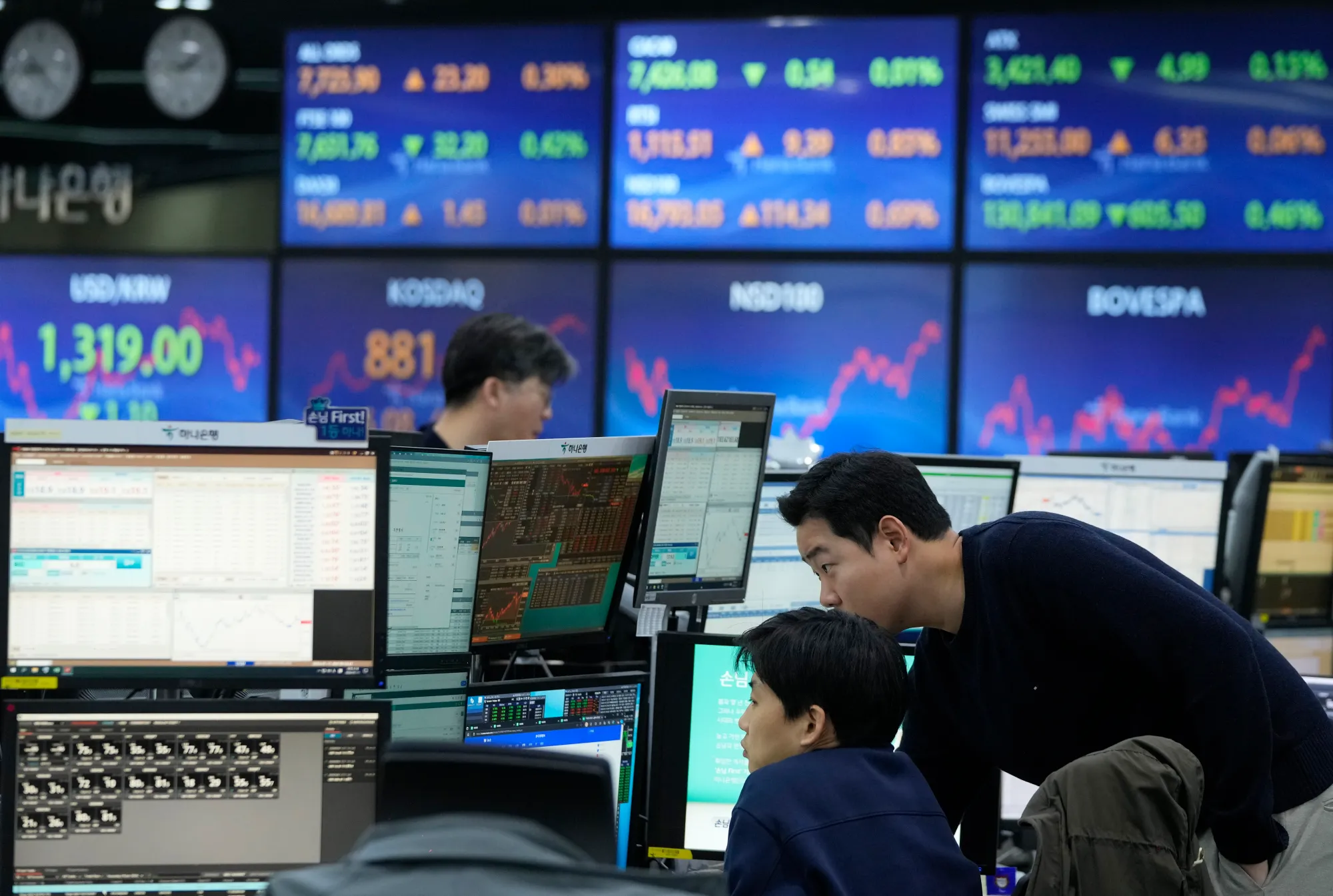
Asian Stocks Rebound on Powell’s Dovish Remarks as Trade Tensions Persist
Asian stock markets rose on Wednesday, recovering from earlier losses this week. Investors found relief in dovish comments by Federal Reserve Chair Jerome Powell, though renewed U.S.–China trade tensions kept overall sentiment cautious.
Wall Street Mixed, But Asia Follows Positive Momentum
Overnight, Wall Street ended mixed after a volatile session. However, strong earnings results from major U.S. banks helped lift market confidence.
By 02:50 GMT, U.S. stock index futures were little changed, showing signs of market stabilization in Asia trading hours.
Powell’s Dovish Tone Fuels Relief Rally in Asia
Markets rebounded after Powell said the U.S. economy remains solid but warned of a softer labor market. He also mentioned that the Federal Reserve could soon end its quantitative tightening program, suggesting a possible policy shift.
Investors interpreted these comments as a sign that further rate cuts may come later this year. Following his remarks, U.S. Treasury yields declined, and the dollar weakened, which boosted risk appetite across Asia.
According to analysts at MUFG, Powell’s speech “reinforces expectations for two more rate cuts this year,” noting that the Fed’s stance could move toward neutral as global risks become more balanced.
Regional Markets Gain Across the Board
- Japan’s Nikkei 225 climbed 1.4%, rebounding from a nearly 3% drop in the previous session.
- The TOPIX index rose 1.3%, while Australia’s S&P/ASX 200 gained 0.9%.
- South Korea’s KOSPI jumped 1.7%, led by strong tech sector performance.
- Singapore’s Straits Times Index advanced 0.5%, and India’s Nifty 50 futures edged higher before the market open.
Trade Tensions Limit Market Upside
Despite the rebound, U.S.–China trade friction limited further gains. Both China’s Shanghai Composite and the CSI 300 index traded flat on Wednesday, while Hong Kong’s Hang Seng rose 1% after recent sharp declines.
Tensions escalated after President Donald Trump suggested cutting trade ties with China in the cooking oil sector, criticizing Beijing’s reduced soybean imports as “economically hostile.”
Even so, optimism around the Fed’s dovish stance outweighed trade concerns, with financial and consumer stocks leading gains across the region.
China’s Inflation Data Points to Deflation Risks
Fresh data showed China’s consumer prices fell 0.3% year-on-year in September, following a 0.4% drop in August. Producer prices also declined 2.3%, marking the third straight month of deflationary pressure.
Economists expect Beijing to introduce more policy support soon to stabilize growth and counter the ongoing deflationary trend.