Asian Currencies Strengthen as Dollar Slips After Powell’s Dovish Comments
Asian currencies gained ground on Wednesday, while the U.S. dollar weakened following dovish remarks from Federal Reserve Chair Jerome Powell. His comments fueled expectations of further interest rate cuts in the coming months.
Powell’s Dovish Tone Lifts Asian Markets
Powell’s statement also boosted global financial markets, helping traders look past renewed U.S.–China trade tensions over rare earth exports and import restrictions. This shift supported risk appetite across Asia, with several regional currencies rebounding from recent lows.
The Chinese yuan strengthened on Wednesday, despite weaker-than-expected inflation data signaling persistent economic softness in China. The Japanese yen led regional gains, rebounding sharply from recent losses as doubts grew over Prime Minister Sanae Takaichi’s fiscal stance.
Dollar Falls as Powell Signals End to Quantitative Tightening
The dollar index and dollar futures each fell about 0.2% during Asian trading, extending overnight declines. Powell said the Federal Reserve was nearing the end of its quantitative tightening program — the process of reducing its balance sheet.
Although he did not give a timeline, markets viewed his comments as a dovish signal, suggesting further monetary easing ahead. According to CME FedWatch, traders now see a 99.6% chance of a 25-basis-point rate cut at the end of October, following a similar move in September.
Uncertainty over the U.S. economy also weighed on the dollar. The ongoing government shutdown has delayed key labor and inflation reports, creating fresh risks for growth.
Yuan Gains Despite Weak Inflation and Trade Risks
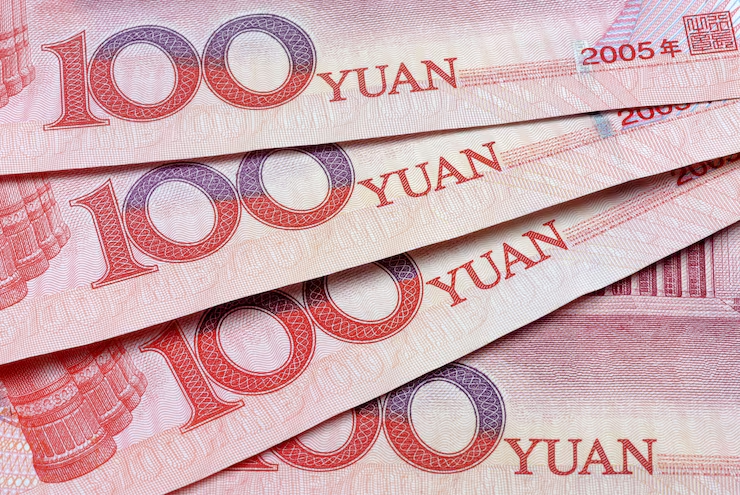
The Chinese yuan (USD/CNY) rose 0.2%, supported by a stronger daily midpoint set by the People’s Bank of China. Meanwhile, trade tensions remained in focus after President Donald Trump threatened 100% tariffs on Chinese goods.
Beijing responded firmly, warning it was ready to defend its interests in a trade dispute. The confrontation has also extended to rare earth export controls, soybean purchases, and import restrictions.
Fresh Chinese data showed consumer prices declined more than expected in September, while producer prices fell for a third consecutive year — highlighting China’s deflationary pressures. Economists expect Beijing to roll out additional policy support to stimulate growth.
Broader Asian FX Markets Advance
Most Asian currencies rose against the weaker dollar. The Japanese yen (USD/JPY) dropped 0.5%, helped by reduced bets on fiscal stimulus under Takaichi.
The South Korean won (USD/KRW) strengthened 0.5% after data showed strong growth in exports and imports. The Australian dollar (AUD/USD) climbed 0.5%, and the Singapore dollar (USD/SGD) gained 0.2%.
The Indian rupee (USD/INR) slipped 0.8%, briefly breaking below 88 per dollar, amid suspected central bank intervention and softer inflation data, which increased expectations of further RBI rate cuts.