UBS Says the AI Rally Still Has Strong Fundamentals
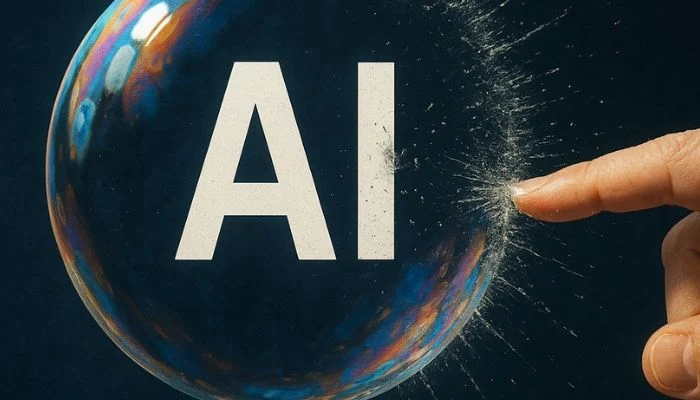
UBS told investors on Friday that the ongoing artificial intelligence (AI) market rally remains supported by solid fundamentals, accelerating adoption, and a favorable macroeconomic backdrop, despite growing concerns that AI-related stocks may be entering bubble territory.
According to the bank’s research note, recent corporate announcements have provided “more reasons for optimism.” UBS analysts highlighted several major developments, including Dell doubling its AI growth outlook, AMD’s multi-year chip partnership with OpenAI, and OpenAI’s new collaborations with Samsung, NVIDIA, Oracle, and Broadcom.
These agreements, UBS said, reflect hundreds of billions of dollars in new AI investment commitments, underscoring both the rapid pace of innovation and the massive capital inflows fueling the sector.
AI Growth Outlook Remains Strong, UBS Says
While UBS cautioned that market volatility could increase and urged investors to stay alert to signs of “froth,” the bank maintained that AI remains a compelling long-term investment theme. Ongoing product innovation continues to drive compute demand, supported by major infrastructure expansions — up to 16 gigawatts of new capacity currently planned.
UBS also pointed to surging AI adoption rates, noting that 26% of Americans now use AI tools daily, compared with 59% in early-adopter regions such as the UAE and Singapore.
The firm forecasts global AI revenues to grow at a 41% compound annual rate through 2030, reaching an estimated $2.6 trillion. Analysts emphasized that valuations remain “well below dotcom bubble levels,” arguing that today’s tech leaders boast stronger earnings, cash flow, and balance sheets than companies during the early-2000s tech boom.
UBS Sees Rising AI Investment Ahead
UBS expects global AI capital spending to increase by 67% in 2025 to about $375 billion, followed by another 33% rise to $500 billion the following year. The bank recommends diversified exposure across the software, hardware, and semiconductor sectors, citing broad opportunities as the AI revolution accelerates.