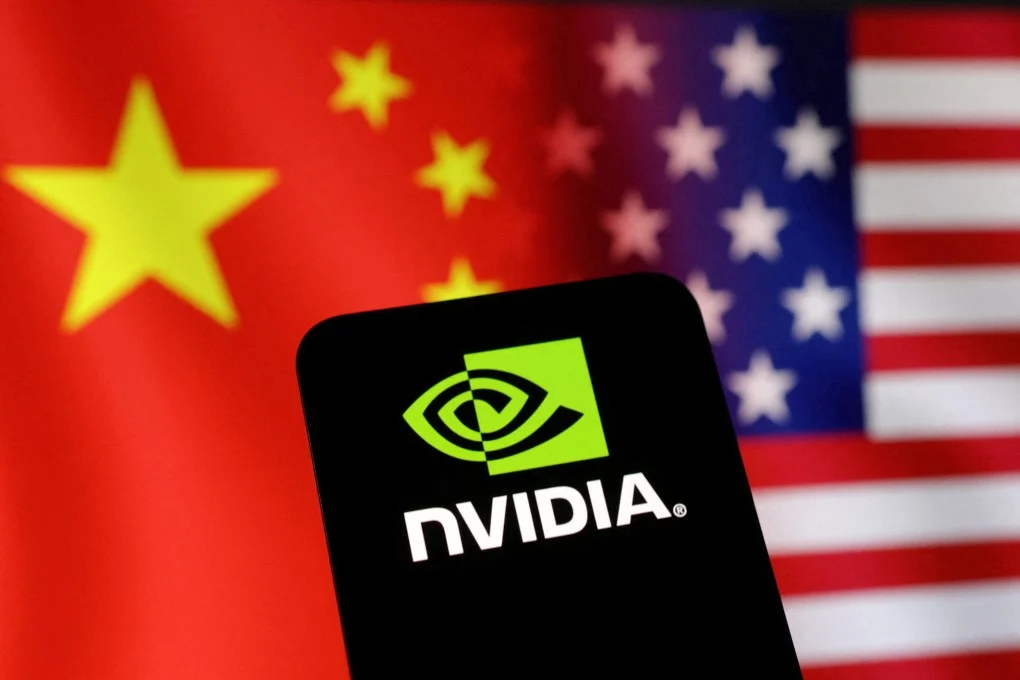
Nvidia AI Chips Face Heightened Scrutiny in China Customs Crackdown
NVIDIA Corporation (NASDAQ: NVDA) is facing increased scrutiny from Chinese customs officials, according to a Financial Times report on Friday.
Beijing has stepped up inspections of artificial intelligence (AI) chips as part of a wider effort to reduce China’s dependence on U.S.-made semiconductors.
Teams of customs officers were reportedly mobilized at major Chinese ports in recent weeks to conduct stringent checks on semiconductor shipments, the report said, citing sources familiar with the matter.
The inspections aim to prevent local firms from ordering Nvidia’s China-specific processors, particularly the H20 and RTX Pro 6000D, which have drawn regulatory opposition in Beijing.
Crackdown Expands to All Advanced Chip Imports
The report added that Chinese customs checks have since been expanded to cover all advanced semiconductor imports.
This move is also intended to combat smuggling of restricted goods that may violate U.S. export controls.
Nvidia’s chips for the Chinese market were specifically designed to comply with U.S. export restrictions.
However, Beijing has rejected the limitations, framing the issue as one of national security, and is now pushing developers to use domestically produced chips instead.
Beijing Boosts Local Chip Production
Although Nvidia was cleared earlier this year to resume chip sales in China, official demand has remained limited.
In parallel, Beijing has increased investment in local semiconductor firms, with Huawei, Cambricon Technologies, and Semiconductor Manufacturing International Corp (SMIC) leading the domestic push.
Reports suggest that China’s harder stance toward U.S. chips was partly fueled by remarks from U.S. Commerce Secretary Howard Lutnick, which were viewed as dismissive by Beijing.
Nvidia Caught Between U.S. and China Tensions
The situation leaves Nvidia navigating a delicate balance between U.S. export restrictions and Chinese regulatory pressure.
Despite the challenges, China remains a crucial market for the chipmaker, accounting for a substantial share of global semiconductor demand.