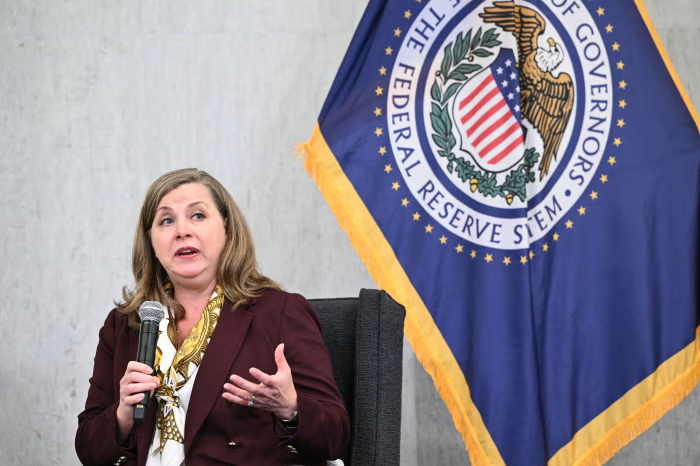
Federal Reserve Vice Chair for Supervision Michelle Bowman said on Friday that she supports decisive interest rate cuts to protect the U.S. job market from growing risks.
Speaking at the Forecasters Club of New York, Bowman noted that recent data point to a “materially more fragile labor market,” while inflation, excluding the effects of tariffs, remains just slightly above the Fed’s 2% target. She argued that the Federal Open Market Committee (FOMC) must act “decisively and proactively” to address weakening labor market conditions.
Bowman warned that the Fed is “at serious risk of already being behind the curve,” stressing that worsening job market data could force policymakers to cut rates faster and deeper in the months ahead.
At its most recent meeting, the FOMC reduced the federal funds rate by a quarter percentage point, setting a target range of 4% to 4.25%. While inflation is still above target, the decision was aimed at strengthening the job market. Bowman, who previously dissented in favor of rate cuts, joined her colleagues this time in supporting the smaller reduction.
She dismissed concerns that President Donald Trump’s trade tariffs would create persistent inflation, noting that price pressures remain close to the Fed’s target when tariffs are excluded. Bowman emphasized that Fed policy should prioritize the labor market, which shows the clearest signs of fragility.
Balance Sheet and Liquidity Measures
Bowman also addressed the Fed’s ongoing balance sheet reduction. She said her preference is to maintain the smallest possible balance sheet, leaning toward scarce rather than ample reserves. Shrinking holdings now, she argued, gives the Fed more flexibility to respond to future crises.
She also voiced support for a Treasury-only portfolio focused on shorter-term debt, while leaving room to shift toward longer-dated bonds if needed. Bowman suggested the Fed should revisit potential sales of mortgage-backed securities (MBS) rather than relying solely on runoff, to reach that Treasury-only goal within a reasonable timeframe. However, she acknowledged that selling MBS could put added stress on the housing market.
Regarding liquidity, Bowman discussed possible adjustments to the Standing Repo Facility (SRF), created in 2021 to serve as a market backstop. She said she prefers raising the SRF’s minimum bid rate above the top of the federal funds rate range, ensuring it remains a tool for exceptional stress scenarios rather than a routine funding option.