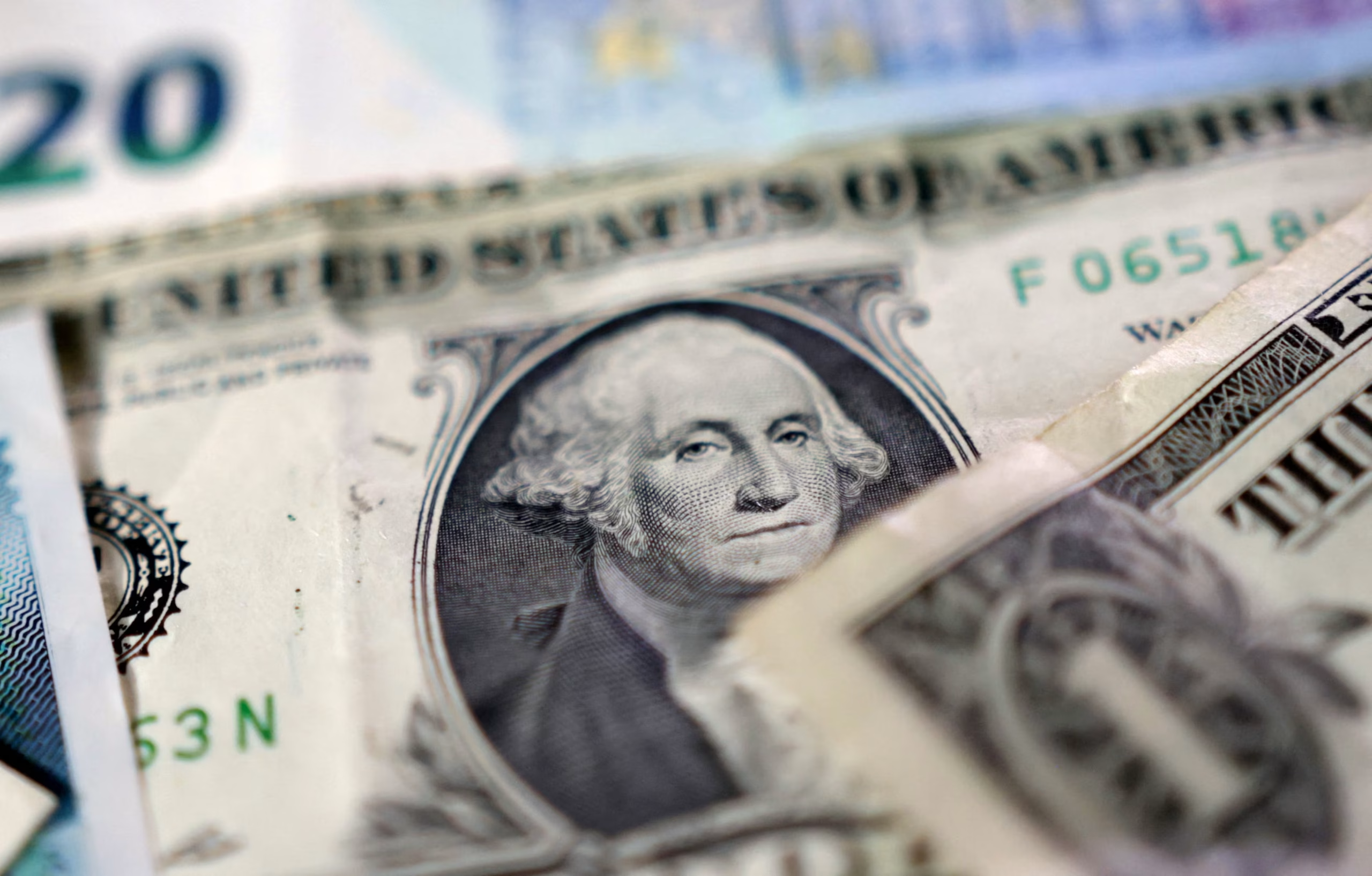
The U.S. dollar inched higher on Wednesday, recovering from its lowest level in nearly a week. This move came after Federal Reserve Chair Jerome Powell struck a cautious tone on further monetary easing. Despite his warning, traders still expect two more interest rate cuts this year.
Australia’s dollar strengthened after consumer inflation came in hotter than expected, just days before the Reserve Bank of Australia’s next policy decision. Meanwhile, the New Zealand dollar remained steady following the appointment of a new central bank governor.
The U.S. dollar index, which tracks the greenback against six major peers, rose 0.1% to 97.361. This followed two straight sessions of losses that pushed the index down to 97.198, its lowest since last Thursday.
Markets are still pricing in quarter-point cuts at both of the remaining Federal Reserve meetings in 2025. Another reduction is anticipated in early 2026. These expectations align broadly with Fed officials’ own forecasts after last week’s quarter-point cut.
The dollar had previously bounced from 96.224, its weakest level since early 2022. That rebound came after Powell’s press conference, where his comments were less dovish than markets had anticipated amid signs of a weakening labor market.
On Tuesday, Powell reiterated the Fed’s challenge of balancing high inflation with a fragile job market. He described the situation as “a challenging one,” stressing that neither premature easing nor excessive tightening would be risk-free.
James Kniveton, senior forex dealer at Convera, said Powell’s remarks highlighted the Fed’s cautious approach. According to him, Powell warned that easing too soon could entrench inflation, while keeping policy too tight could hurt employment.
The dollar also gained 0.2% to 147.88 yen. In Japan, candidates vying to become the next prime minister addressed journalists on Wednesday. Leading contender Sanae Takaichi, known for her dovish stance, warned that higher rates could weigh on mortgages and corporate investment.
Although the Bank of Japan kept policy unchanged last week, hawkish signals have fueled speculation about an earlier return to rate hikes.
Elsewhere, the euro slipped 0.1% to $1.1800, while the British pound fell 0.1% to $1.3510.
Australia’s dollar advanced 0.3% to $0.6620 after consumer prices rose 3% in August year-on-year, slightly above expectations of 2.9%. However, a key measure of core inflation eased to 2.6%, complicating the outlook for the RBA.
According to LSEG data, markets now see only a 33% chance of a rate cut by year-end. Analysts believe sticky price pressures may limit the RBA’s ability to ease further, even as the labor market weakens. Kyle Rodda of Capital.com noted that the jump in headline inflation was largely due to the removal of energy subsidies.
The New Zealand dollar was little changed at $0.5858. Finance Minister Nicola Willis confirmed Swedish central banker Anna Breman as the new Reserve Bank governor, effective December 1. She will be the first woman to hold the position.