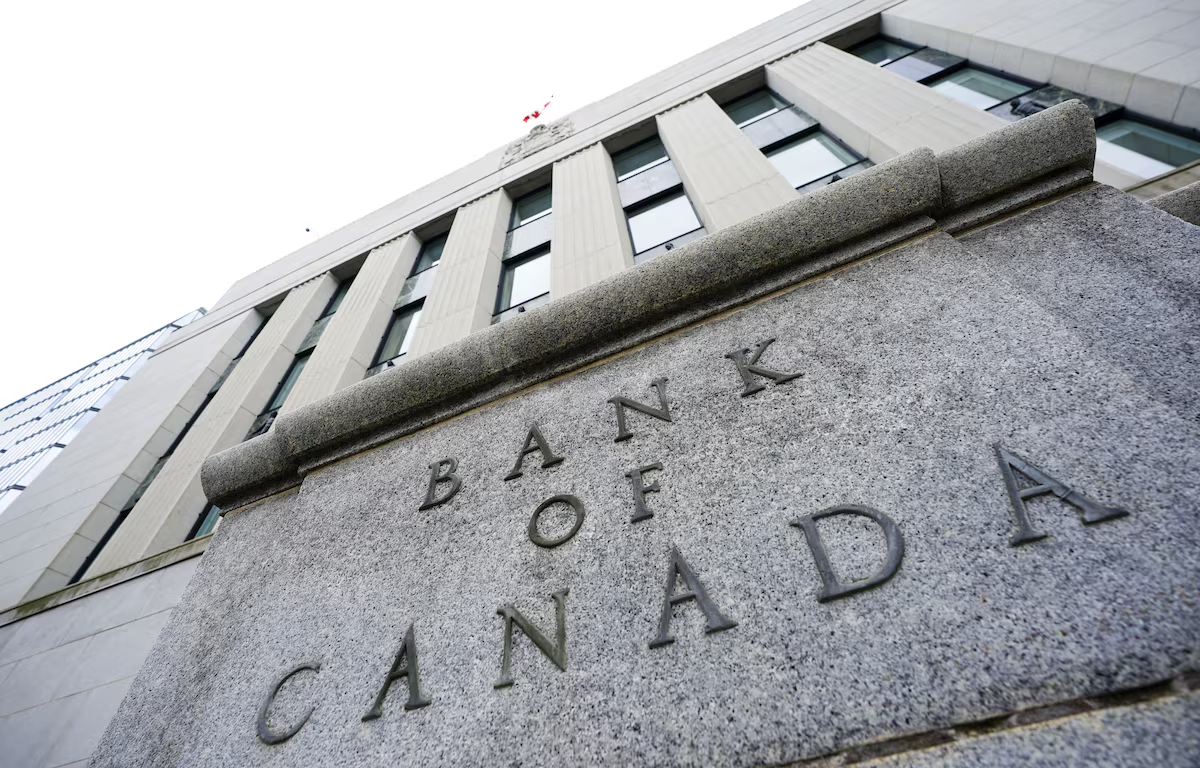
Bank of Canada Cuts Key Rate to 2.5%, Citing Economic Risks
The Bank of Canada lowered its benchmark interest rate to 2.5% on Wednesday, marking the first cut in six months and bringing rates to a three-year low. Policymakers said a weakening job market and reduced inflation pressures drove the decision.
The 25-basis-point cut was expected by markets. The central bank had paused rate reductions in March after lowering rates by 225 basis points over nine months, beginning in June of last year.
Governor Tiff Macklem highlighted uncertainty caused by U.S. tariffs. He explained that with slower economic growth and less risk of rising inflation, the Governing Council unanimously agreed that lowering the policy rate was necessary.
The last time the rate stood at 2.5% was in July 2022. Since then, economic conditions have worsened. Over the past two months, Canada has lost more than 100,000 jobs, pushing unemployment to a nine-year high outside of the pandemic years.
In the second quarter, the economy contracted by 1.6%, and the outlook for the third quarter remains weak. The bank warned that slow population growth and a struggling labor market could further weigh on household spending in the coming months.
Markets now assign nearly a 50% chance of another rate cut at the Bank of Canada’s next policy meeting on October 29. Analysts, including TD Securities’ Andrew Kelvin, see the terminal rate bottoming near 2.25%.
The Canadian dollar slipped 0.2% to C$1.3760 against the U.S. dollar following the announcement.
Beyond domestic concerns, Canada faces pressure from U.S. and Chinese tariffs. Businesses have reported delaying investment plans amid fears of weaker demand and broader fallout from trade disruptions.
Still, the central bank expressed less concern about inflation. Core inflation measures remain around 3%, but broader indicators suggest price growth is closer to 2.5%. Macklem added that Ottawa’s move to remove certain tariffs on U.S. goods should ease inflation further.
Despite this, he cautioned that ongoing trade shifts will continue to raise costs while slowing growth. The Bank of Canada’s long-term inflation target remains at 2%.